“You have to try this eggplant,” my friend insisted over text, and honestly, I was skeptical. Eggplant has always been one of those tricky vegetables for me—sometimes bitter, sometimes mushy in all the wrong ways. But that message came right after a long, chaotic day when I barely had the energy to think about dinner. Yet, curiosity won over exhaustion. I tossed a few eggplants into my basket, figuring, why not? The result? Let’s just say I found myself making this tender miso glazed eggplant recipe multiple times that week—each batch disappearing faster than the last.
There’s something quietly remarkable about how the miso glaze seeps into the eggplant, transforming its texture into something so silky it nearly melts on your tongue. The magic isn’t just in the flavor but in the way this dish feels like a little moment of calm amid the busy hum of life. I remember sitting at my kitchen counter, spooning the last bite, and realizing this simple dish had become my go-to comfort food that’s surprisingly fancy without the fuss.
What makes this recipe stick isn’t just the taste—it’s the confidence that even a “not really a baker” type like me can pull off a dish that looks and tastes like it belongs in a cozy restaurant corner. If you’ve ever felt unsure about eggplant, or just want a new side that’s different from the usual suspects, this miso glazed eggplant will win you over quietly but surely.
Why You’ll Love This Recipe
After testing this recipe multiple times, I can say this tender miso glazed eggplant is a keeper for so many reasons:
- Quick & Easy: Ready in under 30 minutes, perfect for busy weeknights or an effortless dinner that still feels special.
- Simple Ingredients: Uses pantry staples like miso paste and soy sauce—no need for fancy runs to specialty stores.
- Perfect for Any Occasion: Whether you’re serving a casual dinner or want to impress guests with minimal stress, this recipe hits the spot.
- Crowd-Pleaser: Even folks who usually shy away from eggplant ask for seconds.
- Unbelievably Delicious: That savory-sweet miso glaze paired with the silky eggplant texture is downright addictive.
This isn’t just another roasted eggplant recipe. The secret is a quick pan-sear before glazing, which locks in a perfect texture—tender but not mushy. The miso glaze balances salty, sweet, and umami notes so well you’ll find yourself savoring every bite slowly (or not, if you’re anything like me). What’s more, this dish pairs beautifully with many mains and can even star in vegetarian meals.
Honestly, this recipe became my go-to whenever I needed a little culinary pick-me-up. It’s comfort food without the heaviness, a subtle nod to Japanese flavors that feels familiar yet fresh. And if you enjoy dishes with a touch of sweetness and depth, you’ll probably find yourself making this again and again.
What Ingredients You Will Need
This recipe uses simple, wholesome ingredients to deliver bold flavor and satisfying texture without the fuss. Most are pantry staples, so you likely already have them on hand.
- Eggplants: 2 medium Japanese or Chinese eggplants (choose firm, glossy skin for best results)
- Miso Paste: 3 tablespoons white (shiro) miso paste (I prefer Hikari brand for its smoothness and balanced flavor)
- Soy Sauce: 2 tablespoons low-sodium soy sauce (tamari works great if gluten-free)
- Mirin: 1 tablespoon (sweet rice wine that adds subtle sweetness; substitute with a teaspoon of honey and a splash of water if needed)
- Rice Vinegar: 1 tablespoon (adds a mild tang, balancing the glaze)
- Brown Sugar: 1 teaspoon (to deepen caramelization)
- Garlic: 2 cloves, minced (fresh is best; adds a fragrant punch)
- Ginger: 1 teaspoon freshly grated (optional but adds warmth and zest)
- Sesame Oil: 1 teaspoon (for finishing, gives a nutty aroma)
- Vegetable Oil: 2 tablespoons (for pan-searing the eggplant)
- Green Onions: Thinly sliced, for garnish (adds a fresh, crisp contrast)
- Sesame Seeds: Toasted, for garnish (optional, but I love the crunch and nuttiness)
If you want to make this dish vegan, just double-check your miso paste and soy sauce labels to avoid fish-based additives. Also, for a gluten-free version, tamari soy sauce is a reliable swap. In summer, swapping regular eggplants with baby eggplants works wonderfully, making the dish even more tender.
Equipment Needed
- A sharp knife and cutting board: Essential for slicing the eggplants evenly to ensure they cook uniformly.
- A non-stick or cast-iron skillet: I prefer cast iron for its even heat retention, but non-stick works well for easier cleanup.
- Mixing bowl: To whisk together the miso glaze ingredients smoothly.
- Measuring spoons and cups: For precise ingredient amounts—trust me, miso needs balance!
- Spatula or tongs: For flipping the eggplant gently without breaking the slices.
If you don’t own a cast-iron skillet, a sturdy stainless-steel pan is a good budget-friendly alternative. Just keep an eye on the heat to avoid sticking. Also, a small whisk helps get the glaze silky smooth, but a fork works in a pinch. Personally, I clean my cast iron with just a little salt and hot water—no soap—to keep it seasoned and ready for the next batch.
Preparation Method
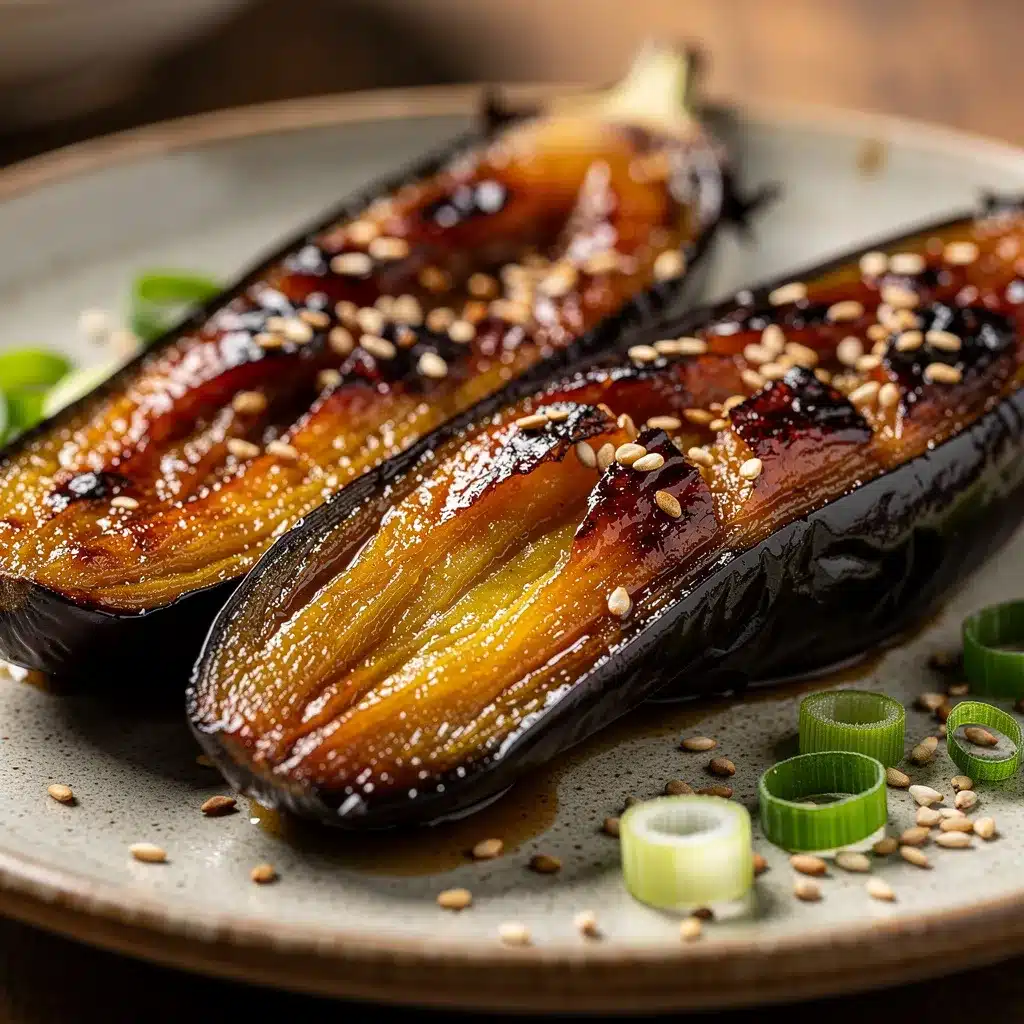
- Slice the Eggplants: Cut the eggplants lengthwise into ½-inch (1.3 cm) thick slices. Try to keep the thickness even for uniform cooking. Set aside.
- Prepare the Miso Glaze: In a mixing bowl, whisk together 3 tablespoons white miso paste, 2 tablespoons soy sauce, 1 tablespoon mirin, 1 tablespoon rice vinegar, 1 teaspoon brown sugar, minced garlic, and grated ginger (if using). Whisk until smooth and well combined. This should take about 3 minutes.
- Heat the Pan: Add 2 tablespoons vegetable oil to a skillet over medium heat. Wait until the oil shimmers but doesn’t smoke—about 2 minutes.
- Sear the Eggplant: Place eggplant slices in the pan, working in batches if needed to avoid crowding. Cook for about 3-4 minutes per side or until golden brown and tender. The eggplant should feel soft when poked with a fork but still hold its shape.
- Glaze the Eggplant: Reduce heat to low. Spoon the miso glaze evenly over each slice, turning the eggplants to coat both sides. The glaze will thicken slightly and caramelize—about 2-3 minutes. Watch carefully to prevent burning.
- Finish with Sesame Oil: Drizzle 1 teaspoon toasted sesame oil over the glazed eggplants for that nutty aroma and glossy finish.
- Garnish and Serve: Transfer the eggplants to a serving dish. Sprinkle sliced green onions and toasted sesame seeds on top. Serve warm.
Tip: If the glaze seems too thick to spread, add a splash of water to loosen it. Also, don’t rush the searing step—patience here gives the eggplant that melt-in-your-mouth texture you want. I’ve learned the hard way that flipping too soon leads to a soggy mess.
Cooking Tips & Techniques
One of the trickiest parts about eggplant is getting that tender texture without it turning into a mushy, oily sponge. Here’s what I learned:
- Choose the Right Eggplant: Smaller, thinner Japanese or Chinese eggplants have a smoother texture and fewer seeds, so they absorb the glaze better.
- Don’t Skip the Searing: Pan-searing before glazing locks moisture inside and creates a subtle crust. It’s the difference between “meh” and melt-in-your-mouth.
- Control the Heat: Medium heat works best. Too high and the glaze burns before the eggplant softens; too low and you miss that caramelization.
- Glaze Consistency: Whisk the glaze well to avoid lumps, and add a splash of water if it’s too thick to coat evenly.
- Timing: Glaze the eggplants right after searing to keep them warm and receptive to the flavors.
- Don’t Overcrowd the Pan: Cook in batches so each slice gets direct contact with the pan surface.
Honestly, the first time I tried skipping the searing step, it was a total flop—too soggy and bland. After a few tweaks, this became one of those recipes where the technique really shines through. Also, multitasking by prepping the glaze while the eggplants cook saves time and keeps things moving smoothly.
Variations & Adaptations
This tender miso glazed eggplant recipe is versatile, and I’ve enjoyed trying different versions depending on mood and pantry availability:
- Spicy Kick: Add ½ teaspoon of chili paste or a dash of cayenne to the miso glaze for a subtle heat that pairs beautifully with the umami.
- Vegan & Gluten-Free: Use tamari soy sauce and check miso paste labels. Swap mirin for a mix of maple syrup and rice vinegar.
- Baked Version: For a hands-off approach, bake the glazed eggplant slices at 400°F (200°C) for 20 minutes, flipping halfway. The texture is slightly different but still delicious.
- Herb Twist: Garnish with fresh cilantro or Thai basil instead of green onions for a fresh, aromatic finish.
One time, I swapped in prosciutto-wrapped asparagus as a side, and the salty meatiness balanced the mellow eggplant glaze perfectly. It reminded me that the miso glaze pairs well with a variety of flavors, so don’t hesitate to customize.
Serving & Storage Suggestions
This miso glazed eggplant is best served warm, right off the stove, so the texture stays silky and the glaze glossy. It makes a fantastic side dish for grilled meats, tofu bowls, or a simple rice plate. For a light meal, serve alongside steamed jasmine rice and a crisp cucumber salad.
Leftovers keep well in an airtight container in the fridge for up to 3 days. When reheating, I recommend a quick pan warm-up over medium heat to revive the texture—microwaves tend to make it soggy. The flavors deepen after a day, so sometimes I actually prefer it slightly chilled as part of a bento box.
If you want to prepare this dish in advance for entertaining, just hold off on garnishes until serving. For a festive occasion, consider pairing it with a sparkling drink like the refreshing champagne punch to complement the rich umami notes.
Nutritional Information & Benefits
Per serving (based on 4 servings): approximately 150 calories, 7g fat, 15g carbohydrates, 3g fiber, 3g protein.
Eggplants provide dietary fiber and antioxidants like nasunin, which supports brain health. Miso paste adds probiotics for gut health and a good dose of essential minerals. Using low-sodium soy sauce keeps the sodium levels moderate, making this a light yet satisfying dish. Plus, it’s naturally gluten-free if you use tamari, and vegan with the right substitutions.
I appreciate this recipe because it combines wholesome ingredients that feel nourishing without being heavy—perfect for anyone looking to enjoy flavorful meals that support wellness.
Conclusion
So, why try this tender miso glazed eggplant recipe? It’s an easy, fuss-free dish that surprises with its rich flavor and buttery texture. Whether you’re new to cooking eggplant or just craving something different, this recipe offers a delicious way to enjoy this often-underappreciated vegetable.
Feel free to tweak the glaze or try one of the variations—cooking should always be a bit flexible and fun. I personally love how this dish comes together quickly yet feels special enough for company, and it’s become a quiet favorite in my kitchen rotation.
Give it a shot and let me know how it turns out! I’m always curious about your twists or pairing ideas. Here’s to many melt-in-your-mouth moments ahead.
Frequently Asked Questions
Can I use regular eggplants instead of Japanese or Chinese varieties?
Yes, but smaller Japanese or Chinese eggplants have less bitterness and a smoother texture, which works better for this recipe. If using larger eggplants, peel the skin if it’s tough and salt the slices to reduce bitterness.
How do I store leftovers to keep the eggplant from getting soggy?
Store in an airtight container in the fridge for up to 3 days. Reheat gently in a pan rather than microwave to preserve texture.
Is this recipe suitable for a vegan diet?
Absolutely! Just make sure your miso paste and soy sauce are vegan-friendly, and swap mirin if needed with a vegan substitute like maple syrup mixed with rice vinegar.
Can I prepare the miso glaze ahead of time?
Yes, the glaze can be made up to 2 days in advance and stored in the fridge. Give it a good whisk before using as it may thicken or separate.
What are some good dishes to serve alongside this miso glazed eggplant?
It pairs well with steamed rice, grilled proteins, or light salads. For a festive meal, try it with perfect scallops with lemon butter sauce or a refreshing vegetable side.
Pin This Recipe!
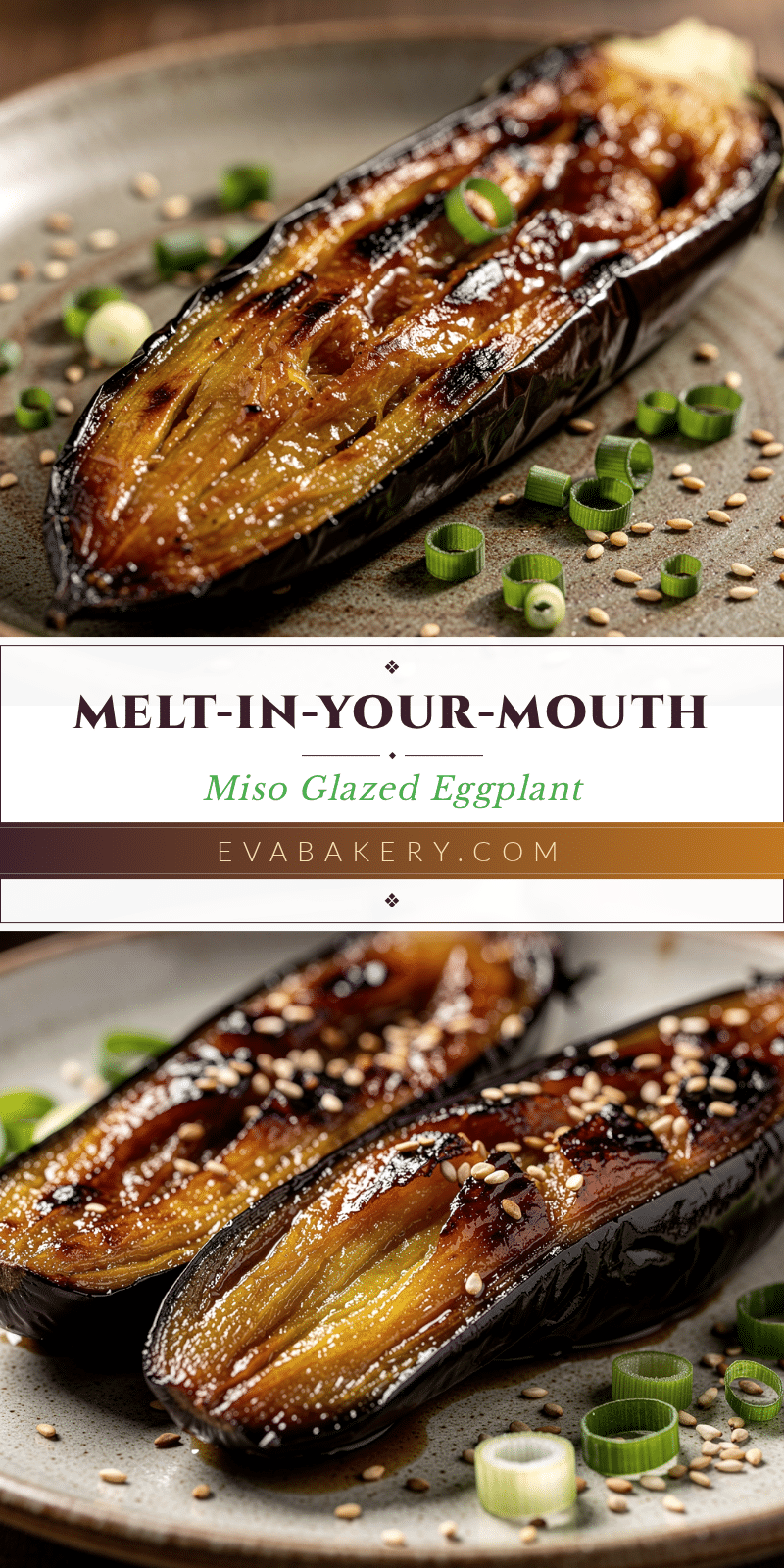
Tender Miso Glazed Eggplant
A quick and easy recipe featuring tender eggplant slices glazed with a savory-sweet miso sauce, perfect as a comforting side dish or vegetarian main.
- Prep Time: 10 minutes
- Cook Time: 15 minutes
- Total Time: 25 minutes
- Yield: 4 servings 1x
- Category: Side Dish
- Cuisine: Japanese
Ingredients
- 2 medium Japanese or Chinese eggplants
- 3 tablespoons white (shiro) miso paste
- 2 tablespoons low-sodium soy sauce (tamari for gluten-free)
- 1 tablespoon mirin (or 1 teaspoon honey + splash of water)
- 1 tablespoon rice vinegar
- 1 teaspoon brown sugar
- 2 cloves garlic, minced
- 1 teaspoon freshly grated ginger (optional)
- 1 teaspoon sesame oil
- 2 tablespoons vegetable oil
- Thinly sliced green onions, for garnish
- Toasted sesame seeds, for garnish (optional)
Instructions
- Slice the eggplants lengthwise into ½-inch (1.3 cm) thick slices. Keep thickness even for uniform cooking and set aside.
- In a mixing bowl, whisk together miso paste, soy sauce, mirin, rice vinegar, brown sugar, minced garlic, and grated ginger until smooth and well combined (about 3 minutes).
- Heat vegetable oil in a skillet over medium heat until shimmering but not smoking (about 2 minutes).
- Place eggplant slices in the pan in batches to avoid overcrowding. Cook for 3-4 minutes per side until golden brown and tender but still holding shape.
- Reduce heat to low. Spoon the miso glaze evenly over each slice, turning to coat both sides. Let the glaze thicken and caramelize for 2-3 minutes, watching carefully to prevent burning.
- Drizzle toasted sesame oil over the glazed eggplants for aroma and glossy finish.
- Transfer to a serving dish and garnish with sliced green onions and toasted sesame seeds. Serve warm.
Notes
If glaze is too thick, add a splash of water to loosen. Do not overcrowd the pan to ensure even searing. Reheat leftovers gently in a pan to preserve texture. Miso glaze can be prepared up to 2 days ahead and stored in the fridge.
Nutrition
- Serving Size: 1/4 of the recipe (a
- Calories: 150
- Sugar: 5
- Sodium: 450
- Fat: 7
- Saturated Fat: 1
- Carbohydrates: 15
- Fiber: 3
- Protein: 3
Keywords: miso glazed eggplant, tender eggplant recipe, easy eggplant side, Japanese eggplant recipe, vegan eggplant dish, gluten-free eggplant