My husband took his first bite, chewed for a second, and then just stared at his fork. I thought something was wrong—maybe the sage was too bitter, or the butternut squash hadn’t cooked through. But then he said, very quietly, “Don’t ever make regular mac and cheese again.” And honestly? I wasn’t about to argue with that.
This creamy butternut squash mac and cheese with crispy sage started as one of those “I have a half-used squash and no real plan” kind of nights. You know the ones—where you’re staring into the fridge hoping something magical happens. Well, something did. The squash puree blends into the cheese sauce so smoothly that you barely notice it’s there (in the best way possible), and those crispy sage leaves on top? They’re not just garnish—they’re the crunchy, herby crown that makes this dish feel like you actually tried.
I’ve made this recipe more times than I can count now, and it’s become my go-to for those transitional weeks when you’re not quite ready to let go of fall flavors but also need something that feels like a hug on a plate. It’s rich without being heavy, comforting without being boring, and it’s the kind of meal that makes you feel like you’ve got your life together—even if you’re eating it straight from the pan at the kitchen counter.
Why You’ll Love This Recipe
Let me tell you why this creamy butternut squash mac and cheese with crispy sage has earned a permanent spot in my dinner rotation. It’s not just another pasta dish—it’s the one that makes people ask for the recipe before they’ve even finished their plate.
- Quick & Easy: From start to finish, you’re looking at about 35 minutes. That’s faster than ordering takeout in some neighborhoods, and way more satisfying.
- Simple Ingredients: No weird specialty items here. Butternut squash, pasta, cheese, sage—you probably already have most of this in your kitchen right now.
- Perfect for Cozy Nights: This is the dish you want when the weather turns chilly and you need something that feels like a warm blanket in food form.
- Crowd-Pleaser: I’ve served this to kids, adults, picky eaters, and even my friend who swears she “doesn’t like squash.” She asked for seconds.
- Unbelievably Delicious: The combination of creamy, cheesy sauce with that nutty, crispy sage topping is pure comfort food magic. It’s the kind of meal that makes you close your eyes after the first bite.
What really sets this apart from other mac and cheese recipes is the butternut squash puree. It’s not there to be healthy (though that’s a nice bonus)—it’s there to make the sauce silkier, slightly sweet, and absolutely luscious. The squash melts into the cheese so completely that you get all the richness of a traditional béchamel without the heaviness. And those crispy sage leaves? They add a texture and flavor pop that takes this from “good” to “I’m making this for every holiday dinner from now on.”
This isn’t just another version of mac and cheese—it’s your new favorite way to eat pasta. Trust me on this one.
What Ingredients You Will Need
This recipe uses simple, wholesome ingredients that work together to create something truly special. Most of these are pantry staples or easy to find at any grocery store, which makes this dish perfect for both planned dinners and spontaneous cravings.
For the Butternut Squash Sauce
- 1 medium butternut squash (about 2-3 pounds), peeled, seeded, and cubed into 1-inch pieces—look for one that feels heavy for its size, with smooth, unblemished skin
- 2 tablespoons olive oil (I prefer extra virgin for roasting, but regular works fine)
- 1 small yellow onion, diced (adds a subtle sweetness that balances the squash)
- 3 cloves garlic, minced (fresh only—don’t use the jarred stuff here)
- 1 cup vegetable broth (or chicken broth if you’re not keeping it vegetarian)
- 1/2 cup heavy cream (use full-fat for the creamiest results, but half-and-half works in a pinch)
- 1/2 teaspoon salt, plus more to taste
- 1/4 teaspoon black pepper
- 1/4 teaspoon nutmeg, freshly grated if possible (it makes a difference, honestly)
For the Pasta and Cheese
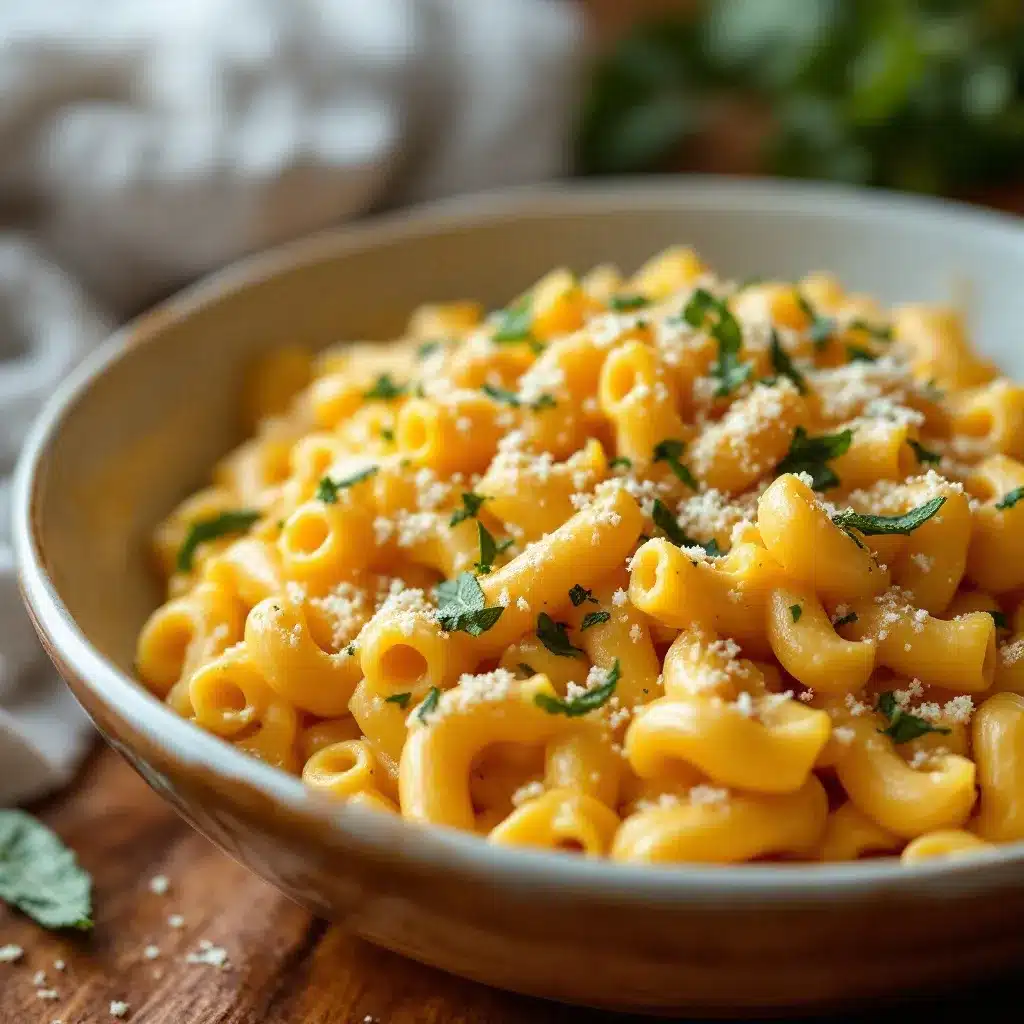
- 1 pound (16 ounces) pasta—I recommend cavatappi, shells, or fusilli; the nooks and crannies catch all that creamy sauce
- 2 cups sharp cheddar cheese, freshly shredded (please don’t buy pre-shredded—it has anti-caking agents that mess with the melt)
- 1 cup Gruyère cheese, freshly shredded (adds that nutty, melty goodness)
- 1/2 cup Parmesan cheese, freshly grated
For the Crispy Sage Topping
- 1/4 cup fresh sage leaves (about 15-20 leaves), washed and thoroughly dried
- 2 tablespoons butter (unsalted, so you control the salt level)
- 1/4 cup panko breadcrumbs (optional, for extra crunch—I add them when I’m feeling fancy)
Ingredient Tips: For the best texture, look for a butternut squash that’s firm with no soft spots. I’ve found that smaller squashes tend to be sweeter and less fibrous. If you’re in a hurry, you can use pre-cut butternut squash cubes from the produce section—just know they might cook a few minutes faster. For the cheese, I really recommend shredding it yourself. It melts so much smoother, and you’ll notice the difference in the final sauce.
Substitution Options: To make this gluten-free, use your favorite gluten-free pasta and gluten-free panko breadcrumbs. For a dairy-free version, substitute the heavy cream with full-fat coconut milk, use dairy-free cheese alternatives (look for ones that melt well), and swap the butter with olive oil for the sage. The flavor will change slightly, but it’s still delicious.
Equipment Needed
You don’t need a fancy kitchen to pull off this creamy butternut squash mac and cheese with crispy sage. Here’s what you’ll actually use:
- Baking sheet for roasting the squash—rimmed is best to catch any juices
- Large pot for boiling pasta (at least 4-quart capacity)
- Medium saucepan for making the sauce
- Food processor or blender to puree the squash—a high-speed blender works beautifully, but a regular blender or immersion blender will do the job
- Cheese grater—a box grater is my go-to, but a microplane works great for the Parmesan
- Small skillet for crisping the sage leaves
- Wooden spoon or silicone spatula for stirring
- 9×13-inch baking dish (or similar size) if you’re baking it—though honestly, I often skip this step and serve it straight from the pot
If you don’t have a food processor, no worries. I’ve made the squash puree by mashing it with a potato masher until smooth, and it worked fine—just a little more rustic in texture. The immersion blender is my lazy-day favorite because it means one less thing to wash.
Preparation Method
- Preheat your oven to 400°F (200°C). While it’s heating up, peel your butternut squash, scoop out the seeds, and cut it into roughly 1-inch cubes. Don’t stress about making them perfect—just aim for similar sizes so they cook evenly.
- Toss the squash cubes with 1 tablespoon of olive oil, a pinch of salt, and a crack of black pepper. Spread them in a single layer on your baking sheet. Roast for 25-30 minutes, flipping halfway through, until the squash is tender and starting to caramelize at the edges. You’ll know it’s done when a fork slides in easily. The smell at this point is incredible—sweet and nutty.
- While the squash roasts, bring a large pot of salted water to a boil. Add your pasta and cook according to the package directions until al dente. I usually go 1 minute less than the package says because the pasta will continue cooking when you mix it with the sauce. Drain the pasta, reserving about 1 cup of the starchy pasta water. Don’t skip this step—that starchy water is liquid gold for adjusting your sauce consistency later.
- In your medium saucepan, heat the remaining 1 tablespoon of olive oil over medium heat. Add the diced onion and cook for 4-5 minutes until it’s translucent and starting to soften. Add the minced garlic and cook for another 30 seconds until fragrant—don’t let it burn, or it’ll turn bitter.
- Add the roasted squash cubes to the saucepan along with the vegetable broth. Use a wooden spoon to scrape up any browned bits from the bottom of the pan (that’s flavor, my friend). Let it simmer for 2-3 minutes, then carefully transfer everything to your blender or food processor. Add the heavy cream, salt, pepper, and nutmeg. Blend until completely smooth and velvety. If it’s too thick, add a splash of the reserved pasta water. Taste it here—it should be creamy, slightly sweet, and just a little nutty from the nutmeg.
- Pour the squash puree back into the saucepan and warm it over low heat. Gradually add the shredded cheddar, Gruyère, and Parmesan, stirring constantly until everything is melted and smooth. This is where patience matters—add the cheese in handfuls, not all at once, and keep stirring. If the sauce seems too thick, thin it out with a little pasta water until it’s the consistency of a creamy soup.
- Add the cooked pasta to the sauce and stir until every piece is coated. Let it sit for 1-2 minutes so the pasta absorbs some of that sauce. If you’re serving it right away, you can stop here. If you want a baked version (which I sometimes do for company), transfer everything to a greased 9×13-inch baking dish.
- Now for the crispy sage topping. In a small skillet, melt the butter over medium heat. Add the sage leaves in a single layer—they’ll sizzle and curl up almost immediately. Cook for 30-45 seconds per side until they’re dark green and crispy. Remove them to a paper towel-lined plate. If you’re using panko, add it to the remaining butter in the pan and toast for 1-2 minutes until golden brown.
- If baking, sprinkle the panko over the mac and cheese and bake at 375°F (190°C) for 15-20 minutes until bubbly and golden on top. Top with the crispy sage leaves right before serving—they lose their crunch if they sit too long.
Cooking Tips & Techniques
After making this creamy butternut squash mac and cheese with crispy sage more times than I can count, I’ve picked up a few tricks that make a real difference. Here’s what I wish someone had told me the first time:
Don’t overcook the squash. I know it sounds weird, but there’s a sweet spot between tender and mushy. You want the squash to be fork-tender but still holding its shape. Overcooked squash releases too much water, which can make your sauce watery instead of creamy. Aim for that 25-30 minute mark and check early if your cubes are on the smaller side.
Toast your sage leaves bone-dry. This is the most important tip for crispy sage. If the leaves have any moisture on them, they’ll steam instead of fry, and you’ll end up with sad, limp sage. Pat them dry with paper towels before they hit the butter. Also, don’t crowd the pan—give each leaf room to crisp up. I learned this the hard way after my first batch turned into a soggy mess.
Grate your own cheese. I know, I know—it’s an extra step. But pre-shredded cheese is coated in cellulose and other anti-caking agents that prevent it from melting smoothly. You’ll end up with a grainy sauce instead of that silky, stretchy texture you’re after. Spend the 3 minutes grating your own, and your taste buds will thank you.
Season in layers. Don’t wait until the end to add all your salt. Season the roasting squash, season the pasta water (it should taste like the sea), and season the sauce as you go. Each layer of seasoning builds on the last, and you’ll end up with a much more flavorful dish.
Trust the nutmeg. I know it seems like a weird addition to mac and cheese, but nutmeg and butternut squash are best friends. It brings out the natural sweetness of the squash and adds a warm, almost floral note that makes the dish feel more complex. Just a pinch is all you need.
Variations & Adaptations
One of the things I love most about this creamy butternut squash mac and cheese with crispy sage is how adaptable it is. Here are some variations I’ve tried and loved:
Vegan Version
Swap the heavy cream for full-fat coconut milk, use nutritional yeast instead of the cheese (about 1/3 cup), and replace the butter with olive oil for the sage topping. It won’t be exactly the same, but it’s surprisingly creamy and satisfying. I made this for my vegan sister-in-law and she asked for the recipe—high praise.
Spicy Kick
Add 1/2 teaspoon of red pepper flakes to the sauce along with the nutmeg, or stir in a diced jalapeño when you cook the onion. The heat cuts through the richness beautifully and adds a whole new dimension. This is my go-to when I’m feeling like I need a little excitement in my dinner routine.
Protein-Packed
Stir in 2 cups of shredded rotisserie chicken or 1 cup of cooked, crumbled Italian sausage after you mix the pasta with the sauce. It turns this side dish into a full meal that’ll keep you full for hours. I’ve also added crispy bacon bits on top (because bacon makes everything better).
Seasonal Swaps
In the summer, I’ve made this with roasted sweet potatoes instead of butternut squash, and it works beautifully. In the spring, try it with roasted asparagus blended into the sauce—it turns a lovely pale green and tastes amazing. The technique stays the same; just swap the vegetable.
Gluten-Free Adaptation
Use your favorite gluten-free pasta (I like brown rice pasta for its texture) and gluten-free panko breadcrumbs. The rest of the ingredients are naturally gluten-free, so this is an easy swap that doesn’t sacrifice flavor.
Serving & Storage Suggestions
This creamy butternut squash mac and cheese with crispy sage is best served hot, straight from the pot or baking dish. The crispy sage leaves should go on right before serving—they lose their crunch within about 15 minutes, so don’t add them ahead of time.
What to serve with it: This dish is rich enough to stand on its own, but it pairs beautifully with a simple green salad dressed with lemon vinaigrette (the acidity cuts through the creaminess). If you’re making it for a holiday dinner, it’s a fantastic side alongside roasted chicken, pork chops, or even a perfect beef tenderloin with red wine reduction. For a lighter meal, serve it with steamed broccoli or roasted Brussels sprouts. I’ve also been known to pair it with crispy prosciutto-wrapped asparagus bites for a truly indulgent dinner spread.
Storage: Leftovers keep well in an airtight container in the refrigerator for up to 4 days. The pasta will absorb some of the sauce as it sits, so don’t be alarmed if it seems drier the next day. To reheat, add a splash of milk or broth and warm it gently on the stovetop or in the microwave, stirring occasionally. I actually think the flavors meld together even more overnight—it’s one of those rare dishes that tastes even better the next day.
Freezing: You can freeze this dish for up to 3 months. Let it cool completely, then transfer to a freezer-safe container. To thaw, move it to the refrigerator overnight, then reheat as directed above. Note that the texture of the sauce may change slightly after freezing—it might be a little grainier—but the flavor will still be fantastic. I’d skip the crispy sage topping until after reheating, as it won’t survive the freezer.
Nutritional Information & Benefits
While I wouldn’t call this a health food (it’s mac and cheese, after all), this creamy butternut squash mac and cheese with crispy sage does have some redeeming qualities. Here’s a rough estimate per serving (based on 6 servings, without the optional panko topping):
- Calories: Approximately 520-580
- Protein: 22-25g
- Fat: 28-32g
- Carbohydrates: 48-52g
- Fiber: 6-8g
- Vitamin A: Over 200% of the daily value (thanks to the butternut squash)
- Calcium: 35-40% of the daily value
Health Benefits: Butternut squash is packed with vitamin A (great for eye health), vitamin C (immune support), and fiber (digestive health). The sage leaves aren’t just for show—sage has anti-inflammatory properties and is rich in antioxidants. And while cheese is high in fat, it also provides calcium and protein. This dish is a good source of energy and nutrients, especially when you consider that the squash replaces some of the heavy cream you’d find in traditional mac and cheese.
Dietary Considerations: This recipe is vegetarian as written. It contains dairy and gluten. For gluten-free and vegan adaptations, see the variations section above. It’s also relatively low in added sugar—the sweetness comes entirely from the roasted squash.
Conclusion
This creamy butternut squash mac and cheese with crispy sage has become one of those recipes I turn to again and again—not because it’s fancy or complicated, but because it delivers every single time. It’s the dish that makes weeknight dinners feel special without requiring a ton of effort. It’s the recipe I bring to potlucks and holiday gatherings, the one that gets the “can you make that again?” requests from everyone who tries it.
What I love most about it is how adaptable it is. You can dress it up for company or keep it simple for a Tuesday night. You can make it vegan, gluten-free, or loaded with extra protein. It’s forgiving, it’s flavorful, and it’s genuinely hard to mess up. If you’re new to cooking with butternut squash, this is the perfect place to start—the squash melts into the background, doing its magic without demanding attention.
I’d love to hear how yours turns out! Did you add any fun variations? Did the crispy sage disappear before you could even top the dish? (That happens to me every time.) Drop a comment below and let me know. And if you’re looking for more cozy, crowd-pleasing recipes, check out our full recipe collection—there’s so much more to explore. Happy cooking, friends!
Frequently Asked Questions
Can I use frozen butternut squash instead of fresh?
Absolutely! Frozen butternut squash works great and saves you the peeling and chopping time. Just roast it straight from frozen—add about 5-10 minutes to the roasting time, and drain any excess liquid before blending it into the sauce. The texture might be slightly less caramelized, but the flavor will still be delicious.
Why did my cheese sauce turn out grainy?
This usually happens for one of two reasons: either you used pre-shredded cheese (which has anti-caking agents that prevent smooth melting) or you overheated the sauce. Always grate your own cheese and keep the heat on low when you’re melting it into the sauce. High heat can cause the proteins in the cheese to seize up, leaving you with a grainy texture.
Can I make this ahead of time?
Yes! You can prepare the entire dish (without the crispy sage topping) up to 2 days ahead. Let it cool completely, cover it, and refrigerate. When you’re ready to serve, bake it at 375°F (190°C) for 20-25 minutes until heated through, then add the freshly made crispy sage on top. The sauce might thicken a bit in the fridge, so you can stir in a splash of milk or broth before baking if needed.
What’s the best pasta shape for this recipe?
I recommend shapes with lots of nooks and crannies to catch that creamy sauce. Cavatappi, shells, fusilli, and rotini are all excellent choices. Elbow macaroni works too, but you’ll miss out on some of that sauce-holding magic. Avoid long, thin pastas like spaghetti or linguine—they don’t hold the sauce as well.
Can I skip the crispy sage topping?
You can, but you’ll be missing out on the best part! The crispy sage adds a texture contrast and a nutty, herbal flavor that really makes the dish special. If you don’t have fresh sage, you can substitute fresh thyme or rosemary (though the texture will be different), or simply toast some panko breadcrumbs in butter for a crunchy topping. But honestly, sage is worth seeking out for this recipe.
Pin This Recipe!
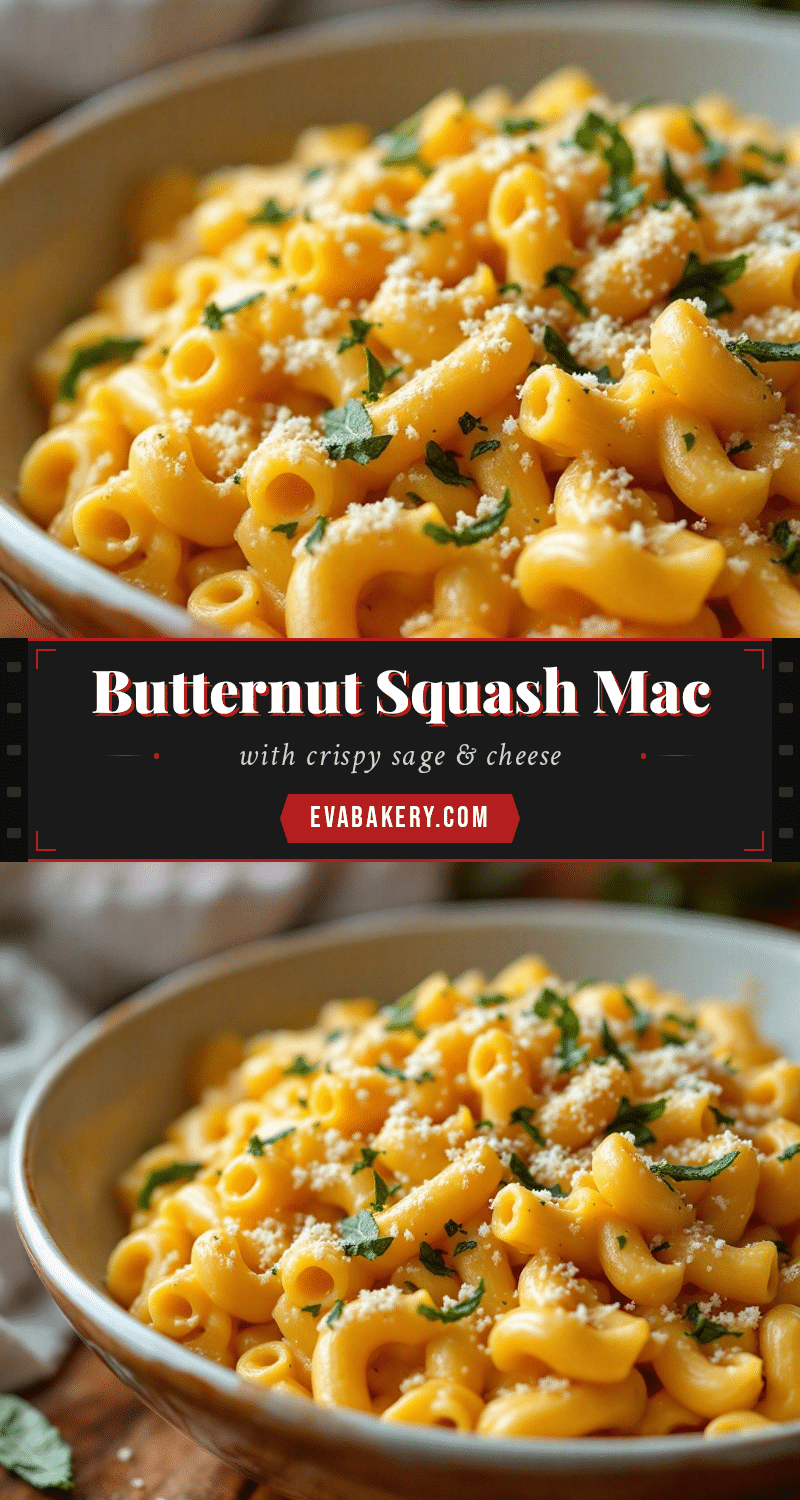
Creamy Butternut Squash Mac and Cheese with Crispy Sage Recipe

This creamy butternut squash mac and cheese with crispy sage is a comforting, crowd-pleasing dish that blends roasted squash into a silky cheese sauce, topped with crunchy sage leaves. It’s quick, easy, and perfect for cozy nights.
- Prep Time: 15 minutes
- Cook Time: 30 minutes
- Total Time: 45 minutes
- Yield: 6 servings 1x
- Category: Main Course
- Cuisine: American
Ingredients
- 1 medium butternut squash (about 2–3 pounds), peeled, seeded, and cubed into 1-inch pieces
- 2 tablespoons olive oil
- 1 small yellow onion, diced
- 3 cloves garlic, minced
- 1 cup vegetable broth
- 1/2 cup heavy cream
- 1/2 teaspoon salt, plus more to taste
- 1/4 teaspoon black pepper
- 1/4 teaspoon nutmeg, freshly grated if possible
- 1 pound (16 ounces) pasta (cavatappi, shells, or fusilli recommended)
- 2 cups sharp cheddar cheese, freshly shredded
- 1 cup Gruyère cheese, freshly shredded
- 1/2 cup Parmesan cheese, freshly grated
- 1/4 cup fresh sage leaves (about 15–20 leaves), washed and thoroughly dried
- 2 tablespoons unsalted butter
- 1/4 cup panko breadcrumbs (optional)
Instructions
- Preheat your oven to 400°F (200°C). Peel the butternut squash, scoop out the seeds, and cut into roughly 1-inch cubes.
- Toss the squash cubes with 1 tablespoon of olive oil, a pinch of salt, and a crack of black pepper. Spread in a single layer on a baking sheet. Roast for 25-30 minutes, flipping halfway, until tender and caramelized at the edges.
- While the squash roasts, bring a large pot of salted water to a boil. Cook the pasta according to package directions until al dente (1 minute less than package says). Drain, reserving about 1 cup of starchy pasta water.
- In a medium saucepan, heat the remaining 1 tablespoon of olive oil over medium heat. Add the diced onion and cook for 4-5 minutes until translucent. Add the minced garlic and cook for 30 seconds until fragrant.
- Add the roasted squash cubes and vegetable broth to the saucepan. Scrape up any browned bits. Simmer for 2-3 minutes, then transfer to a blender or food processor. Add heavy cream, salt, pepper, and nutmeg. Blend until smooth. If too thick, add a splash of reserved pasta water.
- Pour the squash puree back into the saucepan and warm over low heat. Gradually add the shredded cheddar, Gruyère, and Parmesan, stirring constantly until melted and smooth. Thin with pasta water if needed.
- Add the cooked pasta to the sauce and stir until coated. Let sit for 1-2 minutes. If baking, transfer to a greased 9×13-inch baking dish.
- For the crispy sage topping: In a small skillet, melt the butter over medium heat. Add the sage leaves in a single layer and cook for 30-45 seconds per side until dark green and crispy. Remove to a paper towel-lined plate. If using panko, add to the remaining butter and toast for 1-2 minutes until golden brown.
- If baking, sprinkle the panko over the mac and cheese and bake at 375°F (190°C) for 15-20 minutes until bubbly and golden. Top with crispy sage leaves right before serving.
Notes
Don’t overcook the squash; aim for fork-tender but still holding shape. Pat sage leaves bone-dry before frying to ensure crispiness. Grate your own cheese for a smooth sauce. Season in layers for best flavor. Trust the nutmeg—it enhances the squash’s sweetness.
Nutrition
- Serving Size: 1 serving (about 1.5
- Calories: 550
- Sugar: 8
- Sodium: 680
- Fat: 30
- Saturated Fat: 16
- Carbohydrates: 50
- Fiber: 7
- Protein: 23
Keywords: butternut squash mac and cheese, creamy mac and cheese, crispy sage, fall pasta, comfort food, vegetarian mac and cheese