That crackling sound — the one that greets you the moment a fresh focaccia comes out of the oven — still lingers in my mind like a soft echo from a quiet Sunday morning in my tiny kitchen. It was the kind of morning where sunlight sifted lazily through the curtains, and the air smelled faintly of yeast and olive oil. I remember fidgeting with the dough, unsure if it was too sticky or just right, the rosemary needles scattered on top like tiny emerald stars. This easy crispy rosemary sourdough focaccia was my first real leap into homemade bread that wasn’t a total disaster. Honestly, I wasn’t chasing perfection, just that satisfying crunch paired with a tender, pillowy crumb beneath.
There’s something so unhurried about focaccia baking that pulls you into the rhythm of waiting — the slow rise, the gentle pressing of fingertips, the pooling of fragrant oil in every dimple. This recipe, perfect for beginners, was my gentle introduction to sourdough’s magic without the fuss. It stuck with me because it taught patience, rewarded with the kind of bread you want to tear apart with your hands (no knife needed). Plus, the rosemary adds a whisper of earthiness that fills your kitchen with an aroma that feels like home, no matter where you’re baking it.
What I love most is how forgiving this focaccia is. You don’t need a fancy starter or the kind of skill that makes you nervous—just a little time and love. It’s the kind of recipe that invites you in, lets you play, and then surprises you with golden, crispy edges and that classic chewy crumb. It’s not just bread; it’s a little moment of calm in the kitchen, a simple pleasure that’s all your own.
Why You’ll Love This Recipe
This easy crispy rosemary sourdough focaccia recipe is a treat for anyone starting their baking journey or just wanting to enjoy homemade bread without fuss. Here’s why it quickly became a favorite in my kitchen:
- Quick & Easy: Comes together in under 4 hours total, with lots of downtime to relax or prep other dishes.
- Simple Ingredients: No need for exotic items—just flour, water, salt, olive oil, rosemary, and a bit of sourdough starter.
- Perfect for Beginners: No kneading marathon required; the dough is easy to handle and forgiving.
- Crowd-Pleaser: Everyone, from kids to adults, loves the crispy crust and soft inside combo.
- Unbelievably Delicious: The rosemary and sea salt topping adds that extra punch of flavor that keeps you coming back.
What sets this focaccia apart? It’s the method of folding and resting that builds flavor and structure without complicated steps. I like to think of it as sourdough bread made gentle and approachable. The rosemary isn’t just a garnish; it’s a fragrant partner in crime, infusing the bread with that unmistakable Mediterranean vibe.
Honestly, this focaccia is the kind of recipe that makes you pause and savor the moment. It’s comfort food with a crust, the kind that turns a simple meal into an occasion without stress. Whether you’re serving it alongside a fresh salad or tearing off chunks during a cozy night in, this focaccia holds a quiet promise of homemade goodness.
What Ingredients You Will Need
This recipe uses simple, wholesome ingredients to deliver bold flavor and satisfying texture without the fuss. Most of these are pantry staples, and if you’ve got a sourdough starter on hand, you’re halfway there already.
- For the Dough:
- All-purpose flour – 500g (about 4 cups), preferably unbleached for better flavor
- Water – 375ml (1 ½ cups), lukewarm to wake up the yeast gently
- Sourdough starter (active and bubbly) – 100g (about ½ cup)
- Sea salt – 10g (2 tsp), to season the dough
- Extra virgin olive oil – 50ml (3 tbsp), plus more for drizzling
- For the Topping:
- Fresh rosemary sprigs – 2 tbsp, finely chopped
- Coarse sea salt – 1 tsp, to sprinkle on top
- Olive oil – 2 tbsp, for drizzling just before baking
For those starting out, I recommend King Arthur’s unbleached all-purpose flour for consistent results. If you don’t have fresh rosemary, dried works fine, but fresh really makes the aroma pop. Also, if you’re dairy-free or prefer a vegan option, this recipe is naturally free of dairy and eggs, so you’re all set.
If you’re in a pinch, you can substitute the sourdough starter with 1 tsp of instant yeast, but the flavor won’t be quite the same—sourdough brings that tangy depth and chewy texture that’s worth the wait.
Equipment Needed
You don’t need much to make this easy crispy rosemary sourdough focaccia, which is part of why it’s such a great beginner recipe.
- Mixing bowl: A large one, preferably glass or stainless steel, for mixing and allowing the dough to rest.
- Dough scraper or spatula: Handy for folding and handling sticky dough.
- Measuring cups and spoons: For accurate ingredient amounts.
- Baking tray or sheet pan: Approximately 9×13 inches (23×33 cm), preferably rimmed to hold the olive oil and dough.
- Kitchen towel or plastic wrap: To cover dough while it rises and prevent drying out.
- Oven mitts: Safety first when handling that hot, crispy focaccia!
If you don’t have a dough scraper, a flexible spatula or even a butter knife can do the job when folding. For a budget-friendly baking tray, a simple rimmed cookie sheet works well and helps achieve that crispy bottom crust.
Personally, I love using a digital kitchen scale to measure flour and water. It cuts down on guesswork and gives me better results every time. Also, keeping a spray bottle of water nearby to spritz the oven during the first few minutes helps create a lovely crust.
Preparation Method

- Mix the dough: In your large mixing bowl, combine 500g (4 cups) of flour and 375ml (1 ½ cups) of lukewarm water. Stir with a wooden spoon or spatula until no dry flour remains. This shaggy dough doesn’t need kneading—just a good mix. Let it rest for 30 minutes to hydrate (autolyse).
- Add starter, salt, and oil: Add 100g (½ cup) active sourdough starter, 10g (2 tsp) sea salt, and 50ml (3 tbsp) olive oil to the dough. Mix thoroughly until everything is combined. The dough will be sticky but elastic. Don’t worry if it feels loose—that’s perfect.
- Bulk fermentation and folds: Cover the bowl with a damp kitchen towel or plastic wrap. Let the dough rest at room temperature for 3 hours. Every 30 minutes during the first 2 hours, perform a series of gentle folds directly in the bowl: reach under the dough, stretch it up, and fold it over itself. This builds strength without kneading.
- Prepare the pan: Drizzle olive oil generously over your 9×13 inch (23×33 cm) baking tray, spreading it evenly with your hands or a brush.
- Shape and proof: Transfer the dough to the tray and gently stretch it to fit, pressing with your fingertips to create the signature dimples. Cover loosely and proof for another 30-45 minutes until puffy but not overinflated.
- Add toppings: Sprinkle 2 tbsp chopped fresh rosemary and 1 tsp coarse sea salt evenly over the surface. Drizzle with 2 tbsp olive oil, letting it pool in some of the dimples.
- Bake: Preheat your oven to 450°F (230°C). Bake the focaccia on the middle rack for 20-25 minutes until golden brown and crispy on top. The edges should crackle when tapped, and the bottom should be crisp.
- Cool and serve: Remove from the oven and let cool slightly on a wire rack. This keeps the bottom crispy and prevents sogginess. Enjoy warm or at room temperature.
Watch the dough during proofing—it should feel airy but still hold its shape. If it starts to collapse, it’s overproofed, and the focaccia might be dense. Also, don’t skip the olive oil on the pan; it’s key for that mouthwatering crust.
Cooking Tips & Techniques
Making focaccia can feel intimidating, but here are some tips I learned through trial and error that made all the difference:
- Don’t rush fermentation: The slow rise builds flavor and texture. I’ve tried rushing with more yeast, but the taste isn’t the same.
- Handle the dough gently: It’s sticky and soft. Instead of kneading, folding helps develop gluten without toughening the dough.
- Use your fingertips for dimpling: Pressing with your fingertips creates pockets for olive oil and rosemary to settle in, giving that signature focaccia texture.
- Olive oil is your friend: Don’t skimp. Both in the dough and on the tray, it keeps the crust crispy and flavor-rich.
- Check oven temperature with an oven thermometer: Home ovens can be unpredictable. A steady 450°F (230°C) gives the best crust without burning.
- Don’t skip resting after baking: Letting the bread cool a bit helps the crumb set and prevents it from being gummy inside.
One lesson I learned the hard way: overproofing makes the dough collapse and bake flat. Also, I once forgot to oil the tray and ended up scraping the focaccia off like a sad puzzle. Trust me, the oil makes a world of difference.
Variations & Adaptations
This recipe is a versatile base for many flavors and dietary tweaks. Here are some ideas I’ve tried or recommend:
- Herb swap: Replace rosemary with thyme, oregano, or a mix of Italian herbs for a different aroma.
- Garlic lovers: Press thin slices of garlic into the dough before baking for a punch of flavor.
- Olive toppings: Scatter black or green olives on top for a salty contrast.
- Gluten-free option: Use a gluten-free flour blend and add xanthan gum; the texture will differ but still tasty.
- Seasonal twist: Top with thinly sliced cherry tomatoes or caramelized onions before baking for a fresh summer focaccia.
Personally, I love adding a sprinkle of flaky Maldon salt right after baking—it adds a crunch that’s irresistible. When I’m feeling fancy, pairing this focaccia with crispy prosciutto-wrapped asparagus bites makes a simple yet elegant snack spread.
Serving & Storage Suggestions
This focaccia is best served warm or at room temperature. Tear it into rustic chunks for sharing or slice it thin for sandwiches. It pairs beautifully with olive oil dips, balsamic vinegar, or a simple cheese board.
For storage, wrap cooled focaccia tightly in plastic wrap or place in an airtight container. It lasts well for 2 days at room temperature or up to 5 days in the fridge. To re-crisp, warm in a 375°F (190°C) oven for about 5-7 minutes.
You can also freeze focaccia: wrap tightly in foil, then a freezer bag, and thaw overnight in the fridge before reheating. The flavors actually deepen after a day or two, making leftovers surprisingly good.
Serve alongside a fresh salad or a cozy soup, or enjoy it with a glass of something bubbly like the refreshing champagne punch for a casual gathering. The crispness and herb aroma make it a natural match for bright, fresh flavors.
Nutritional Information & Benefits
A typical serving (about 100g) of this rosemary sourdough focaccia provides roughly 250-300 calories, with a balance of carbohydrates, fats, and a modest protein amount from the flour and starter. The olive oil contributes heart-healthy monounsaturated fats, while rosemary offers antioxidants and anti-inflammatory benefits.
This bread is naturally dairy-free, making it suitable for many dietary preferences. Using sourdough starter means the bread is often easier to digest than commercial yeast breads, thanks to the fermentation process breaking down gluten proteins.
Of course, portion control is key if you’re watching calories, but I find this focaccia a satisfying, wholesome choice that pairs well with nutrient-rich sides.
Conclusion
This easy crispy rosemary sourdough focaccia recipe is a gentle invitation to the joys of homemade bread without intimidation. It’s forgiving, flavorful, and full of character—perfect for beginners who want real results without fuss. I love how it transforms simple ingredients into something that fills the kitchen with warmth and invites sharing.
Feel free to tweak the herbs, toppings, or serving ideas to make it your own. Baking this focaccia became a small ritual for me, a way to slow down and savor the process—something I hope you’ll enjoy too.
If you try this recipe, I’d love to hear how it turned out or what variations you experimented with. Sharing those moments makes baking feel even more special. Here’s to crispy crusts and rosemary-scented kitchens!
FAQs
Can I use store-bought yeast instead of sourdough starter?
Yes, you can substitute 1 tsp instant yeast for the starter. The rising time will be shorter, but the flavor won’t have the same sourdough tang.
How do I know when the focaccia is fully baked?
It should be golden brown on top, with crispy edges that crackle when tapped. The bottom should be firm and crisp, not doughy.
Can I make the dough ahead of time?
Absolutely! You can refrigerate the dough after mixing and folding for up to 12 hours, then bring it to room temperature before shaping and baking.
What if I don’t have fresh rosemary?
Dried rosemary works in a pinch, but use less as it’s more concentrated. You can also experiment with other herbs like thyme or oregano.
How do I prevent the focaccia from sticking to the pan?
Generously oil the baking tray before placing the dough. Using a non-stick pan or lining with parchment paper also helps.
Pin This Recipe!
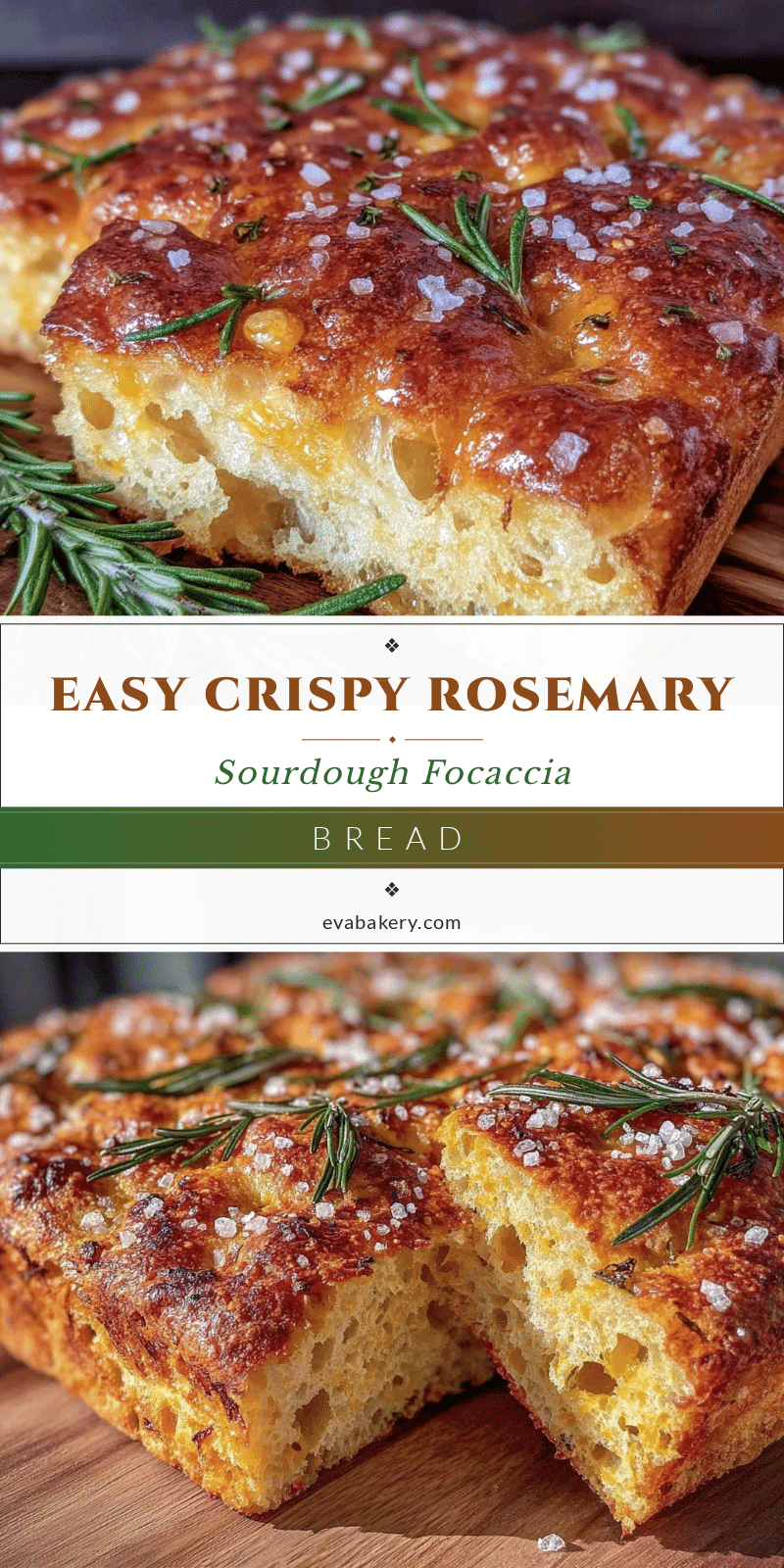
Easy Crispy Rosemary Sourdough Focaccia Recipe for Beginners to Perfect Homemade Bread
This easy crispy rosemary sourdough focaccia is perfect for beginners, offering a satisfying crunch with a tender, pillowy crumb and a fragrant rosemary aroma. It’s a forgiving recipe that transforms simple ingredients into delicious homemade bread.
- Prep Time: 45 minutes
- Cook Time: 20-25 minutes
- Total Time: 4 hours
- Yield: 8 servings
- Category: Bread
- Cuisine: Mediterranean
Ingredients
- All-purpose flour – 500g (about 4 cups)
- Water – 375ml (1 ½ cups), lukewarm
- Sourdough starter (active and bubbly) – 100g (about ½ cup)
- Sea salt – 10g (2 tsp)
- Extra virgin olive oil – 50ml (3 tbsp), plus more for drizzling
- Fresh rosemary sprigs – 2 tbsp, finely chopped
- Coarse sea salt – 1 tsp
- Olive oil – 2 tbsp, for drizzling just before baking
Instructions
- In a large mixing bowl, combine 500g (4 cups) of flour and 375ml (1 ½ cups) of lukewarm water. Stir until no dry flour remains. Let rest for 30 minutes to hydrate (autolyse).
- Add 100g (½ cup) active sourdough starter, 10g (2 tsp) sea salt, and 50ml (3 tbsp) olive oil to the dough. Mix thoroughly until combined. The dough will be sticky but elastic.
- Cover the bowl with a damp kitchen towel or plastic wrap. Let the dough rest at room temperature for 3 hours. Every 30 minutes during the first 2 hours, perform gentle folds by reaching under the dough, stretching it up, and folding it over itself.
- Drizzle olive oil generously over a 9×13 inch (23×33 cm) baking tray, spreading evenly.
- Transfer the dough to the tray and gently stretch it to fit, pressing with fingertips to create dimples. Cover loosely and proof for 30-45 minutes until puffy but not overinflated.
- Sprinkle 2 tbsp chopped fresh rosemary and 1 tsp coarse sea salt evenly over the surface. Drizzle with 2 tbsp olive oil, letting it pool in some dimples.
- Preheat oven to 450°F (230°C). Bake focaccia on the middle rack for 20-25 minutes until golden brown and crispy on top.
- Remove from oven and let cool slightly on a wire rack before serving.
Notes
Do not rush fermentation; slow rise builds flavor and texture. Use fingertips to create dimples for olive oil pools. Generously oil the baking tray to prevent sticking and achieve a crispy crust. Let bread cool on a wire rack to keep the bottom crispy. Overproofing causes dough collapse and dense bread. Oven temperature should be steady at 450°F (230°C).
Nutrition
- Serving Size: About 100g per servi
- Calories: 275
- Sugar: 1
- Sodium: 400
- Fat: 9
- Saturated Fat: 1.3
- Carbohydrates: 40
- Fiber: 2
- Protein: 7
Keywords: focaccia, sourdough, rosemary, homemade bread, crispy crust, easy bread recipe, beginner baking, olive oil bread