I want salmon right now. Not the kind you have to think about—marinate, flip, check, worry about. I want the kind where you put everything on one pan, let the oven do the heavy lifting, and ten minutes later you’re eating something that feels like it took actual effort. But here’s the thing—I don’t have any lemons. And every garlic butter salmon recipe I’ve ever seen starts with lemon slices. So I’m staring at my fridge like it owes me an answer, and it’s staring back with a bunch of asparagus that’s about two days from being compost.
That’s when it hits me. I don’t need the lemon. I’ve got butter, I’ve got garlic, and I’ve got a hot oven. The asparagus gets roasted right alongside the salmon, soaking up all that garlic butter as it goes. No extra pan. No separate side dish. No lemon required. Honestly, it’s one of those moments where you realize you’ve been overcomplicating dinner for years.
This is the kind of meal that makes you feel like you’ve got your life together, even if you’re eating it straight off the pan while standing at the counter. And that’s exactly why it stuck.
Why You’ll Love This Recipe
Let me tell you why this one-pan wonder earns a permanent spot in my weekly rotation. It’s not just easy—it’s the kind of easy that makes you wonder why you ever bothered with complicated dinners.
- Quick & Easy: From start to table in under 25 minutes. Seriously. This is weeknight dinner gold.
- Simple Ingredients: You probably have everything already. Butter, garlic, salmon, asparagus. That’s it. No fancy grocery store run required.
- Perfect for Busy Nights: Whether it’s a Tuesday after work or a lazy Sunday when you just don’t feel like cooking, this recipe delivers.
- Crowd-Pleaser: I’ve served this to picky eaters, seafood skeptics, and vegetable avoiders. Everyone cleans their plate.
- Unbelievably Delicious: The salmon comes out flaky and tender, the asparagus gets perfectly charred, and that garlic butter sauce ties it all together. It’s comfort food that feels fancy.
What makes this recipe different from every other salmon recipe out there? It’s the technique. By roasting everything together on one sheet pan, the asparagus absorbs all the garlic butter goodness while the salmon stays perfectly moist. No flipping, no basting, no fuss. Just dinner that works.
This isn’t just another salmon recipe. It’s the one you’ll come back to again and again. The kind that makes you close your eyes after the first bite and think, why don’t I make this every single night?
What Ingredients You Will Need
This recipe keeps things simple—just a handful of ingredients that work together to create something genuinely delicious. Here’s what you’ll need and why each one matters.
- Salmon Fillets (4 fillets, about 6 ounces each): Look for fillets that are roughly the same thickness so they cook evenly. I prefer wild-caught salmon when I can find it, but farm-raised works beautifully too. Pat them dry with paper towels before cooking—this helps the seasoning stick and gives you a better sear.
- Asparagus (1 bunch, about 1 pound, trimmed): Fresh asparagus is key here. Look for firm stalks with tight tips. Snap off the woody ends—they’ll naturally break where the tender part begins. If your asparagus is thick, you might want to peel the bottom inch or two for extra tenderness.
- Unsalted Butter (4 tablespoons, melted): I use unsalted so I can control the salt level myself. Kerrygold is my go-to for its rich flavor, but any good-quality butter works. If you’re dairy-free, you can substitute with a high-quality vegan butter or ghee.
- Garlic (4 cloves, minced): Fresh garlic makes a huge difference here. Don’t use the pre-minced stuff from a jar—it’s not the same. If you’re in a pinch, you can use 1 teaspoon of garlic powder, but fresh really is better.
- Olive Oil (2 tablespoons): This helps the asparagus roast up crispy and adds a little extra richness. Extra virgin is fine, but regular olive oil works too.
- Salt and Black Pepper (to taste): I use kosher salt for its clean flavor and easy pinch-ability. Freshly cracked black pepper is non-negotiable—the pre-ground stuff just doesn’t deliver the same punch.
- Optional Garnishes: Fresh parsley, dill, or chives add a pop of color and freshness. A squeeze of lemon is lovely if you have it, but remember—this recipe was born from not having lemons, so don’t stress if you don’t.
That’s it. Seven ingredients (eight if you count the garnish) and you’ve got dinner. No complicated spice blends, no obscure pantry items. Just real food that tastes like you tried harder than you actually did.
Equipment Needed
You don’t need a fancy kitchen to make this recipe work. Here’s what you’ll need:
- Baking Sheet or Sheet Pan: A rimmed baking sheet is ideal—it catches any butter that might drip off and makes cleanup a breeze. I use a half-sheet pan (18×13 inches) and it fits everything perfectly. If you don’t have one, any oven-safe baking dish will work in a pinch.
- Parchment Paper or Aluminum Foil: Lining your pan makes cleanup even easier. Parchment is my preference because nothing sticks to it, but foil works too. Just give it a quick spray of cooking spray if using foil.
- Small Bowl: For mixing your garlic butter. Any small bowl will do.
- Chef’s Knife: For trimming the asparagus and mincing the garlic. A sharp knife makes both tasks infinitely easier.
- Cutting Board: To protect your counter and give you a stable surface for prep.
- Measuring Spoons: For the olive oil and salt. Eyeballing works too, but measuring ensures consistency.
That’s it. Six pieces of equipment, most of which you probably already own. No stand mixer, no food processor, no specialty pans. Just the basics.
Preparation Method
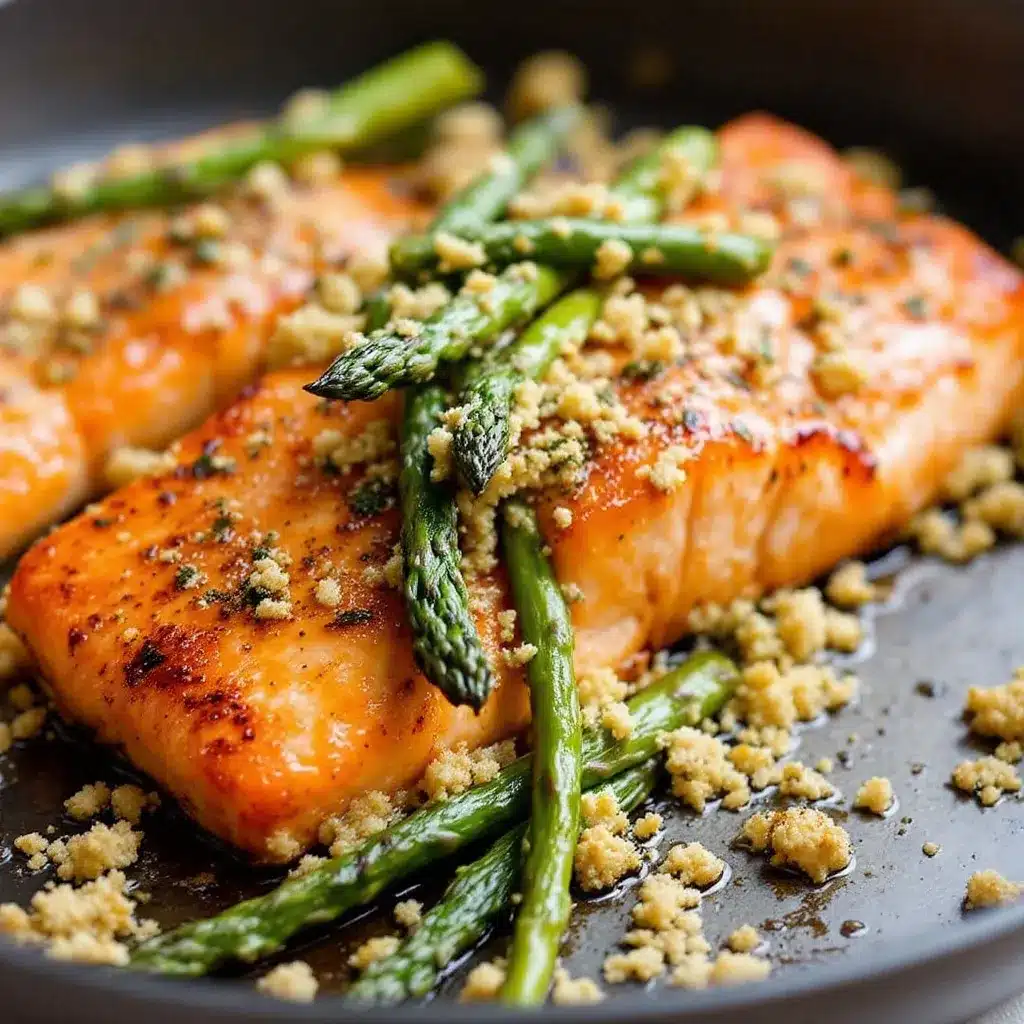
Alright, let’s get cooking. Follow these steps and you’ll have dinner on the table in no time.
- Preheat your oven to 400°F (200°C). Give it a good 10-15 minutes to come to temperature. A hot oven is crucial for getting that nice sear on the salmon and crispy edges on the asparagus.
- Line your baking sheet with parchment paper or foil. This isn’t strictly necessary, but trust me—you’ll thank yourself when cleanup takes 30 seconds instead of 10 minutes.
- Prepare the asparagus. Rinse the asparagus and snap off the woody ends. They’ll naturally break where the tender part begins—usually about an inch or two from the bottom. If your asparagus is particularly thick, you can peel the bottom inch with a vegetable peeler for extra tenderness.
- Season the asparagus. Spread the trimmed asparagus on one side of your baking sheet. Drizzle with 2 tablespoons of olive oil and a generous pinch of salt and pepper. Toss to coat evenly, then spread them out in a single layer.
- Prepare the salmon. Pat your salmon fillets dry with paper towels. This step is important—wet salmon won’t get that nice golden crust. Place the fillets on the other side of the baking sheet, skin-side down if they have skin. Season generously with salt and pepper.
- Make the garlic butter. In a small bowl, melt 4 tablespoons of unsalted butter. Stir in the 4 minced garlic cloves. If you want a little extra flavor, you can add a pinch of red pepper flakes or some dried herbs here.
- Brush the garlic butter. Using a pastry brush or a spoon, brush the garlic butter mixture over the salmon fillets and the asparagus. Make sure everything gets a good coating. Don’t worry if some butter pools on the pan—it’ll help everything cook evenly.
- Roast for 12-15 minutes. The exact time depends on the thickness of your salmon and how well-done you like it. For medium-rare (still slightly translucent in the center), aim for 12 minutes. For well-done, go for 15. The asparagus should be tender and slightly charred at the tips.
- Check for doneness. The salmon should flake easily with a fork and register 125°F (52°C) for medium-rare or 135°F (57°C) for medium. The asparagus should be fork-tender but still have a little bite.
- Rest for 2 minutes. Let everything rest on the pan for a couple of minutes before serving. This allows the juices to redistribute and makes the salmon even more tender.
- Garnish and serve. Sprinkle with fresh parsley, dill, or chives if you have them. Serve straight from the pan or transfer to a platter for a prettier presentation.
A quick note: if your salmon fillets are on the thinner side (like 1 inch or less), check them at the 10-minute mark. Thin fillets cook fast and you don’t want to overcook them. If they’re thicker (1.5 inches or more), you might need an extra 2-3 minutes.
Cooking Tips & Techniques
I’ve made this recipe more times than I can count, and I’ve learned a few things along the way. Here’s what I wish someone had told me the first time.
Don’t crowd the pan. If your baking sheet is too small, the asparagus will steam instead of roast. You want them in a single layer with a little space between each stalk. If you’re feeding a crowd, use two pans.
Room temperature salmon cooks more evenly. Take your salmon out of the fridge about 15 minutes before cooking. Cold salmon straight from the fridge will cook unevenly—the outside will be done before the center gets warm.
Watch the garlic. Minced garlic can burn quickly at 400°F. If you’re worried about it, you can add the garlic butter halfway through cooking instead of at the beginning. I’ve burned my fair share of garlic butter, and let me tell you—burnt garlic tastes bitter and sad. Don’t make my mistake.
Use a thermometer. Honestly, this is the best investment you can make for cooking salmon. A simple instant-read thermometer takes all the guesswork out of doneness. Salmon is perfectly cooked at 125°F for medium-rare or 135°F for medium. No more dry, overcooked fish.
Flip the asparagus halfway through. About 6-7 minutes in, give the asparagus a quick toss. This ensures even cooking and helps them get those beautiful charred spots.
Patience is a virtue. I know it’s tempting to check on the salmon every few minutes, but try to resist. Every time you open the oven door, you let heat escape and extend the cooking time. Trust the process.
Variations & Adaptations
This recipe is incredibly versatile. Here are some ways to switch it up based on what you have on hand or what you’re in the mood for.
Dietary Variations:
- Dairy-Free: Substitute the butter with olive oil or a high-quality vegan butter. The flavor will be slightly different, but it’s still delicious.
- Low-Carb/Keto: This recipe is already naturally low in carbs and keto-friendly. The asparagus has minimal carbs, and the salmon is packed with healthy fats.
- Gluten-Free: This recipe is naturally gluten-free. Just double-check your butter and seasoning to make sure they haven’t been processed in a facility that handles gluten.
Flavor Variations:
- Lemon Herb: Add the zest of one lemon and a tablespoon of fresh dill or parsley to the garlic butter. If you have a lemon, squeeze it over the finished dish for brightness.
- Spicy: Add 1/2 teaspoon of red pepper flakes or a drizzle of sriracha to the garlic butter. The heat pairs beautifully with the richness of the salmon.
- Honey Garlic: Add 1 tablespoon of honey to the garlic butter for a sweet-savory glaze. This is my personal favorite variation—the honey caramelizes in the oven and creates the most incredible crust.
Vegetable Substitutions:
- No asparagus? Try green beans, broccoli florets, or zucchini slices. Just adjust the cooking time based on the vegetable’s density. Green beans and broccoli will cook in about the same time as asparagus. Zucchini might need a few minutes less.
- If you’re a fan of asparagus appetizers, you might also enjoy these crispy prosciutto-wrapped asparagus bites—they make a great starter for a special dinner.
Herb Swaps:
- No parsley? Dill, chives, tarragon, or basil all work beautifully. Each brings its own unique flavor profile to the dish.
I once made this with a drizzle of balsamic glaze over the finished dish, and it was incredible. Don’t be afraid to experiment—that’s how the best recipes are born.
Serving & Storage Suggestions
This dish is best served immediately, but here’s how to make the most of it whether you’re eating now or saving some for later.
Serving: Serve the salmon and asparagus straight from the pan for a casual dinner, or transfer to a platter for a more polished presentation. A sprinkle of fresh herbs adds a nice pop of color. If you want to round out the meal, serve it alongside some crusty bread, rice, or a simple green salad. For a special occasion, these perfect scallops with lemon butter sauce would make an elegant starter.
Storage: Leftovers can be stored in an airtight container in the refrigerator for up to 3 days. Keep the salmon and asparagus together—they’ll continue to flavor each other as they sit.
Reheating: The best way to reheat this dish is in the oven at 350°F for about 5-7 minutes, or until warmed through. The microwave works in a pinch, but it can make the salmon dry and the asparagus soggy. If you’re in a hurry, you can also reheat it in a skillet over medium heat with a splash of water or broth.
Freezing: While I don’t recommend freezing the cooked dish (the texture of both the salmon and asparagus will suffer), you can freeze the raw salmon fillets for up to 3 months. Just thaw them in the refrigerator overnight before cooking.
Flavor Development: The flavors actually meld together beautifully overnight. If you have leftovers, try flaking the cold salmon over a salad the next day for an easy lunch. The garlic butter dressing will have soaked into the salmon, making it extra flavorful.
Nutritional Information & Benefits
This recipe isn’t just delicious—it’s genuinely good for you. Here’s a breakdown of what you’re getting in each serving.
Estimated Nutritional Values (per serving, based on 4 servings):
- Calories: 420
- Protein: 35g
- Fat: 28g
- Carbohydrates: 6g
- Fiber: 3g
- Sugar: 2g
- Sodium: 380mg
Health Benefits:
- Salmon is packed with omega-3 fatty acids, which support heart health and brain function. It’s also an excellent source of high-quality protein and vitamin D.
- Asparagus is rich in fiber, folate, and vitamins A, C, and K. It’s also a natural diuretic, which can help reduce bloating.
- Garlic has been shown to boost the immune system and has anti-inflammatory properties.
- Butter (in moderation) provides fat-soluble vitamins A, D, E, and K, and adds richness that helps you feel satisfied.
Dietary Considerations: This recipe is naturally gluten-free, low-carb, and keto-friendly. It’s also high in protein and healthy fats, making it a great option for anyone watching their blood sugar or following a paleo diet. If you’re dairy-free, simply swap the butter for olive oil.
Conclusion
This one-pan garlic butter salmon with asparagus is the kind of recipe that makes you feel like you’ve hacked the system. It’s fast enough for a busy Tuesday, fancy enough for a dinner party, and simple enough that you don’t need to think too hard about it. The salmon comes out perfectly flaky, the asparagus gets those gorgeous charred edges, and that garlic butter sauce ties everything together in the most satisfying way.
I love this recipe because it reminds me that cooking doesn’t have to be complicated to be good. Sometimes the best meals come from the simplest combinations—a good piece of fish, some fresh vegetables, and a little butter and garlic. That’s it. That’s all you need.
Now I want to hear from you. Have you tried this recipe? Did you add your own twist? Drop a comment below and let me know how it turned out. And if you’re looking for more easy weeknight dinners, don’t forget to browse the full recipe collection for more inspiration. Happy cooking!
Frequently Asked Questions
Can I use frozen salmon for this recipe?
Yes, but you’ll need to thaw it completely first. Place the frozen fillets in the refrigerator overnight, or submerge them in cold water for about 30 minutes. Pat them dry before cooking, and you’re good to go.
Do I need to flip the salmon during cooking?
Nope! That’s the beauty of this recipe—everything cooks together on one pan without any flipping. The oven’s dry heat does all the work, giving you perfectly cooked salmon with a nice golden crust.
Can I add other vegetables to the pan?
Absolutely. Broccoli, green beans, zucchini, or cherry tomatoes all work well. Just keep in mind that different vegetables have different cooking times. If you’re adding something denser like carrots or potatoes, you’ll need to give them a head start in the oven before adding the salmon and asparagus.
How do I know when the salmon is done?
The most reliable way is to use an instant-read thermometer. Salmon is perfectly cooked at 125°F (52°C) for medium-rare or 135°F (57°C) for medium. If you don’t have a thermometer, look for the fish to flake easily with a fork and have a slightly translucent center for medium-rare.
What if I don’t have fresh garlic?
Fresh garlic really does make a difference in this recipe, but if you’re in a pinch, you can use 1 teaspoon of garlic powder instead. Just mix it into the melted butter before brushing it over the salmon and asparagus. It won’t be quite as punchy, but it’ll still be delicious.
Pin This Recipe!
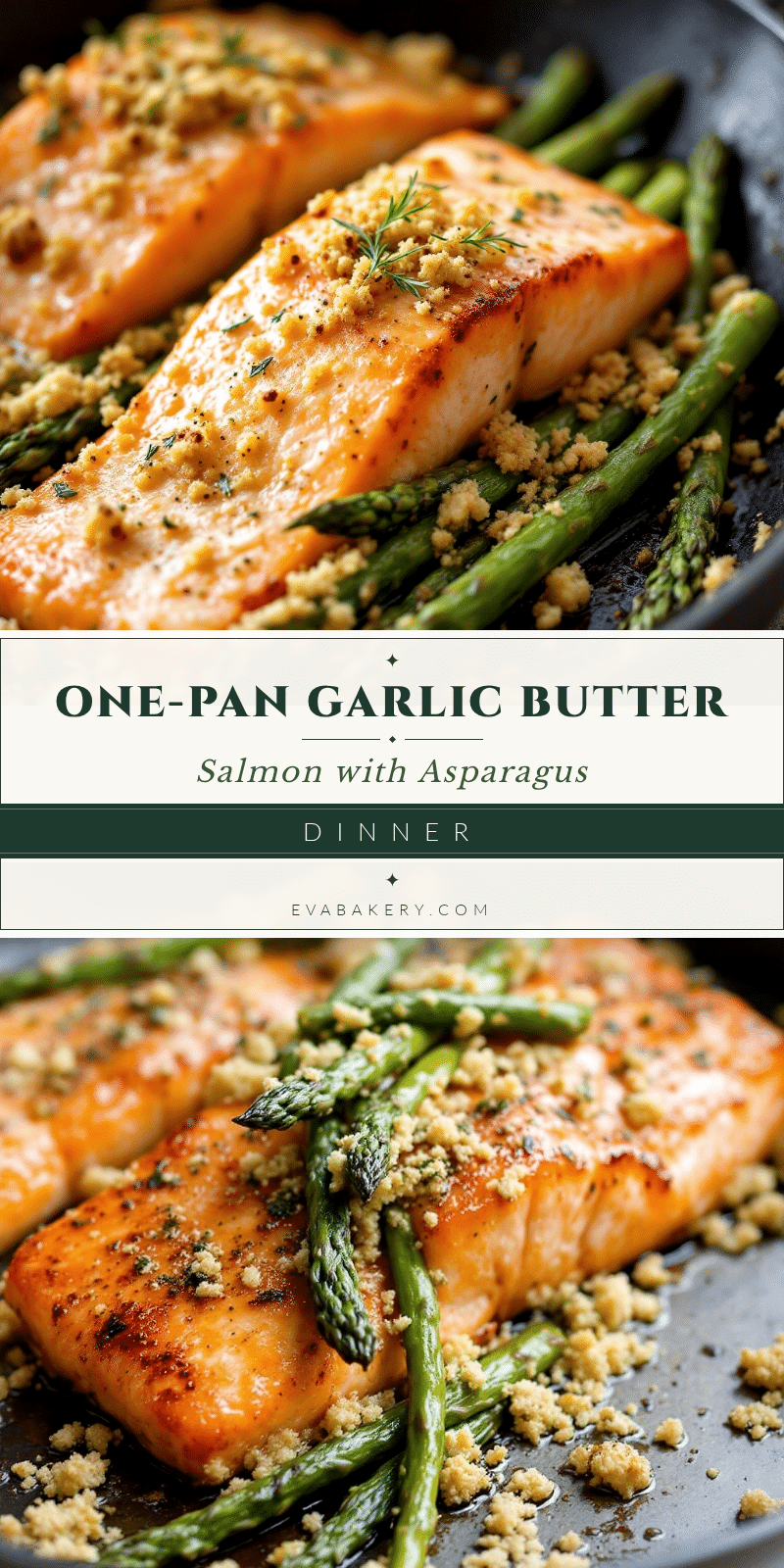
Easy One-Pan Garlic Butter Salmon with Asparagus Recipe
This one-pan garlic butter salmon with asparagus is a quick and easy weeknight dinner that requires minimal effort and delivers maximum flavor. The salmon comes out perfectly flaky, the asparagus gets beautifully charred, and the garlic butter sauce ties everything together.
- Prep Time: 10 minutes
- Cook Time: 15 minutes
- Total Time: 25 minutes
- Yield: 4 servings 1x
- Category: Main Course
- Cuisine: American
Ingredients
- 4 salmon fillets (about 6 ounces each)
- 1 bunch asparagus (about 1 pound, trimmed)
- 4 tablespoons unsalted butter, melted
- 4 cloves garlic, minced
- 2 tablespoons olive oil
- Salt and black pepper to taste
- Optional: fresh parsley, dill, or chives for garnish
Instructions
- Preheat your oven to 400°F (200°C).
- Line your baking sheet with parchment paper or foil.
- Rinse the asparagus and snap off the woody ends.
- Spread the trimmed asparagus on one side of your baking sheet. Drizzle with 2 tablespoons of olive oil and a generous pinch of salt and pepper. Toss to coat evenly, then spread them out in a single layer.
- Pat your salmon fillets dry with paper towels. Place the fillets on the other side of the baking sheet, skin-side down if they have skin. Season generously with salt and pepper.
- In a small bowl, melt 4 tablespoons of unsalted butter. Stir in the 4 minced garlic cloves.
- Using a pastry brush or a spoon, brush the garlic butter mixture over the salmon fillets and the asparagus.
- Roast for 12-15 minutes. For medium-rare, aim for 12 minutes. For well-done, go for 15.
- Check for doneness: the salmon should flake easily with a fork and register 125°F (52°C) for medium-rare or 135°F (57°C) for medium. The asparagus should be fork-tender.
- Let everything rest on the pan for 2 minutes before serving.
- Garnish with fresh parsley, dill, or chives if desired. Serve straight from the pan or transfer to a platter.
Notes
If your salmon fillets are thin (1 inch or less), check at 10 minutes. For thicker fillets (1.5 inches or more), add 2-3 minutes. Don’t crowd the pan; use two pans if needed. Let salmon come to room temperature for 15 minutes before cooking for even cooking. Watch the garlic to prevent burning; add halfway through if concerned. Flip asparagus halfway through for even charring.
Nutrition
- Serving Size: 1 serving
- Calories: 420
- Sugar: 2
- Sodium: 380
- Fat: 28
- Saturated Fat: 10
- Carbohydrates: 6
- Fiber: 3
- Protein: 35
Keywords: salmon, asparagus, garlic butter, one-pan, easy dinner, weeknight dinner, healthy, low-carb, keto