That first crunch—the crisp snap of a Honeycrisp apple giving way under my son’s little teeth—still takes me straight to a Tuesday afternoon last March. He was standing on a stool next to me, one hand gripping a wooden skewer, the other clutching a handful of green grapes. “Mama, look, it’s a rainbow!” he shouted, juice dripping down his chin. I wasn’t trying to be creative that day. I was just tired. Tired of the 3 p.m. slump, tired of the begging for chips, tired of the same old apple slices that ended up dry and forgotten on the plate. So I grabbed what was in the fridge—some strawberries, a pineapple that was finally ripe, some blueberries that were about to turn—and started threading them onto sticks. It wasn’t a plan. It was survival. But something clicked in that moment. The bright colors, the hands-on activity, the way he actually ate the fruit without a single complaint. These Easy Rainbow Fruit Kabobs for After-School Snacks became our thing. Not because they’re fancy or complicated, but because they solve a very real problem: how do you get hungry kids to eat fruit when all they want is sugar and salt? The answer, honestly, is to make it fun. And these kabobs? They deliver every single time.
I’ve made hundreds of these over the past year. For playdates, for birthday parties, for those chaotic weekday afternoons when homework is piling up and everyone is hangry. They’ve never failed me. There’s something about the skewer itself—the way it turns fruit into a treat, the way kids can build their own, the way the colors pop on a plate. It’s not just a snack. It’s an activity. It’s a conversation starter. It’s a way to get kids in the kitchen without a fight. And honestly? It’s the only snack I’ve ever made that my picky eater and my adventurous eater both agree on. So if you’re looking for a way to survive the after-school hours with your sanity intact, these rainbow fruit kabobs are your answer.
Why You’ll Love This Recipe
Let me tell you why these kabobs have earned a permanent spot in my weekly rotation. They’re not just pretty—they’re practical, and that’s what matters when you’re juggling a million things at once.
- Quick & Easy: These come together in under 15 minutes. No cooking, no baking, no complicated steps. Just wash, chop, and thread. Perfect for those days when the kids are already asking “what’s for snack?” before you’ve even put your bag down.
- Simple Ingredients: You don’t need to make a special trip to the store. Whatever fruit you have in your fridge will work. I’ve made these with everything from mango to kiwi to leftover melon. The rainbow is just a guideline, not a rule.
- Perfect for After-School Snacks: This is the ultimate after-school solution. It’s hands-on, it’s engaging, and it gives kids something to look forward to after a long day of sitting still and following rules. They can even help make their own.
- Crowd-Pleaser: I’ve served these at birthday parties, playdates, and even a few adult gatherings. Kids love the fun factor, and adults love that they’re actually eating fruit. It’s a win-win.
- Unbelievably Delicious: When you combine sweet strawberries, tangy pineapple, juicy grapes, and creamy banana on one stick, magic happens. The flavors complement each other perfectly, and the texture contrast is chef’s kiss.
What makes these different from every other fruit kabob recipe out there? It’s the little things. The way I soak the wooden skewers so they don’t splinter. The trick to keeping bananas from browning. The perfect order of threading for maximum visual impact. I’ve tested this dozens of times to get it just right. This isn’t just another version—it’s my best version, born from trial and error and a lot of hungry kids.
Honestly, these kabobs are the kind of snack that makes you feel like a good parent without actually trying that hard. And isn’t that what we all need? A win that doesn’t require a lot of effort. A moment of connection over something simple and colorful. A way to turn a mundane Tuesday into something a little bit special.
What Ingredients You Will Need
This recipe uses simple, wholesome ingredients that you probably already have in your kitchen. The beauty of these kabobs is their flexibility—you can swap fruits based on what’s in season or what’s on sale. Here’s what I typically use:
For the Rainbow Fruit Kabobs:
- Strawberries: About 1 cup, hulled and halved. Look for bright red, fragrant berries. If they’re not in season, frozen strawberries (thawed and patted dry) work in a pinch, but fresh is definitely better for texture.
- Pineapple: 1 cup, cut into 1-inch chunks. Fresh pineapple is ideal, but canned pineapple chunks (drained well) are a great shortcut. I prefer Dole’s canned pineapple for consistent sweetness.
- Cantaloupe or Honeydew: 1 cup, cut into 1-inch cubes. Orange melon adds that beautiful orange hue to the rainbow. In summer, I use fresh melon from the farmer’s market. In winter, I look for pre-cut melon at the grocery store.
- Red or Green Grapes: 1 cup, stemmed. Grapes are the perfect pop-in-your-mouth size. Red grapes add a beautiful purple tone, while green grapes bring a bright green. I use whichever I have on hand.
- Blueberries: 1 cup, fresh. These add that gorgeous deep blue-purple that completes the rainbow. Look for firm, plump berries. Avoid any that are mushy or leaking juice.
- Bananas: 1-2, cut into 1-inch rounds. Bananas add creaminess and a mild sweetness. The trick is to use slightly underripe bananas—they hold up better on the skewer. I’ll share more tips on preventing browning in the preparation section.
- Kiwi: 1-2, peeled and cut into rounds or wedges. Kiwi adds a beautiful green color and a tangy-sweet flavor. It’s not essential, but it really rounds out the rainbow.
Optional Add-Ins:
- Mango: Adds a tropical sweetness and beautiful golden color. I use frozen mango chunks (thawed) when fresh isn’t available.
- Blackberries: Another option for the purple part of the rainbow. They’re a bit softer than blueberries, so handle gently.
- Apple: Cut into cubes and tossed with a little lemon juice to prevent browning. Adds a nice crunch.
- Mini Marshmallows: Okay, this isn’t fruit, but my kids love adding a couple for a sweet surprise. Use sparingly!
For the Skewers:
- Wooden Skewers: 6-inch or 8-inch skewers work best. Soak them in water for 10-15 minutes before threading to prevent splintering. You can also use reusable metal skewers if you have them.
- Optional: Yogurt Dip or Chocolate Dip: Not necessary, but a small bowl of Greek yogurt or melted dark chocolate takes these kabobs to the next level. I’ll share my favorite dip recipes in the variations section.
Ingredient Substitution Guidance: The beauty of this recipe is its flexibility. No strawberries? Use raspberries. No pineapple? Try peaches or nectarines. No blueberries? Blackberries or even chopped dark chocolate work. The goal is color and variety, not strict adherence to a specific fruit list. For a lower-sugar option, use more berries and less tropical fruit. For a more filling snack, add cubes of cheese or ham between the fruit pieces.
Equipment Needed
You don’t need much for this recipe, which is part of its appeal. Here’s what you’ll need:
- Wooden or Metal Skewers: I prefer 6-inch wooden skewers for little hands. They’re the perfect size for a small snack. If you’re using wooden skewers, soak them in water for at least 10 minutes before using to prevent splintering. I learned this the hard way after my son got a splinter in his thumb. Metal skewers are reusable and don’t require soaking, but they can be slippery with fruit.
- Cutting Board: A large, stable cutting board makes prep easy. I use a bamboo board that doesn’t dull my knives.
- Sharp Knife: A good chef’s knife or paring knife is essential for cutting fruit into uniform pieces. Dull knives are dangerous—they slip more easily. Keep yours sharp.
- Melon Baller or Small Cookie Scoop: Optional, but helpful for making uniform fruit balls. My kids love using the melon baller—it feels like a toy to them.
- Paper Towels: For patting fruit dry. Wet fruit makes the kabobs slippery and can cause the fruit to slide around on the skewer.
- Serving Platter: A large, flat platter or sheet pan works best for arranging the finished kabobs. I use a white platter to make the colors pop.
Budget-Friendly Options: Don’t have wooden skewers? You can use sturdy toothpicks for mini kabobs. No melon baller? Just cut the fruit into cubes with a knife. No fancy platter? A clean baking sheet works perfectly. The equipment doesn’t matter—the fun does.
Preparation Method
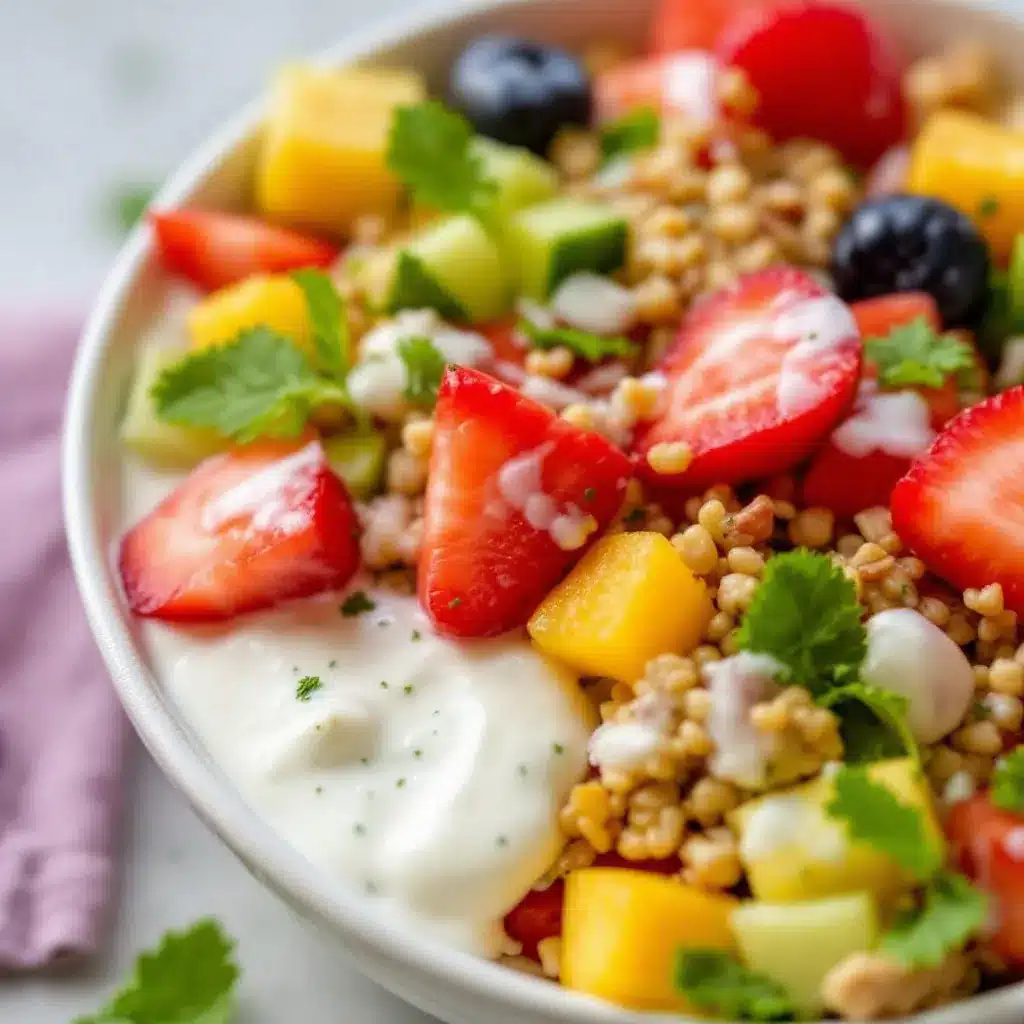
Alright, let’s get to the fun part. Here’s how to make these rainbow fruit kabobs step by step. Trust me, it’s easier than you think.
- Soak the Skewers (10 minutes before starting): Place your wooden skewers in a shallow dish of water. Let them soak for at least 10 minutes. This prevents splintering when you thread the fruit. If you’re using metal skewers, skip this step. (Pro tip: I keep a container of pre-soaked skewers in my fridge for busy days. They last for weeks.)
- Wash and Prep the Fruit (5 minutes): Rinse all your fruit under cold water. Pat everything dry with paper towels—this is crucial. Wet fruit makes the kabobs slippery and can cause the fruit to slide around. Hull the strawberries and cut them in half. Cut the pineapple into 1-inch chunks. Cut the melon into 1-inch cubes. Stem the grapes. Peel and slice the kiwi into rounds or wedges. Cut the banana into 1-inch rounds. (Pro tip: For the banana, cut it slightly thicker than the other fruits—it’s softer and needs more stability on the skewer.)
- Prevent Banana Browning (2 minutes): This is my secret weapon. Toss the banana slices in a little lemon juice or pineapple juice. Just a splash—enough to coat them lightly. This prevents oxidation and keeps them looking fresh for hours. You can also use a commercial fruit freshener like Fruit-Fresh, but lemon juice works just fine. (Pro tip: Don’t skip this step if you’re making these ahead of time. I’ve learned this the hard way—brown bananas are not appetizing.)
- Arrange Your Fruit (2 minutes): Set up a little assembly line. Group each fruit type together in the order of the rainbow: red (strawberries), orange (cantaloupe), yellow (pineapple), green (kiwi or green grapes), blue (blueberries), purple (red grapes). This makes the assembly process faster and more fun, especially if kids are helping.
- Thread the Fruit (5-10 minutes): Now for the fun part. Take a skewer and start threading. I like to follow the rainbow order, but you can mix it up. Here’s my preferred order for visual impact:
– Start with a strawberry (red)
– Add a cantaloupe cube (orange)
– Add a pineapple chunk (yellow)
– Add a kiwi slice or green grape (green)
– Add a few blueberries (blue)
– End with a red grape (purple)
(Pro tip: Leave a little space at the bottom of the skewer for little hands to hold. About an inch of empty skewer is perfect.) - Repeat Until Done (5 minutes): Continue threading until all the fruit is used. You should get about 8-12 kabobs, depending on the size of your fruit pieces and skewers. (Pro tip: If you have leftover fruit, just serve it on the side. Nothing goes to waste in this house.)
- Arrange on a Platter (2 minutes): Place the finished kabobs on a large serving platter. Arrange them in a rainbow pattern if you’re feeling fancy, or just pile them up. They look beautiful either way. (Pro tip: If you’re serving these at a party, place them upright in a tall glass or jar for a stunning centerpiece.)
- Serve Immediately or Refrigerate: These are best served fresh, but you can make them up to 2 hours ahead. Store them in an airtight container in the refrigerator. If storing, place a damp paper towel over the top to keep the fruit from drying out. (Pro tip: Don’t store them overnight—the fruit will release moisture and the kabobs will get soggy.)
Sensory Cues: When you’re threading the fruit, listen for that satisfying “pop” as the skewer goes through each piece. The fruit should feel firm but give slightly under pressure. If it’s too hard, it will crack the skewer. If it’s too soft, it will fall apart. You want that perfect sweet spot where the fruit is ripe but still holds its shape.
Cooking Tips & Techniques
I’ve made these kabobs more times than I can count, and I’ve learned a few things along the way. Here are my best tips for perfect results every time.
The Splinter Problem: I learned this one the hard way. My son got a splinter from a dry wooden skewer, and let me tell you, that was not a fun afternoon. Soak your wooden skewers for at least 10 minutes before using. I keep a container of pre-soaked skewers in my fridge now—it’s a game-changer. If you forget to soak them, just run them under warm water for 30 seconds. It’s not as effective, but it helps.
The Banana Browning Issue: Bananas are the divas of the fruit world. They brown at the slightest provocation. The lemon juice trick works, but here’s another tip: use slightly underripe bananas. They’re firmer and less prone to browning. Also, thread the banana pieces last, right before serving. This minimizes their exposure to air.
The Slippery Fruit Problem: Wet fruit is a nightmare to thread. Pat everything dry with paper towels before you start. This includes canned fruit—drain it well and pat it dry. Trust me, you don’t want to be chasing blueberries around your cutting board.
The Uniformity Trick: Cut your fruit into roughly the same size pieces. This ensures even threading and a more polished look. I use a melon baller for melon and a small cookie scoop for pineapple. It’s not necessary, but it makes the kabobs look professional.
The Timing Strategy: If you’re making these for a party or a busy afternoon, prep the fruit ahead of time. Wash, cut, and store each fruit type separately in airtight containers in the fridge. Then thread the kabobs right before serving. This saves time and keeps the fruit fresh. I do this on Sunday afternoons for the week ahead—it’s a lifesaver.
My Biggest Failure: I once tried to make these kabobs with frozen fruit. Don’t do it. The fruit was mushy, the skewers slipped, and the whole thing was a mess. Frozen fruit is great for smoothies, but not for kabobs. Stick with fresh fruit for the best results. Learn from my mistake.
Variations & Adaptations
One of the best things about this recipe is how adaptable it is. Here are some of my favorite variations.
Seasonal Variations: In spring, use strawberries, kiwi, and mango. In summer, go with watermelon, peaches, and blackberries. In fall, try apple, pear, and pomegranate seeds. In winter, use citrus segments, banana, and kiwi. The rainbow changes with the seasons, and that’s part of the fun.
Dietary Adaptations: For a lower-sugar version, focus on berries and skip the tropical fruits. For a more filling snack, add cubes of cheese (cheddar or mozzarella work great) or ham between the fruit pieces. For a vegan option, skip any animal-based add-ins and use a plant-based yogurt dip. For a gluten-free option, these are naturally gluten-free—just make sure any dips or add-ins are certified gluten-free.
Flavor Twists: Try a tropical version with mango, pineapple, kiwi, and coconut flakes. Or a berry version with strawberries, blueberries, blackberries, and raspberries. For a fall-inspired version, use apple, pear, and pomegranate with a drizzle of honey. My personal favorite is the tropical version—it feels like a vacation on a stick.
Dip Options: These kabobs are delicious on their own, but dips take them to the next level. Try Greek yogurt with a drizzle of honey, melted dark chocolate (let it cool slightly before serving), or a simple peanut butter sauce (peanut butter thinned with a little milk). For a fun party option, set up a dip bar with several options.
Personal Variation: My kids love when I add a few mini marshmallows to the skewers. It’s not exactly healthy, but it makes snack time feel like a treat. I also sometimes drizzle the finished kabobs with a little melted white chocolate for special occasions. It’s indulgent, but hey, we all need a little sweetness sometimes.
Serving & Storage Suggestions
These rainbow fruit kabobs are best served fresh, but here’s how to make the most of them.
Serving Temperature: Serve these at room temperature or slightly chilled. If you’re serving them at a party, arrange them on a platter with a bowl of yogurt dip in the center. For a fun presentation, stand them upright in a tall glass or mason jar. They look like a bouquet of fruit, and kids love it.
Complementary Dishes: These kabobs pair beautifully with other light snacks. Try them alongside some fluffy mini quiches for a brunch spread, or with crispy prosciutto-wrapped asparagus bites for a more elegant party. For a simple after-school snack, serve them with a glass of milk or a fruit smoothie. If you’re feeling festive, pair them with a refreshing champagne punch for a grown-up gathering.
Storage Instructions: Store leftover kabobs in an airtight container in the refrigerator for up to 24 hours. Place a damp paper towel over the top to keep the fruit from drying out. Don’t store them longer than that—the fruit will release moisture and the kabobs will get soggy. If you have leftover fruit that’s not on skewers, store it separately and use it for smoothies or fruit salad.
Reheating: These are meant to be served cold or at room temperature, so no reheating is needed. If you’ve stored them in the fridge, let them sit at room temperature for 10-15 minutes before serving. This takes the chill off and brings out the fruit’s natural sweetness.
Flavor Development: These kabobs are best eaten fresh, but the flavors do meld together slightly after a few hours in the fridge. The fruit releases some juice, which creates a subtle syrup that coats the other pieces. It’s not bad—just different. If you’re making them ahead, I recommend serving them within 2 hours for the best texture.
Nutritional Information & Benefits
These rainbow fruit kabobs are as healthy as they are fun. Here’s what you’re getting in each serving.
Estimated Nutritional Values (per kabob, using a variety of fruits):
- Calories: 60-80
- Carbohydrates: 15-20g
- Fiber: 2-3g
- Sugar: 10-14g (natural fruit sugars)
- Vitamin C: 30-50% of daily value
- Vitamin A: 10-20% of daily value
- Potassium: 150-200mg
Health Benefits of Key Ingredients: Strawberries are packed with vitamin C and antioxidants. Pineapple contains bromelain, which aids digestion. Blueberries are loaded with brain-boosting flavonoids. Bananas provide potassium for muscle function. Kiwi offers more vitamin C than an orange. Together, they create a nutrient-dense snack that supports immune health, digestion, and energy levels.
Dietary Considerations: These kabobs are naturally gluten-free, dairy-free, vegan, and nut-free (unless you add nut-based dips). They’re low in fat and sodium, making them a heart-healthy choice. For a lower-sugar option, focus on berries and skip the tropical fruits. Always check labels on any dips or add-ins for potential allergens.
Personal Wellness Perspective: I love that these kabobs make healthy eating feel like a treat. My kids don’t think of them as “healthy” snacks—they think of them as fun rainbow sticks. That’s the magic. When we focus on adding colorful, whole foods to our diet instead of restricting, eating well becomes a joy, not a chore. These kabobs are a small but powerful reminder that healthy food can be exciting.
Conclusion
These Easy Rainbow Fruit Kabobs for After-School Snacks have become a staple in our home for a reason. They’re quick, they’re fun, and they actually get kids to eat fruit without a fight. But more than that, they’ve become a little ritual—a way to connect with my kids after a long day, a moment of creativity and color in the middle of the afternoon chaos. I love watching their faces light up as they build their own rainbow, picking their favorite fruits and arranging them just so. It’s a small thing, but it matters.
I encourage you to make these your own. Swap in your family’s favorite fruits, experiment with different dips, let the kids take the lead. The beauty of this recipe is its flexibility—there’s no wrong way to do it. Whether you’re making them for a birthday party, a playdate, or just a regular Tuesday afternoon, these kabobs are guaranteed to bring a smile to everyone’s face.
So go ahead—grab some skewers, raid your fruit bowl, and make a rainbow. I’d love to hear how it goes. Drop a comment below and tell me what fruits your family loves, or share a photo of your colorful creations. And if you’re looking for more fun snack ideas, check out our full recipe collection for inspiration. Happy snacking!
Frequently Asked Questions
Can I make these fruit kabobs ahead of time?
Yes, you can make them up to 2 hours ahead. Store them in an airtight container in the refrigerator with a damp paper towel over the top to keep the fruit fresh. Don’t make them more than a few hours in advance, as the fruit will release moisture and the kabobs may get soggy.
What fruits work best for rainbow kabobs?
Firm fruits work best—strawberries, pineapple, melon, grapes, and blueberries are my go-to choices. Bananas and kiwi work too, but they’re softer and need to be handled gently. Avoid very soft fruits like raspberries or overly ripe peaches, as they’ll fall apart on the skewer.
How do I keep the bananas from turning brown?
Toss the banana slices in a little lemon juice or pineapple juice before threading. This prevents oxidation and keeps them looking fresh for hours. You can also use a commercial fruit freshener like Fruit-Fresh. Using slightly underripe bananas also helps—they’re firmer and less prone to browning.
Can I use frozen fruit for these kabobs?
I don’t recommend it. Frozen fruit becomes mushy when it thaws, and it won’t hold up well on the skewer. The moisture from thawing also makes the kabobs slippery and messy. Stick with fresh fruit for the best results. If you only have frozen fruit, thaw it completely, pat it very dry, and use it immediately.
What can I serve with these fruit kabobs?
These kabobs are delicious on their own, but they pair beautifully with dips like Greek yogurt with honey, melted dark chocolate, or peanut butter sauce. For a more substantial snack, serve them with cheese cubes, crackers, or a handful of nuts. They also work great as part of a brunch spread or party platter.
Pin This Recipe!
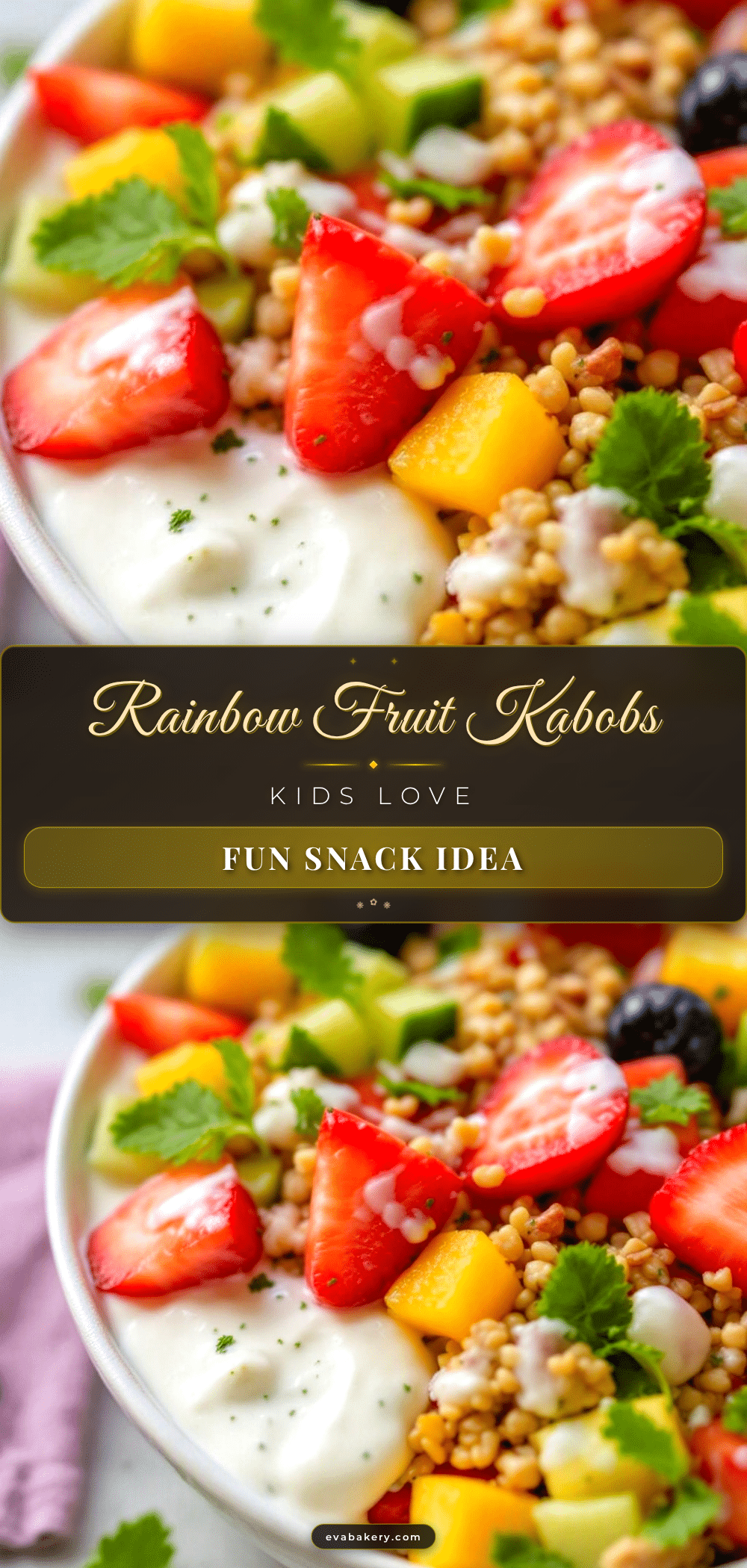
Easy Rainbow Fruit Kabobs: Best After-School Snack
These Easy Rainbow Fruit Kabobs are the perfect after-school snack—quick, fun, and packed with colorful fruits. Kids love building their own rainbow on a stick, making healthy eating a treat.
- Prep Time: 15 minutes
- Cook Time: 0 minutes
- Total Time: 15 minutes
- Yield: 8-12 kabobs 1x
- Category: Snack
- Cuisine: American
Ingredients
- 1 cup strawberries, hulled and halved
- 1 cup pineapple, cut into 1-inch chunks
- 1 cup cantaloupe or honeydew, cut into 1-inch cubes
- 1 cup red or green grapes, stemmed
- 1 cup fresh blueberries
- 1–2 bananas, cut into 1-inch rounds
- 1–2 kiwi, peeled and cut into rounds or wedges
- Optional: mango, blackberries, apple, mini marshmallows
- Wooden or metal skewers (6-inch or 8-inch)
Instructions
- Soak wooden skewers in water for at least 10 minutes to prevent splintering. If using metal skewers, skip this step.
- Wash all fruit under cold water and pat dry with paper towels.
- Hull strawberries and cut in half. Cut pineapple and melon into 1-inch chunks. Stem grapes. Peel and slice kiwi. Cut bananas into 1-inch rounds.
- Toss banana slices in a little lemon juice or pineapple juice to prevent browning.
- Arrange fruit in rainbow order: red (strawberries), orange (cantaloupe), yellow (pineapple), green (kiwi or green grapes), blue (blueberries), purple (red grapes).
- Thread fruit onto skewers in rainbow order, leaving about an inch of empty skewer at the bottom for holding.
- Repeat until all fruit is used, making about 8-12 kabobs.
- Arrange kabobs on a serving platter. Serve immediately or refrigerate for up to 2 hours.
Notes
Soak wooden skewers to prevent splintering. Pat fruit dry to avoid slippery kabobs. Use slightly underripe bananas to prevent browning. Best served fresh, but can be made up to 2 hours ahead. Store in an airtight container with a damp paper towel on top.
Nutrition
- Serving Size: 1 kabob
- Calories: 6080
- Sugar: 1014
- Sodium: 5
- Fat: 1
- Carbohydrates: 1520
- Fiber: 23
- Protein: 1
Keywords: fruit kabobs, rainbow fruit skewers, after-school snack, healthy snack for kids, easy fruit recipe, no-cook snack, colorful fruit sticks