I had been looking for a weeknight salmon recipe that actually delivered on that glossy, restaurant-style finish without turning my kitchen into a sticky disaster zone. For a while, I just accepted that homemade honey garlic salmon was going to be either too watery or end up with burnt garlic bits stuck to the pan. It was one of those small frustrations you learn to live with, you know? I tried a dozen versions—some from blogs, a couple from cookbooks, one that a friend swore by—and every single one fell short in some way. Either the glaze slid right off the fish, or the asparagus came out limp and sad, or the whole thing took forty-five minutes when the recipe promised thirty.
Then, honestly, I stopped looking. I started messing around one Tuesday night with whatever was in the fridge—a filet of salmon, a bunch of asparagus that was about to go soft, and the last bit of honey in the squeeze bottle. I wasn’t trying to invent anything. I just wanted dinner without drama. But something clicked when I let the sauce reduce a little longer than usual, letting it bubble and thicken until it clung to the spoon. The salmon came out lacquered, almost candied at the edges, and the asparagus had just enough char to balance all that sweetness. My husband actually paused mid-bite and said, “Wait, what did you do differently?”
That night, I wrote down the rough measurements on a napkin. I’ve made it maybe twenty times since, tweaking the garlic-to-honey ratio, testing different pan temperatures, figuring out exactly when to add the asparagus so it comes out tender-crisp. This version—the one I’m sharing here—is the one that finally stuck. It’s not flashy. It’s just reliable. And honestly, that’s exactly what I was looking for all along.
Why You’ll Love This Recipe
This sticky honey garlic salmon with asparagus isn’t just another quick dinner idea. It’s the kind of meal that makes you feel like you’ve got your act together, even when you’re barely keeping up. Here’s what makes it stand out from every other salmon recipe you’ve tried:
- Quick & Easy: From start to finish, this comes together in under 30 minutes. The active cooking time is maybe 15 minutes, which means you can pull this off on a Tuesday after a long day without breaking a sweat.
- Simple Ingredients: You probably already have honey, soy sauce, and garlic in your pantry. No obscure condiments, no specialty oils—just real, accessible ingredients that do exactly what they’re supposed to do.
- Perfect for Busy Weeknights: This is the definition of a one-pan meal. The salmon and asparagus cook together, so you’re not juggling multiple pans or timing things separately. Less cleanup, more eating.
- Crowd-Pleaser: I’ve served this to picky kids, skeptical in-laws, and friends who claim they don’t like fish. Every single time, the plate comes back clean. The sweet-savory glaze is basically irresistible.
- Unbelievably Delicious: That sticky, caramelized exterior on the salmon? It’s not from some complicated technique. It’s just a matter of letting the sauce reduce properly and not crowding the pan. The texture is next-level comfort food.
What makes this recipe different from the rest is the balance. Most honey garlic sauces are either too sweet or too salty, and the garlic often burns before the fish is cooked through. I spent weeks testing the ratios and the timing to get it just right. The asparagus isn’t an afterthought here either—it roasts in the same pan, soaking up the extra glaze while developing those gorgeous charred edges. It’s a complete meal that feels intentional, not thrown together.
This is the kind of recipe that makes you close your eyes after the first bite. It’s comfort food reimagined—healthier, faster, but with the same soul-soothing satisfaction. Perfect for impressing guests without stress, or turning a simple Tuesday into something memorable.
What Ingredients You Will Need
This recipe uses simple, wholesome ingredients to deliver bold flavor and satisfying texture without the fuss. Most of these are pantry staples, which is exactly what you want on a busy weeknight.
For the Salmon & Glaze
- 4 (6-ounce) salmon fillets – skin-on or skinless, your call. I prefer skin-on because it gets beautifully crispy and helps hold the fish together. Look for fillets that are roughly the same thickness so they cook evenly.
- 1/3 cup honey – use a runny, liquid honey. Avoid crystallized honey or agave, which won’t give you the same sticky consistency. I like local wildflower honey for its floral notes.
- 3 tablespoons low-sodium soy sauce – regular soy sauce works too, but the glaze will be saltier. Tamari or coconut aminos are great gluten-free swaps.
- 4 cloves garlic, minced – fresh garlic is non-negotiable here. Pre-minced jarred garlic has a different flavor and tends to burn faster. Take the extra 30 seconds to mince it yourself.
- 1 tablespoon rice vinegar – this brightens the glaze and cuts through the richness. Apple cider vinegar works in a pinch.
- 1 tablespoon olive oil – for searing the salmon. Avocado oil is a great substitute with a higher smoke point.
- 1 teaspoon sesame oil – optional, but it adds a lovely nutty depth. Skip it if you don’t have it on hand.
- Pinch of red pepper flakes – just a tiny bit for warmth, not heat. Leave it out if you’re sensitive to spice.
For the Asparagus
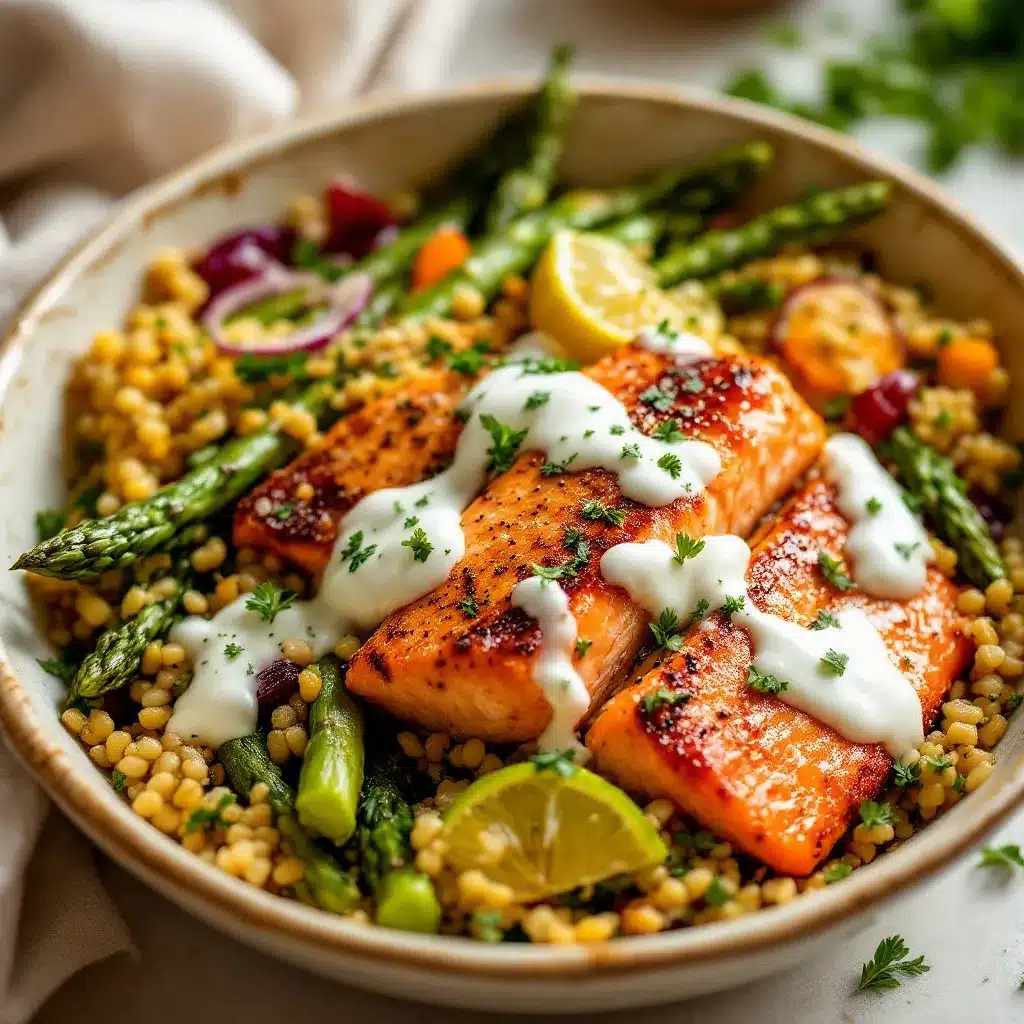
- 1 bunch asparagus (about 1 pound) – look for bright green stalks with tight, closed tips. Thicker spears hold up better to roasting. Trim off the woody ends by snapping them where they naturally break.
- 1 tablespoon olive oil – for coating the asparagus before roasting.
- Salt and black pepper – to taste. I use flaky sea salt for finishing.
- Optional: lemon wedges – for squeezing over the finished dish. A little acidity at the end makes everything pop.
For Garnish
- Sesame seeds – toasted white or black sesame seeds add visual appeal and a subtle crunch.
- Chopped green onions – for freshness and color. Chives work too.
Equipment Needed
You don’t need a fully stocked kitchen to pull this off. Here’s what you’ll need:
- A large oven-safe skillet – cast iron is ideal because it holds heat well and gives you that beautiful sear. A stainless steel skillet works too. Avoid nonstick if possible—you won’t get the same caramelization.
- A sharp knife – for mincing garlic and trimming asparagus. A dull knife makes both tasks frustrating.
- Tongs – for flipping the salmon and moving the asparagus around. I prefer silicone-tipped tongs to avoid scratching the pan.
- A small bowl – for mixing the glaze ingredients together before cooking.
- A cutting board – preferably one that’s dedicated to raw proteins, or give it a good wash between tasks.
- Optional: an instant-read thermometer – if you’re nervous about overcooking salmon, this takes the guesswork out. 125°F for medium, 130°F for medium-well.
If you don’t have an oven-safe skillet, you can sear the salmon in a regular pan and then transfer everything to a baking sheet to finish in the oven. It’s one extra step, but it works perfectly fine. I’ve done it that way more times than I can count.
Preparation Method
Let’s get cooking. This comes together fast, so I recommend reading through the entire method once before you start. Trust me, it helps.
- Preheat your oven to 400°F (200°C). Position the rack in the upper third of the oven. While it’s heating, take the salmon out of the fridge and let it sit at room temperature for about 10 minutes. This helps it cook more evenly.
- Prepare the asparagus. Rinse the asparagus and pat it dry. Snap off the woody ends—they’ll naturally break where the tender part begins. Toss the spears with 1 tablespoon olive oil, a pinch of salt, and a few cracks of black pepper. Set them aside for now.
- Make the glaze. In a small bowl, whisk together the honey, soy sauce, minced garlic, rice vinegar, sesame oil (if using), and red pepper flakes. Set it near the stove so it’s ready to go. The garlic will settle at the bottom, so give it a quick stir right before you use it.
- Season the salmon. Pat the salmon fillets dry with paper towels—this is crucial for getting a good sear. Season both sides with a pinch of salt and pepper. Don’t go overboard on the salt because the soy sauce adds plenty.
- Sear the salmon. Heat 1 tablespoon of olive oil in your oven-safe skillet over medium-high heat. When the oil shimmers (but isn’t smoking), place the salmon fillets skin-side down if they have skin, or presentation-side down if they’re skinless. Let them cook undisturbed for 4 minutes. You want a deep golden crust. Don’t poke or move them—just let them do their thing.
- Flip and glaze. Carefully flip the salmon using tongs. Pour the glaze into the skillet around the fillets (not directly on top, or it’ll burn). Let it bubble for about 30 seconds, then spoon some of the glaze over the tops of the fillets. The sauce should be thickening slightly.
- Add the asparagus. Nestle the seasoned asparagus spears around the salmon in the skillet. Try to keep them in a single layer so they roast evenly. Spoon a little more glaze over the asparagus if there’s enough liquid.
- Transfer to the oven. Place the entire skillet in the preheated oven. Roast for 8-12 minutes, depending on the thickness of your salmon and how well-done you like it. For medium (125°F internal temperature), aim for 8-9 minutes. For medium-well (130°F), go for 10-12 minutes. The asparagus should be tender-crisp with some charred spots.
- Rest and garnish. Remove the skillet from the oven and let it rest for 2-3 minutes. The residual heat will finish cooking the salmon gently. Sprinkle with sesame seeds and chopped green onions. Squeeze a lemon wedge over everything if you’re using it.
- Serve immediately. Transfer the salmon and asparagus to plates or a platter. Spoon any remaining glaze from the pan over the top. This is best enjoyed right away while the salmon is still sticky and the asparagus has that perfect snap.
Cooking Tips & Techniques
I’ve made this recipe enough times to know exactly where things can go wrong. Here are the lessons I learned the hard way, so you don’t have to.
Don’t crowd the pan. If your skillet is too small, the salmon will steam instead of sear. Use a 12-inch skillet if you have one. If you’re doubling the recipe, cook the salmon in batches. I once tried to cram six fillets into a 10-inch pan and ended up with pale, sad fish. Never again.
Watch the garlic. Garlic burns fast, especially in a sweet glaze like this one. That’s why you add the glaze after flipping the salmon, not before. If you add it too early, the garlic will turn bitter and the honey will scorch. Keep the heat at medium-high, not screaming hot.
Let the sauce reduce. The key to that sticky, glossy finish is letting the sauce bubble and thicken in the pan. If you pull it out of the oven too early, the glaze will be thin and runny. Look for it to coat the back of a spoon. If it’s still watery, give it another 2 minutes in the oven.
Use a thermometer. Salmon goes from perfectly cooked to dry and flaky in about 90 seconds. An instant-read thermometer is the best investment you can make for seafood. Insert it into the thickest part of the fillet—125°F for medium, 130°F for medium-well. Once you hit that temp, pull it out immediately.
Timing is everything. Start the asparagus at the same time as the salmon goes into the oven. If you prefer softer asparagus, you can add it 2-3 minutes before the salmon. If you like it crunchier, add it 2-3 minutes after. I like mine with a little bite, so I add it right when the salmon goes in.
One more thing: if your glaze is too thin at the end, you can transfer the salmon and asparagus to a plate and simmer the remaining sauce on the stovetop for a minute or two. It’ll thicken up quickly. Just don’t walk away—it can go from perfect to burnt in seconds.
Variations & Adaptations
This recipe is incredibly forgiving. Here are some ways to make it your own:
- Spicy Honey Garlic Salmon: Add 1-2 teaspoons of sriracha or gochujang to the glaze for a spicy kick. The heat balances the sweetness beautifully. I tried this version on a whim and now it’s my husband’s favorite.
- Low-Carb / Keto-Friendly: Swap the honey for a sugar-free honey substitute or use 2 tablespoons of monk fruit sweetener dissolved in 2 tablespoons of water. The texture won’t be quite as sticky, but the flavor is still fantastic. Serve with extra asparagus or roasted broccoli instead of any starchy sides.
- Gluten-Free: Use tamari or coconut aminos instead of soy sauce. Everything else in the recipe is naturally gluten-free, so this is an easy swap. I’ve tested it with coconut aminos and it’s a little milder, but still delicious.
- Different Vegetables: Not an asparagus fan? Try green beans, broccolini, or snap peas instead. Adjust the roasting time based on the vegetable—green beans might need 10-12 minutes, while snap peas are done in 6-8. I’ve also done this with zucchini slices, and they turn out beautifully caramelized.
- Honey Garlic Chicken Thighs: This glaze works just as well with boneless, skinless chicken thighs. Sear them for 5 minutes per side, then roast for 15-18 minutes at 400°F until they reach 165°F internal temperature. The asparagus can go in for the last 10 minutes of cooking.
- Extra Garlic Lover’s Version: Roast a whole head of garlic alongside the salmon. Slice off the top, drizzle with olive oil, wrap in foil, and pop it in the oven for 30-35 minutes. Squeeze the soft cloves over the finished dish. It’s a game-changer.
Serving & Storage Suggestions
This dish is best served fresh from the oven, but here’s how to make the most of it no matter when you’re eating.
Serving Temperature: Serve the salmon warm, right after it rests. The glaze is at its stickiest and most luscious straight out of the pan. If you let it sit too long, the sauce will start to set and lose that glossy sheen.
What to Serve With It: This is a complete meal on its own, but if you want to round it out, try it with steamed jasmine rice or quinoa to soak up the extra glaze. A simple cucumber salad with rice vinegar and sesame seeds adds a refreshing crunch. For a special occasion, pair it with a crisp white wine like Sauvignon Blanc or a dry Riesling.
Storage: Leftovers keep well in an airtight container in the refrigerator for up to 3 days. The asparagus will soften over time, but the flavor stays great. I don’t recommend freezing this dish—the texture of both the salmon and asparagus suffers significantly.
Reheating: The best way to reheat is in a skillet over medium-low heat with a splash of water or extra soy sauce. Cover the pan and let it steam gently for 3-4 minutes. The microwave works in a pinch, but it’ll dry out the salmon. If you’re using the microwave, cover the plate with a damp paper towel and heat in 30-second bursts.
How Flavors Develop: Honestly, the leftovers are almost better the next day. The salmon absorbs more of the glaze overnight, and the flavors meld together beautifully. I’ve been known to make extra just for lunch the next day. The asparagus won’t be as crisp, but the overall dish is still incredibly satisfying.
Nutritional Information & Benefits
This recipe is packed with nutrients while still feeling indulgent. Here’s what you’re getting in each serving (based on 4 servings):
- Calories: Approximately 420-450 per serving (salmon + asparagus + glaze)
- Protein: 35-38 grams – salmon is one of the best sources of high-quality protein
- Healthy Fats: 22-25 grams – rich in omega-3 fatty acids, which support heart and brain health
- Carbohydrates: 28-30 grams – mostly from the honey and asparagus
- Fiber: 3-4 grams – from the asparagus
- Vitamin C: 12-15% of the daily value – from the asparagus
- Vitamin K: 50-60% of the daily value – asparagus is a powerhouse for bone health
Health Benefits: Salmon is loaded with omega-3s, which are known to reduce inflammation and support cardiovascular health. Asparagus is rich in antioxidants, folate, and fiber. The garlic in the glaze has natural antibacterial properties and may help support immune function. This is a meal that tastes like a treat but works hard for your body.
Dietary Considerations: This recipe is naturally dairy-free and can be made gluten-free with a simple soy sauce swap. It’s also low in added sugar compared to many restaurant versions of honey garlic dishes. If you’re watching your sodium, use low-sodium soy sauce and go easy on the added salt.
Conclusion
This sticky honey garlic salmon with asparagus is the kind of recipe that becomes a regular in your rotation without you even planning it. It’s quick enough for a Tuesday, impressive enough for company, and forgiving enough for a beginner. The glaze does the heavy lifting—turning simple ingredients into something that tastes like you spent hours in the kitchen.
What I love most about this recipe is how adaptable it is. Play with the spice level, swap in different vegetables, use chicken instead of salmon—it all works. The core technique of searing, glazing, and roasting is one you’ll use over and over again once you get the hang of it. And honestly, that sticky, caramelized exterior is worth the extra minute of patience while the sauce reduces.
I’d love to hear how yours turns out. Did you add extra garlic? Swap in broccoli for the asparagus? Leave a comment below and let me know your version. And if you’re looking for more quick weeknight meals, don’t miss my perfect scallops with lemon butter sauce or these crispy prosciutto-wrapped asparagus bites for another elegant yet easy option. Happy cooking!
Frequently Asked Questions
Can I use frozen salmon for this recipe?
Yes, but you need to thaw it completely first. Pat it very dry with paper towels before searing, or the excess moisture will prevent a good crust. I recommend thawing it in the refrigerator overnight for the best texture.
How do I know when the salmon is done without a thermometer?
Look for these visual cues: the flesh should be opaque and flake easily with a fork, and the thickest part should feel slightly firm but still give a little when pressed. If it feels hard, it’s overcooked. When in doubt, pull it out a minute early—it’ll continue cooking from residual heat.
Can I make the glaze ahead of time?
Absolutely. Whisk together the honey, soy sauce, garlic, rice vinegar, sesame oil, and red pepper flakes, then store it in an airtight container in the refrigerator for up to 5 days. Give it a good stir before using, as the garlic will settle at the bottom.
What if I don’t have an oven-safe skillet?
No problem. Sear the salmon in a regular skillet, then transfer everything to a parchment-lined baking sheet. Roast the salmon and asparagus together in the oven at 400°F for 8-12 minutes. The glaze might spread out more on the baking sheet, but the flavor will be the same.
Can I double this recipe for a crowd?
Yes, but cook the salmon in batches if your skillet isn’t large enough. Crowding the pan will steam the fish instead of searing it. Use two skillets if you have them, or cook half the salmon, keep it warm in a low oven, and repeat with the second batch. The glaze recipe can easily be doubled or tripled.
Pin This Recipe!
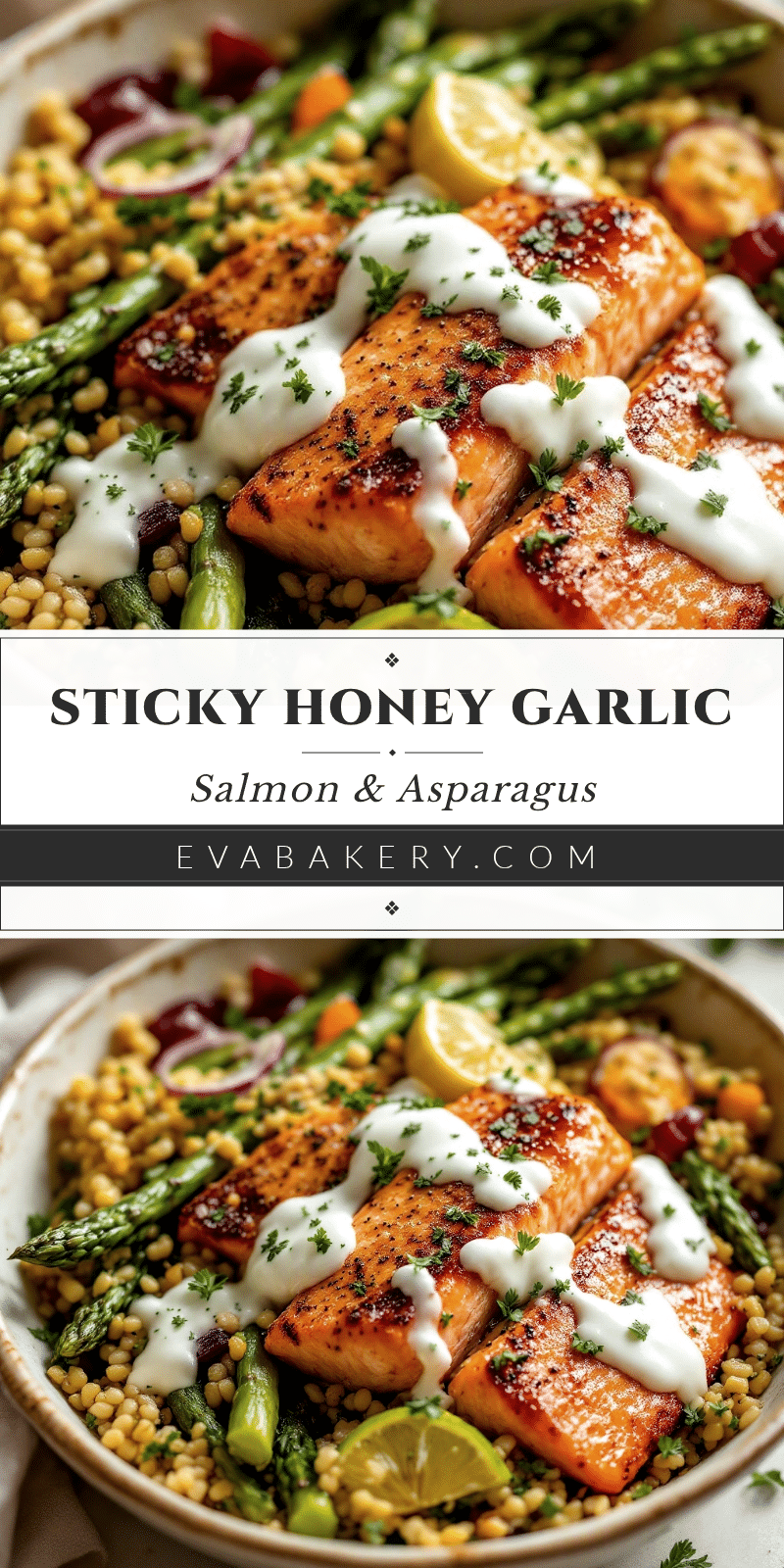
Easy Sticky Honey Garlic Salmon with Asparagus

This sticky honey garlic salmon with asparagus is a quick, one-pan meal that delivers a glossy, restaurant-style finish in under 30 minutes. The sweet-savory glaze caramelizes perfectly on the salmon while the asparagus roasts alongside, making it an ideal weeknight dinner that’s both impressive and effortless.
- Prep Time: 10 minutes
- Cook Time: 15 minutes
- Total Time: 25 minutes
- Yield: 4 servings 1x
- Category: Main Course
- Cuisine: American
Ingredients
- 4 (6-ounce) salmon fillets, skin-on or skinless
- 1/3 cup honey
- 3 tablespoons low-sodium soy sauce
- 4 cloves garlic, minced
- 1 tablespoon rice vinegar
- 1 tablespoon olive oil
- 1 teaspoon sesame oil (optional)
- Pinch of red pepper flakes
- 1 bunch asparagus (about 1 pound), woody ends trimmed
- 1 tablespoon olive oil (for asparagus)
- Salt and black pepper to taste
- Optional: lemon wedges for serving
- Sesame seeds for garnish
- Chopped green onions for garnish
Instructions
- Preheat your oven to 400°F (200°C). Position the rack in the upper third of the oven. Let the salmon sit at room temperature for about 10 minutes.
- Prepare the asparagus: rinse, pat dry, snap off woody ends, and toss with 1 tablespoon olive oil, salt, and pepper. Set aside.
- Make the glaze: in a small bowl, whisk together honey, soy sauce, minced garlic, rice vinegar, sesame oil (if using), and red pepper flakes. Set near the stove.
- Pat salmon fillets dry with paper towels and season both sides with salt and pepper.
- Heat 1 tablespoon olive oil in a large oven-safe skillet over medium-high heat. When the oil shimmers, place salmon fillets skin-side down (or presentation-side down if skinless). Cook undisturbed for 4 minutes until deep golden.
- Flip the salmon carefully using tongs. Pour the glaze into the skillet around the fillets (not directly on top). Let it bubble for about 30 seconds, then spoon some glaze over the tops.
- Nestle the seasoned asparagus spears around the salmon in a single layer. Spoon a little more glaze over the asparagus if possible.
- Transfer the skillet to the preheated oven. Roast for 8-12 minutes, depending on thickness and desired doneness (125°F for medium, 130°F for medium-well). Asparagus should be tender-crisp with charred spots.
- Remove from oven and let rest for 2-3 minutes. Sprinkle with sesame seeds and chopped green onions. Squeeze lemon wedges over if desired.
- Serve immediately, spooning any remaining glaze from the pan over the top.
Notes
Don’t crowd the pan to ensure a good sear. Add the glaze after flipping the salmon to prevent garlic from burning. Let the sauce reduce properly for a sticky finish. Use an instant-read thermometer for perfectly cooked salmon (125°F for medium, 130°F for medium-well). For thinner glaze, simmer remaining sauce on stovetop after removing salmon.
Nutrition
- Serving Size: 1 salmon fillet with
- Calories: 435
- Sugar: 24
- Sodium: 680
- Fat: 23
- Saturated Fat: 4
- Carbohydrates: 29
- Fiber: 3.5
- Protein: 36
Keywords: honey garlic salmon, sticky salmon, salmon with asparagus, one-pan salmon, quick salmon recipe, weeknight dinner, healthy salmon, easy salmon recipe