I ruined pumpkin cinnamon rolls for three straight autumns before I finally understood what they actually needed. Not more pumpkin spice—that was my first mistake, dumping in half a jar like it was doing me a favor. Not even more butter, which honestly felt like the answer to everything back then. The problem was texture. Every batch came out either gummy in the center like undercooked bread pudding or dry on the edges like somebody left a biscuit out overnight. I kept blaming the pumpkin, but the pumpkin was fine. The yeast was fine. I was the problem.
It took a failed sourdough starter—one I almost tossed in the compost bin out of pure frustration—to show me what was missing. That starter, weak and barely bubbling, ended up in a test batch of dough I had zero expectations for. I figured I’d already wasted enough flour that season, what was one more loaf? But something weird happened. The dough felt different. Springier. Less like a wet blanket and more like something that actually wanted to rise. When those rolls came out of the oven, I sat there staring at them for a solid minute before I even touched one. They were fluffy. Actually, genuinely fluffy. Not dense, not gummy, not dry. Just soft in that way that makes you close your eyes without meaning to.
That’s the thing about these fluffy pumpkin spice sourdough cinnamon rolls. They don’t taste like a compromise between healthy and indulgent or like someone tried to make pumpkin bread into a pastry and gave up halfway. They taste like I finally stopped fighting the ingredients and let them do their job. The sourdough starter adds this subtle tang that cuts through the sweetness in a way yeast never could, and the pumpkin puree keeps everything tender without making it soggy. It took me three years and a lot of sad, crumbly failures to get here, but honestly? I’d do it all over again just to watch someone take that first bite and get quiet.
Why You’ll Love This Recipe
Let me tell you why these rolls are different from every other pumpkin cinnamon roll recipe you’ve seen pinned a hundred times. First off, they actually stay soft the next day. Not “soft if you microwave them for exactly twelve seconds” soft. Just soft. The sourdough starter does something to the gluten structure that keeps these rolls tender for days, assuming they last that long in your house.
- No Stand Mixer Required – I’ve made these entirely by hand in a mixing bowl with a wooden spoon. The dough is forgiving enough that you don’t need fancy equipment.
- Make-Ahead Friendly – You can prep these the night before and bake them fresh in the morning. The overnight fermentation actually improves the flavor.
- Real Pumpkin Flavor – Not just pumpkin spice. Actual pumpkin puree adds moisture and a subtle earthiness that balances the cinnamon sugar filling.
- Less Sweet Than Store-Bought – These rolls let the warm spices shine without hitting you with a sugar coma before noon. The cream cheese frosting adds just enough sweetness.
- Perfect for Thanksgiving Morning – While your turkey is brining and your pies are chilling, these rolls make the house smell like autumn in the best way possible.
What really sets this recipe apart is the sourdough fermentation. Most pumpkin cinnamon roll recipes use commercial yeast and end up with that dense, almost wet texture that pumpkin puree tends to create. The sourdough starter breaks down the starches in the pumpkin, making the dough lighter and more digestible. Plus, that subtle tang plays beautifully against the sweet cinnamon filling. It’s not sourdough-forward like bread—it’s just enough to make you wonder what makes these taste so much better than the usual version.
This is the kind of recipe that makes you look forward to cold mornings. The kind where you wake up, preheat the oven, and know that in about twenty minutes your whole kitchen is going to smell like someone bottled fall and sprayed it everywhere. It’s comfort food that actually delivers on the promise.
What Ingredients You Will Need
This recipe uses simple, mostly pantry-friendly ingredients to create something that feels way more complicated than it actually is. I’ve tested this with different brands and substitutions, so I’ll share what works best.
For the Dough:
- All-purpose flour – 3 cups (360g). I use King Arthur for consistent results, but any brand works. Don’t use bread flour here; it makes the rolls too chewy.
- Active sourdough starter – ½ cup (120g), fed and bubbly. If your starter is sluggish, feed it twice before using. Discard starter works in a pinch but gives a stronger tang.
- Pumpkin puree – ½ cup (120g). Not pumpkin pie filling. Libby’s is my go-to because it’s consistently thick and not watery.
- Whole milk – ¼ cup (60ml), warm. You can use 2% or oat milk in a pinch, but whole milk gives the softest texture.
- Unsalted butter – 3 tablespoons (42g), melted and slightly cooled.
- Brown sugar – 2 tablespoons (25g), packed.
- Egg – 1 large, room temperature. Cold eggs will shock the dough and slow fermentation.
- Salt – 1 teaspoon (5g). Don’t skip this—it balances the sweetness and strengthens the dough.
For the Pumpkin Spice Filling:
- Unsalted butter – 4 tablespoons (56g), softened but not melted.
- Brown sugar – ½ cup (100g), packed. Dark brown gives deeper flavor, light brown works fine.
- Granulated sugar – ¼ cup (50g).
- Ground cinnamon – 2 tablespoons (14g). I prefer Vietnamese cinnamon for its intensity.
- Pumpkin pie spice – 1 tablespoon (7g). If you don’t have it, mix 1½ teaspoons cinnamon, 1 teaspoon ginger, ½ teaspoon nutmeg, ¼ teaspoon cloves.
- Pinch of salt – Just a tiny pinch to wake up the flavors.
For the Cream Cheese Frosting:
- Cream cheese – 4 ounces (113g), softened. Full-fat is non-negotiable here for proper texture.
- Unsalted butter – 2 tablespoons (28g), softened.
- Powdered sugar – 1 cup (120g), sifted if it’s lumpy.
- Vanilla extract – 1 teaspoon (5ml). Pure vanilla, not imitation.
- Milk – 1-2 tablespoons (15-30ml), to thin the frosting as needed.
The pumpkin puree does double duty here—it adds moisture and color while the sourdough starter provides lift and flavor. Make sure your puree isn’t watery; if it looks loose, blot it with a paper towel before measuring.
Equipment Needed
You don’t need a professional bakery setup for these rolls, but a few specific tools make the process smoother.
- Large mixing bowl – Anything big enough to hold the dough as it rises. Glass or ceramic works best because they retain heat better than metal.
- Rolling pin – A standard rolling pin is fine. If you don’t have one, a clean wine bottle works surprisingly well.
- 9×13 inch baking dish – Glass or ceramic. Metal pans work too, but glass lets you see the browning on the bottom.
- Kitchen scale – I know, I know, but seriously. Measuring flour by weight changed my baking life. A $15 scale from Amazon will do the job.
- Bench scraper – Helps with cutting the rolls cleanly without squishing them. A sharp knife works, but a scraper is better.
- Plastic wrap or beeswax wraps – For covering the dough during proofing.
- Parchment paper – Line your baking dish for easy cleanup. Trust me on this one.
If you don’t have a rolling pin, I’ve used a mason jar in a pinch. Just wrap it in plastic wrap first. And if you’re cutting rolls with dental floss instead of a knife, you’re already ahead of the game—slide it under the roll, cross the ends over the top, and pull. Cleanest cuts you’ll ever get.
Preparation Method
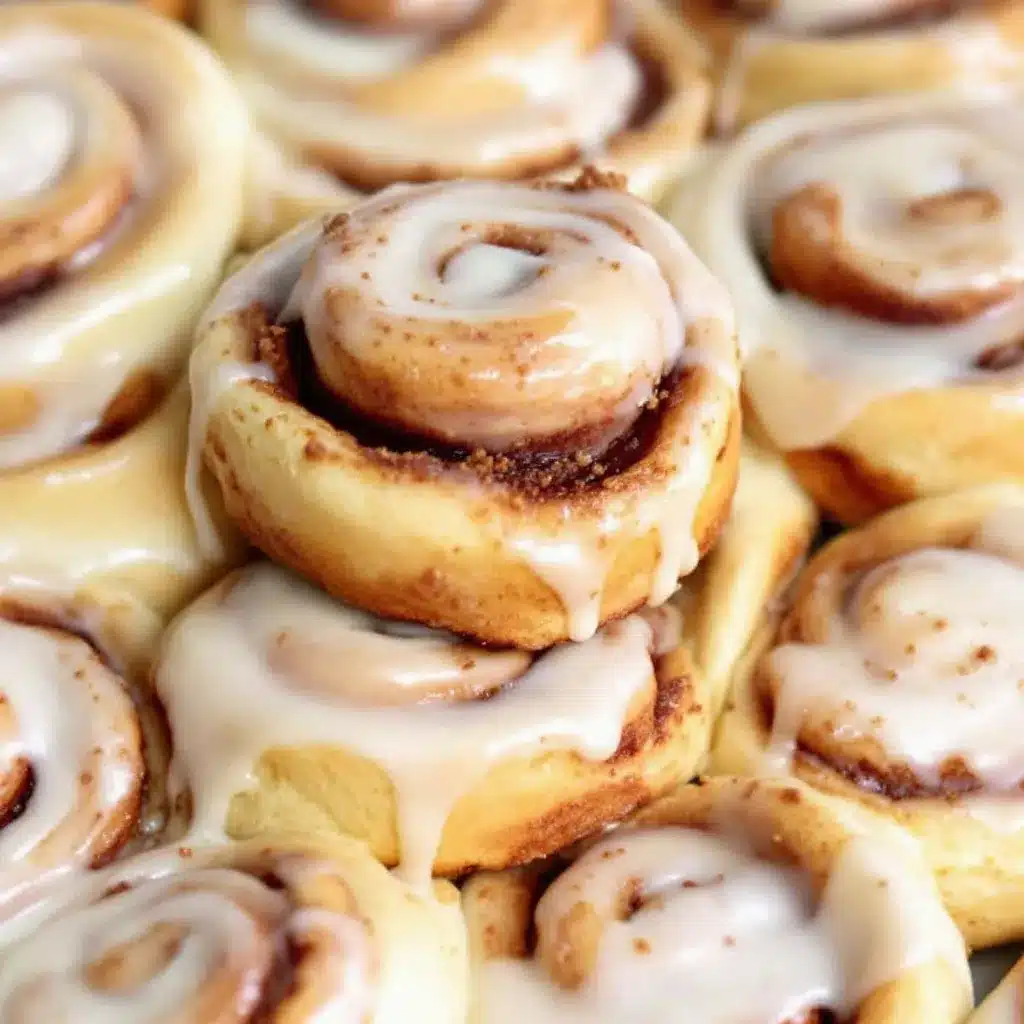
- Feed your starter 6-8 hours before you plan to bake. You want it bubbly and doubled in size. If it passes the float test—drop a spoonful in water and it floats—you’re golden. If it sinks, give it another feeding and wait.
- Mix the dough. In a large bowl, whisk together the flour and salt. In a separate bowl, combine the sourdough starter, pumpkin puree, warm milk, melted butter, brown sugar, and egg. Stir until smooth. Pour the wet ingredients into the dry and mix with a wooden spoon until a shaggy dough forms. It will look rough and a little sticky—that’s normal.
- Knead the dough. Turn it out onto a lightly floured surface and knead for 8-10 minutes. The dough should become smooth and slightly tacky but not sticky. If it’s sticking to your hands like crazy, add flour one tablespoon at a time. If it’s too dry, add milk a teaspoon at a time. You’re looking for that “soft earlobe” texture—you know, that weird but accurate baking description.
- First rise. Place the dough in a lightly oiled bowl, cover with plastic wrap, and let it rise at room temperature for 6-8 hours. It should double in size and feel puffy when you poke it. If your kitchen is cold, put it in your oven with the light on. If it’s warm, check it at 5 hours.
- Make the filling. While the dough rises, mix the softened butter, brown sugar, granulated sugar, cinnamon, pumpkin pie spice, and salt in a small bowl until it forms a paste. Set aside at room temperature.
- Roll out the dough. After the first rise, turn the dough onto a lightly floured surface. Roll it into a rectangle about 12×16 inches and roughly ¼ inch thick. Don’t stress about perfect edges—they’re going to get rolled up anyway.
- Spread the filling. Using an offset spatula or the back of a spoon, spread the cinnamon filling evenly over the dough, leaving a 1-inch border on the long edge farthest from you. The filling should be thick but spreadable.
- Roll it up. Starting from the long edge closest to you, roll the dough tightly into a log. Pinch the seam to seal. Don’t roll too tight or the filling will squeeze out the ends—I learned this the hard way after a spectacular filling explosion.
- Cut the rolls. Using a sharp knife or bench scraper, trim off the uneven ends (baker’s tax). Cut the log into 12 equal pieces, about 1½ inches each. If you want cleaner cuts, use unflavored dental floss.
- Second rise. Arrange the rolls in a parchment-lined 9×13 baking dish, leaving a little space between each. Cover loosely with plastic wrap and let them rise for 2-3 hours at room temperature. They should puff up and touch each other. For overnight rolls, refrigerate them after 1 hour at room temperature, then bake them straight from the fridge in the morning.
- Preheat and bake. About 20 minutes before baking, preheat your oven to 350°F (175°C). Bake the rolls for 25-30 minutes, until golden brown on top and the center rolls feel set when you gently poke them. If the tops brown too quickly, tent with foil at the 20-minute mark.
- Make the frosting. While the rolls bake, beat the cream cheese and butter together until smooth. Gradually add the powdered sugar, then the vanilla. Add milk one tablespoon at a time until the frosting reaches a thick but spreadable consistency.
- Frost and serve. Let the rolls cool for 5-10 minutes before spreading the frosting. If you frost them too early, the frosting will melt into a puddle. Too late, and it won’t spread smoothly. Aim for warm, not hot.
Cooking Tips & Techniques
I’ve made every mistake possible with these rolls so you don’t have to. Here’s what I learned.
Don’t over-flour your work surface. I know the dough feels sticky, but adding too much flour makes the rolls dense. Use just enough to keep it from sticking, and use a bench scraper to lift the dough if it grabs the counter.
Temperature matters more than you think. If your kitchen is cold, the dough will take forever to rise. I’ve had batches take 10 hours in a drafty apartment. If your kitchen is warm, check the dough early. The ideal temperature for sourdough fermentation is around 75-78°F (24-26°C).
The overnight method is a game-changer. After cutting the rolls and arranging them in the dish, let them sit at room temperature for an hour, then cover and refrigerate overnight. The slow cold fermentation develops deeper flavor and makes morning baking effortless. Just add 5-10 minutes to the bake time since they’re starting cold.
Watch for the “jiggle test.” Perfectly baked rolls should jiggle slightly in the center when you shake the pan. If they’re solid, they’re overbaked. If they slosh, they need more time. That gentle wobble means the centers are still soft and gooey while the edges are set.
Let them rest before cutting. I know it’s torture, but letting the rolls sit for 15-20 minutes after baking allows the structure to set. Cutting too early turns them into a sticky mess, no matter how good they smell.
Variations & Adaptations
Gluten-Free Version: Substitute the all-purpose flour with a 1:1 gluten-free baking flour blend that contains xanthan gum. Add an extra tablespoon of milk since gluten-free flours absorb more liquid. The texture won’t be exactly the same—slightly more tender and less stretchy—but still delicious.
Dairy-Free Adaptation: Use coconut oil or vegan butter in place of regular butter. Swap the milk for oat or almond milk, and use a dairy-free cream cheese for the frosting. Miyoko’s brand gives the best texture for frosting. The rolls will be slightly less rich but still fluffy.
Pumpkin-Free Option: If you’re out of pumpkin puree, substitute with sweet potato puree or butternut squash puree. The color will be slightly different, but the texture works the same. You can also use applesauce, though the rolls will be less dense and slightly sweeter.
Extra Spicy Filling: Add ¼ teaspoon of cardamom, ¼ teaspoon of allspice, and a pinch of black pepper to the filling. The pepper sounds weird but adds a subtle warmth that makes the cinnamon pop. I tried this on a whim last year and now I can’t go back.
Nutty Addition: Sprinkle ½ cup of chopped pecans or walnuts over the filling before rolling. Toast them first for maximum flavor. The crunch adds a nice contrast to the soft dough.
Serving & Storage Suggestions
These rolls are best served warm, about 10-15 minutes after they come out of the oven. The frosting should be slightly melty but not completely liquid. If you’re serving a crowd, keep the pan covered with foil in a warm oven (200°F) for up to 30 minutes.
For drinks, these pair beautifully with a hot cup of spiced chai or a simple black coffee. If you’re feeling festive, a sparkling New Year’s sangria makes a surprisingly good brunch companion, especially during the holiday season. The citrus notes cut through the sweetness of the frosting.
Storage: Keep leftover rolls in an airtight container at room temperature for up to 2 days. After that, refrigerate them for up to 5 days. The rolls will firm up in the fridge, but a quick 15-second microwave zap brings back the softness.
Freezing: You can freeze the unbaked rolls after cutting them. Arrange them on a parchment-lined baking sheet, freeze until solid, then transfer to a freezer bag. When you’re ready to bake, thaw them in the refrigerator overnight, then let them come to room temperature for an hour before baking. Add 5 minutes to the bake time.
Reheating: For individual rolls, microwave for 15-20 seconds. For a whole pan, cover with foil and warm in a 300°F oven for 10 minutes. The frosting will get melty again, which is honestly the best way to eat them.
Nutritional Information & Benefits
Per roll (with frosting): approximately 320 calories, 12g fat, 48g carbohydrates, 6g protein, 3g fiber, 22g sugar.
The sourdough fermentation process reduces phytic acid in the flour, making the nutrients more bioavailable. This means your body can actually absorb more of the minerals from the wheat. Plus, the fermentation creates beneficial bacteria that support gut health.
Pumpkin puree is packed with vitamin A (over 200% of your daily needs per cup), vitamin C, and fiber. It’s also low in calories compared to other baking ingredients, which means you get moisture without a ton of extra fat.
The cinnamon in the filling has anti-inflammatory properties and may help regulate blood sugar levels. Not that you’re eating these rolls for health reasons, but it’s nice to know they’re not completely empty calories.
These rolls are vegetarian and can be made dairy-free or gluten-free with the substitutions listed above. They contain wheat, dairy, and eggs in the standard version.
Conclusion
These fluffy pumpkin spice sourdough cinnamon rolls are the recipe I wish I’d had three years ago when I was wasting pumpkins and patience on dense, disappointing pastries. They’re proof that sometimes the best baking comes from failures—from starters that wouldn’t cooperate and doughs that felt wrong until they suddenly, magically, weren’t.
I love these rolls because they make people slow down. There’s something about pulling a pan of warm, frosted cinnamon rolls out of the oven that makes everyone gather in the kitchen, coffee cups in hand, just waiting. And that first bite, when the tangy sourdough meets the sweet cinnamon filling and the creamy frosting—it’s worth every failed batch I went through to get here.
If you try these, let me know how they turn out. Tag me in your photos, leave a comment about your favorite variation, or tell me about your own baking failures that turned into successes. I read every single one, and honestly, the stories are my favorite part of sharing recipes.
Happy baking, friends. Your kitchen is about to smell incredible.
Pin This Recipe!
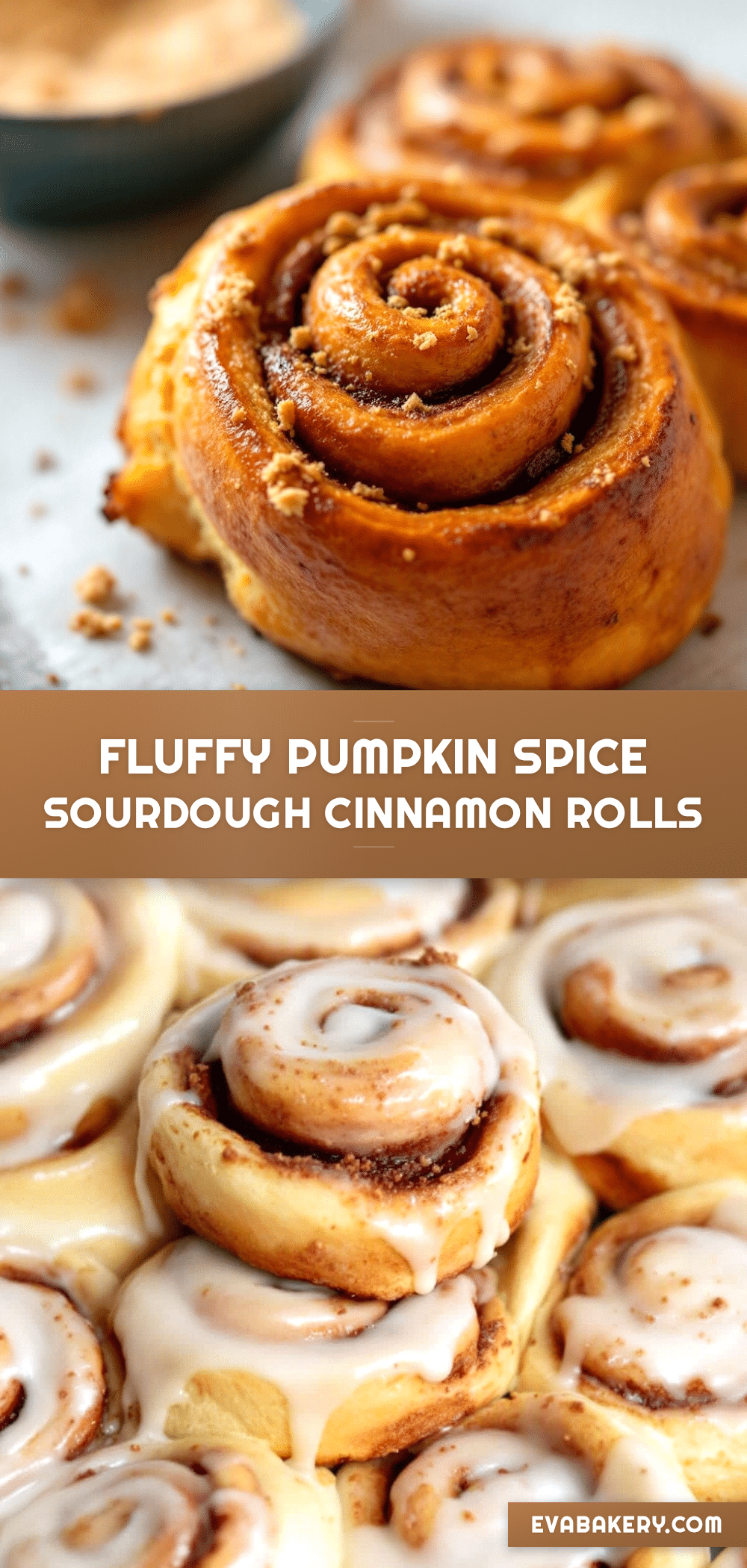
Fluffy Pumpkin Spice Sourdough Cinnamon Rolls
These fluffy pumpkin spice sourdough cinnamon rolls are soft, tangy, and perfectly spiced. Made with real pumpkin puree and a sourdough starter, they stay tender for days and are perfect for Thanksgiving morning or any cozy autumn day.
- Prep Time: 30 minutes
- Cook Time: 30 minutes
- Total Time: 9 hours (includes rising time)
- Yield: 12 servings 1x
- Category: Breakfast, Dessert
- Cuisine: American
Ingredients
- 3 cups (360g) all-purpose flour
- ½ cup (120g) active sourdough starter, fed and bubbly
- ½ cup (120g) pumpkin puree (not pumpkin pie filling)
- ¼ cup (60ml) whole milk, warm
- 3 tablespoons (42g) unsalted butter, melted and slightly cooled
- 2 tablespoons (25g) brown sugar, packed
- 1 large egg, room temperature
- 1 teaspoon (5g) salt
- 4 tablespoons (56g) unsalted butter, softened (for filling)
- ½ cup (100g) brown sugar, packed (for filling)
- ¼ cup (50g) granulated sugar (for filling)
- 2 tablespoons (14g) ground cinnamon (preferably Vietnamese)
- 1 tablespoon (7g) pumpkin pie spice
- Pinch of salt (for filling)
- 4 ounces (113g) cream cheese, softened (for frosting)
- 2 tablespoons (28g) unsalted butter, softened (for frosting)
- 1 cup (120g) powdered sugar, sifted (for frosting)
- 1 teaspoon (5ml) vanilla extract (for frosting)
- 1–2 tablespoons (15-30ml) milk (for frosting)
Instructions
- Feed your sourdough starter 6-8 hours before baking. It should be bubbly and doubled in size; it passes the float test if a spoonful floats in water.
- In a large bowl, whisk together the flour and salt. In a separate bowl, combine the sourdough starter, pumpkin puree, warm milk, melted butter, brown sugar, and egg. Stir until smooth.
- Pour the wet ingredients into the dry and mix with a wooden spoon until a shaggy dough forms. It will be sticky.
- Turn the dough onto a lightly floured surface and knead for 8-10 minutes until smooth and slightly tacky. Add flour 1 tablespoon at a time if too sticky, or milk 1 teaspoon at a time if too dry. The dough should feel like a soft earlobe.
- Place the dough in a lightly oiled bowl, cover with plastic wrap, and let rise at room temperature for 6-8 hours until doubled in size and puffy. If your kitchen is cold, use the oven with the light on.
- While the dough rises, make the filling: mix softened butter, brown sugar, granulated sugar, cinnamon, pumpkin pie spice, and a pinch of salt in a small bowl until it forms a paste. Set aside at room temperature.
- After the first rise, turn the dough onto a lightly floured surface. Roll it into a 12×16 inch rectangle, about ¼ inch thick.
- Spread the cinnamon filling evenly over the dough, leaving a 1-inch border on the long edge farthest from you.
- Starting from the long edge closest to you, roll the dough tightly into a log. Pinch the seam to seal. Do not roll too tight to avoid squeezing out the filling.
- Trim off the uneven ends (baker’s tax) with a sharp knife or bench scraper. Cut the log into 12 equal pieces, about 1½ inches each. For cleaner cuts, use unflavored dental floss.
- Arrange the rolls in a parchment-lined 9×13 inch baking dish, leaving a little space between each. Cover loosely with plastic wrap and let rise for 2-3 hours at room temperature until puffed and touching. For overnight rolls, refrigerate after 1 hour at room temperature, then bake straight from the fridge in the morning.
- About 20 minutes before baking, preheat the oven to 350°F (175°C). Bake the rolls for 25-30 minutes until golden brown on top and the center rolls feel set when gently poked. If tops brown too quickly, tent with foil at the 20-minute mark.
- While the rolls bake, make the frosting: beat cream cheese and butter together until smooth. Gradually add powdered sugar, then vanilla. Add milk 1 tablespoon at a time until the frosting is thick but spreadable.
- Let the rolls cool for 5-10 minutes before spreading the frosting. Frost when warm, not hot, to avoid melting.
Notes
For best results, use a kitchen scale to measure flour by weight. The overnight method (refrigerating after 1 hour at room temperature) develops deeper flavor. Let rolls rest 15-20 minutes after baking before cutting to avoid a sticky mess. For gluten-free, use a 1:1 gluten-free flour blend with xanthan gum and add an extra tablespoon of milk. For dairy-free, use coconut oil or vegan butter and dairy-free cream cheese.
Nutrition
- Serving Size: 1 roll with frosting
- Calories: 320
- Sugar: 22
- Sodium: 280
- Fat: 12
- Saturated Fat: 7
- Carbohydrates: 48
- Fiber: 3
- Protein: 6
Keywords: pumpkin cinnamon rolls, sourdough cinnamon rolls, pumpkin spice, fall baking, sourdough breakfast, fluffy cinnamon rolls, pumpkin sourdough