“Are you sure these are homemade?” my cousin asked, eyes wide as I placed a warm bowl of gulab jamun on the table. Honestly, I wasn’t expecting much the first time I tried making these little golden orbs soaked in cardamom rose water syrup. I was more of a “grab from the store” kind of person, mostly because gulab jamun always felt like some mystical dessert reserved for Indian weddings or special occasions, not my busy weeknight dinners. But one evening, when the fridge was pretty bare and I was craving something sweet yet comforting, I thought, “Why not give it a shot?”
What started as a low-key experiment turned into a full-on obsession. I found myself making gulab jamun multiple times that week, tweaking the syrup, perfecting the frying temperature, and yes, even figuring out how to get that melt-in-your-mouth texture. The aroma of cardamom and rose water filling my kitchen was oddly calming, like a secret invitation to slow down for a moment. I realized this wasn’t just about dessert — it was a small ritual, a quiet joy in the middle of chaos, a way to turn something simple into a meaningful treat.
And here’s the thing: this recipe stuck—not because it’s fancy or complicated, but because it’s honest and approachable. It’s the kind of recipe that invites you to come back, again and again, for that familiar warmth and sweetness. So, if you’ve ever thought homemade gulab jamun was out of reach, I hope this story and recipe make you rethink that. You might just find your new favorite dessert, too.
Why You’ll Love This Recipe
After countless trials (and a few fried disasters), I landed on this perfect homemade gulab jamun recipe with cardamom rose water syrup that really nails that delicate balance between rich and light. Here’s why this one deserves a spot in your dessert rotation:
- Quick & Easy: Though it looks impressive, this recipe comes together in about 40 minutes total, making it doable even on busy nights or last-minute dessert cravings.
- Simple Ingredients: No need to hunt down exotic items; most of what you’ll need is probably already in your pantry or local grocery store.
- Perfect for Celebrations: Whether it’s Diwali, a casual dinner party, or just because you want to treat yourself, these sweet dumplings bring a little festive magic to the table.
- Crowd-Pleaser: Kids and adults alike can’t get enough of these — they’re soft, syrupy, and utterly irresistible.
- Unbelievably Delicious: The secret lies in the syrup—fragrant cardamom and a splash of rose water work wonders, making every bite feel special without overwhelming the palate.
- What Sets This Apart: Many recipes skip the step of resting the dough, but allowing it to rest results in a tender texture that’s light, not dense. Plus, frying the jamuns at just the right temperature ensures they puff up perfectly without absorbing too much oil.
This isn’t just another dessert recipe; it’s a little moment of sweetness that comforts like a warm hug and surprises you with its simplicity. If you’re curious how something so humble can taste so good, this recipe will show you exactly how.
What Ingredients You Will Need
This recipe uses simple, wholesome ingredients to deliver bold flavor and that classic soft texture without fuss. The ingredients are pantry-friendly and easy to source, with a few little tips to get the best result.
- For the Gulab Jamun Dough:
- Milk powder – 1 cup (120g) (I prefer using full-fat for richness)
- All-purpose flour – 2 tablespoons (15g) (for binding; can swap with gluten-free flour)
- Baking soda – 1/4 teaspoon (helps with puffiness)
- Ghee or unsalted butter – 2 tablespoons, melted (adds tenderness)
- Whole milk – 1/4 cup (60ml), warm (adjust as needed for dough consistency)
- Sugar – 1/2 teaspoon (a pinch to balance dough taste)
- For the Cardamom Rose Water Syrup:
- Sugar – 2 cups (400g)
- Water – 1 1/2 cups (360ml)
- Green cardamom pods – 6, lightly crushed (freshly crushed works best)
- Rose water – 1 tablespoon (adjust to taste, be careful not to overpower)
- Fresh lemon juice – 1 teaspoon (prevents crystallization)
- For Frying:
- Vegetable oil or ghee – 3 cups (enough for deep frying)
Tip: I recommend Amul brand for ghee if you can find it, as it adds authentic flavor. For rose water, a good quality brand like Almond Blossom makes a noticeable difference in aroma. If you don’t have rose water, a few strands of saffron steeped in warm syrup can be a lovely alternative.
Equipment Needed
- Deep frying pan or heavy-bottomed skillet – for frying the gulab jamuns evenly
- Slotted spoon – to gently remove the fried balls from oil
- Mixing bowls – at least two, for dough and syrup
- Measuring cups and spoons – for accuracy (especially sugar and liquids)
- Wire rack or paper towels – to drain excess oil
- Small saucepan – for preparing the syrup
For budget-friendly frying, a cast iron skillet works beautifully and holds heat steady without needing fancy temperature control. I’ve also used an electric deep fryer, which is handy if you make gulab jamun often. Just remember, maintaining the right oil temperature (around 325°F/160°C) is key, so a kitchen thermometer can be a helpful but optional tool.
Preparation Method
- Make the Dough: In a large bowl, mix 1 cup (120g) milk powder, 2 tablespoons (15g) all-purpose flour, 1/4 teaspoon baking soda, and 1/2 teaspoon sugar. Add 2 tablespoons melted ghee or butter and gently mix with your fingers until crumbly.
- Add Warm Milk: Gradually pour in 1/4 cup (60ml) warm milk, mixing lightly to form a soft dough. Don’t overwork it; just bring it together so it’s smooth and pliable but not sticky. If too dry, add a teaspoon more milk at a time.
- Rest the Dough: Cover the dough with a damp cloth and let it rest for 10 minutes. This helps the dough hydrate and results in softer gulab jamuns.
- Prepare the Syrup: In a saucepan, combine 2 cups (400g) sugar and 1 1/2 cups (360ml) water. Add the lightly crushed cardamom pods and bring to a boil over medium heat, stirring occasionally until sugar dissolves.
- Simmer and Flavor: Lower the heat and simmer the syrup for 5-7 minutes. Add 1 teaspoon fresh lemon juice to prevent crystallization and stir in 1 tablespoon rose water at the end. Remove from heat and keep warm.
- Shape the Dough: Divide the rested dough into 16-18 equal portions. Roll each gently between your palms to form smooth, crack-free balls about 1 inch (2.5 cm) diameter. Avoid cracking, as it causes oil absorption.
- Heat the Oil: In your deep frying pan or skillet, heat 3 cups of oil or ghee over medium-low heat to around 325°F (160°C). To test, drop a small piece of dough; it should slowly rise to the surface without browning too quickly.
- Fry the Gulab Jamuns: Fry the balls in batches, stirring gently and constantly for even browning. They will first sink, then rise, expanding slightly. Fry until golden brown all over, about 6-8 minutes per batch.
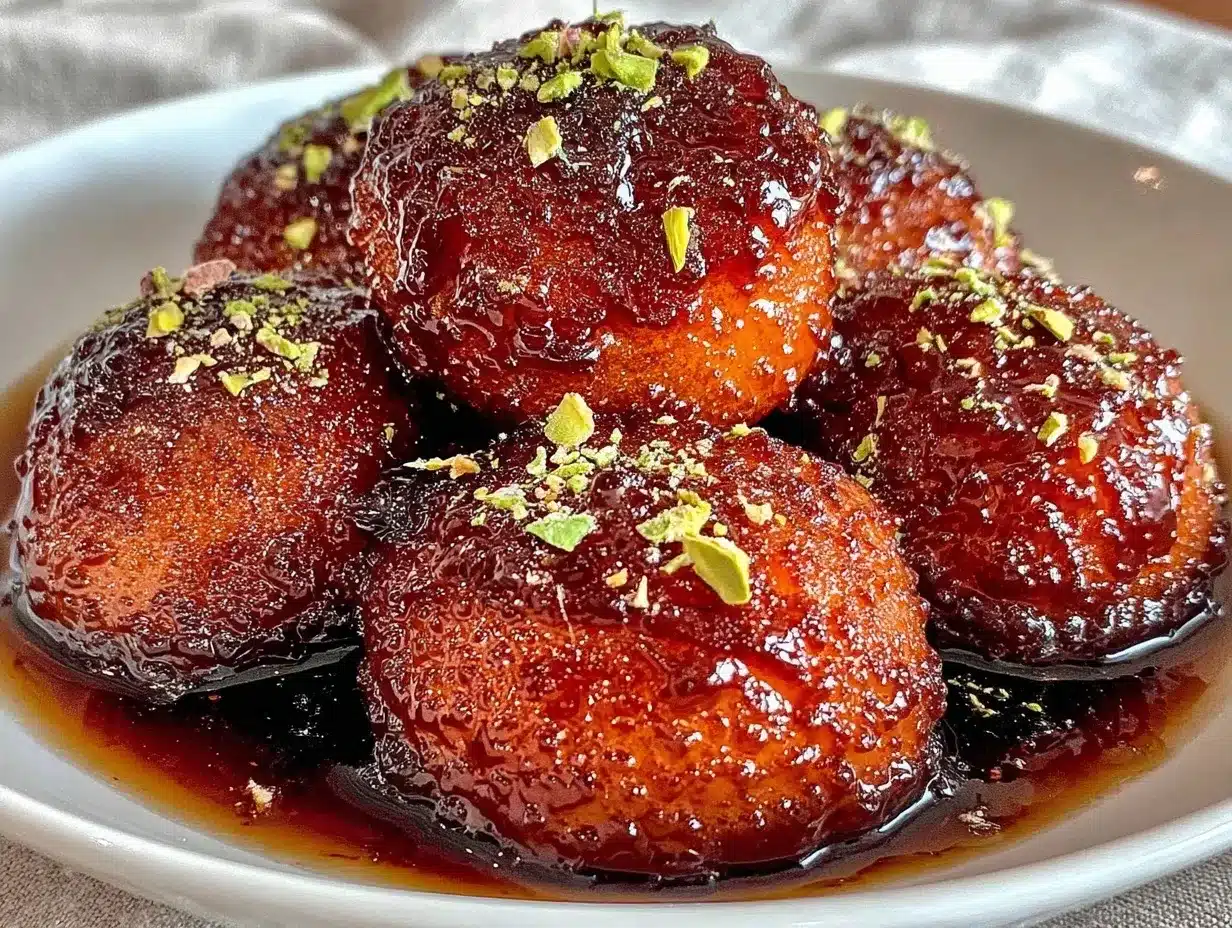
- Drain and Soak: Remove fried gulab jamuns with a slotted spoon and drain on paper towels briefly. Then, immediately immerse them in the warm cardamom rose water syrup. Let them soak for at least 30 minutes to absorb the syrup fully.
- Serve: Serve gulab jamuns warm or at room temperature, garnished with crushed pistachios or a sprinkle of dried rose petals if you like. They keep well in syrup for 2-3 days refrigerated.
Pro tip: Don’t rush the frying process; frying at too high heat will brown them outside while leaving the inside uncooked. Patience here really pays off with soft, melt-in-the-mouth results.
Cooking Tips & Techniques
Perfecting homemade gulab jamun takes a few tricks I learned the hard way. First, the dough texture is key—too dry and the jamuns crack and soak excess oil; too wet and they fall apart. Resting the dough helps a lot. Also, keep the oil temperature steady around 325°F (160°C). If it’s too hot, the jamuns brown too fast; too cool, and they turn greasy.
When frying, stir gently but continuously to keep the jamuns spherical and evenly colored. One batch at a time prevents overcrowding, which drops oil temperature. I once tried frying a whole batch at once—let’s just say I ended up with unevenly cooked dough balls. That day was a reminder that patience is a virtue in frying.
For the syrup, adding lemon juice is a small but essential step to keep the sugar from crystallizing, especially if you plan to store leftovers. And don’t skip the rose water or cardamom—it’s the subtle fragrance that transforms the syrup from simple sweetness to something memorable.
Finally, soaking time matters. Letting the jamuns sit in syrup for at least 30 minutes ensures they absorb the flavors fully and stay moist rather than drying out. If you’re short on time, warm syrup helps speed absorption, but cooler syrup can be refreshing in summer.
Variations & Adaptations
Like any beloved recipe, this perfect homemade gulab jamun is versatile and welcomes some fun tweaks:
- Dietary: For a vegan version, swap ghee with coconut oil and use almond or soy milk instead of dairy milk. Use gluten-free flour alternatives carefully, as texture may vary.
- Flavor Twists: Add a pinch of saffron threads soaked in warm milk to the dough or syrup for a luxurious color and aroma. You can also infuse the syrup with a small cinnamon stick for a warm spice note.
- Cooking Method: If you prefer less oil, try baking the jamuns at 350°F (175°C) until golden, then soak them in syrup. They won’t be quite the same but still delightful and lighter.
- Seasonal: In summer, garnish with fresh edible rose petals or serve alongside chilled kulfi for a refreshing contrast.
- Personal Variation: Once, I tried stuffing the gulab jamun balls with a tiny piece of chopped pistachio soaked in honey before frying. It added a surprising crunch and nutty sweetness that my family loved.
Serving & Storage Suggestions
Gulab jamun is best served warm or at room temperature, allowing the syrup to be luxuriously soaked into each bite. Present them in a shallow bowl with a little extra syrup spooned over, garnished with crushed pistachios or slivered almonds for a bit of texture and color.
This dessert pairs beautifully with a cup of chai or even something sparkling and light, like the champagne punch recipe when celebrating with friends. For a more savory course, try serving gulab jamun after a rich main like the perfect beef tenderloin to balance flavors.
Store leftover gulab jamuns in their syrup in an airtight container in the refrigerator for up to 3 days. Reheat gently in the microwave or in a warm water bath to bring back softness and aroma. Note that sometimes the syrup thickens when chilled—just stir in a splash of warm water before serving.
Over time, the flavors deepen, making leftovers even more delightful the next day — if they last that long!
Nutritional Information & Benefits
This homemade gulab jamun recipe is indulgent but made with simple, wholesome ingredients. Each serving (about 2 gulab jamuns) provides roughly 250 calories, mainly from fats and sugars, which makes it a treat best enjoyed in moderation.
Key ingredients like cardamom offer antioxidant properties and aid digestion, while rose water has calming effects. Using ghee adds healthy fats known for supporting immunity. For those mindful of gluten, swapping all-purpose flour for gluten-free options can make this dessert accessible.
While gulab jamun is not a low-carb dessert, this version avoids preservatives and artificial flavors commonly found in store-bought sweets. It’s a comforting, real-food dessert perfect for occasional indulgence without guilt.
Conclusion
Making perfect homemade gulab jamun with cardamom rose water syrup isn’t just about the dessert itself—it’s about creating a moment of sweetness that feels like a quiet celebration. Whether you’re new to Indian sweets or looking for a reliable recipe to impress guests, this one’s got your back.
Feel free to play with the flavors and textures—there’s room for your own twists and touches. I love this recipe because it’s approachable enough to make on a whim but special enough to bring a smile every time.
If you try it, I’d love to hear how you made it your own or what memories it sparked. Sharing recipes and stories is what keeps the kitchen alive, after all. So, go ahead—give these gulab jamuns a whirl and enjoy that fragrant, golden magic.
FAQs
How do I know when the oil is at the right temperature for frying gulab jamun?
Drop a small piece of dough into the oil—it should slowly rise to the surface without browning too quickly. Aim for about 325°F (160°C). Using a kitchen thermometer can help, but the slow rising test works well too.
Can I make gulab jamun dough ahead of time?
Yes! You can prepare the dough, cover it tightly, and refrigerate for up to 8 hours. Bring it back to room temperature before shaping and frying for best results.
Is there a way to make gulab jamun without deep frying?
Absolutely. Baking the shaped dough balls at 350°F (175°C) until golden is an option. Then soak them in warm syrup. The texture will be different—less oily and crisp—but still tasty.
What can I use if I don’t have rose water?
If rose water isn’t available, saffron strands soaked in warm syrup or a few drops of orange blossom water can add a lovely floral note.
How long can I store gulab jamun in syrup?
Stored in an airtight container in the refrigerator, gulab jamun can last up to 3 days. Reheat gently before serving to restore softness and aroma.
Pin This Recipe!
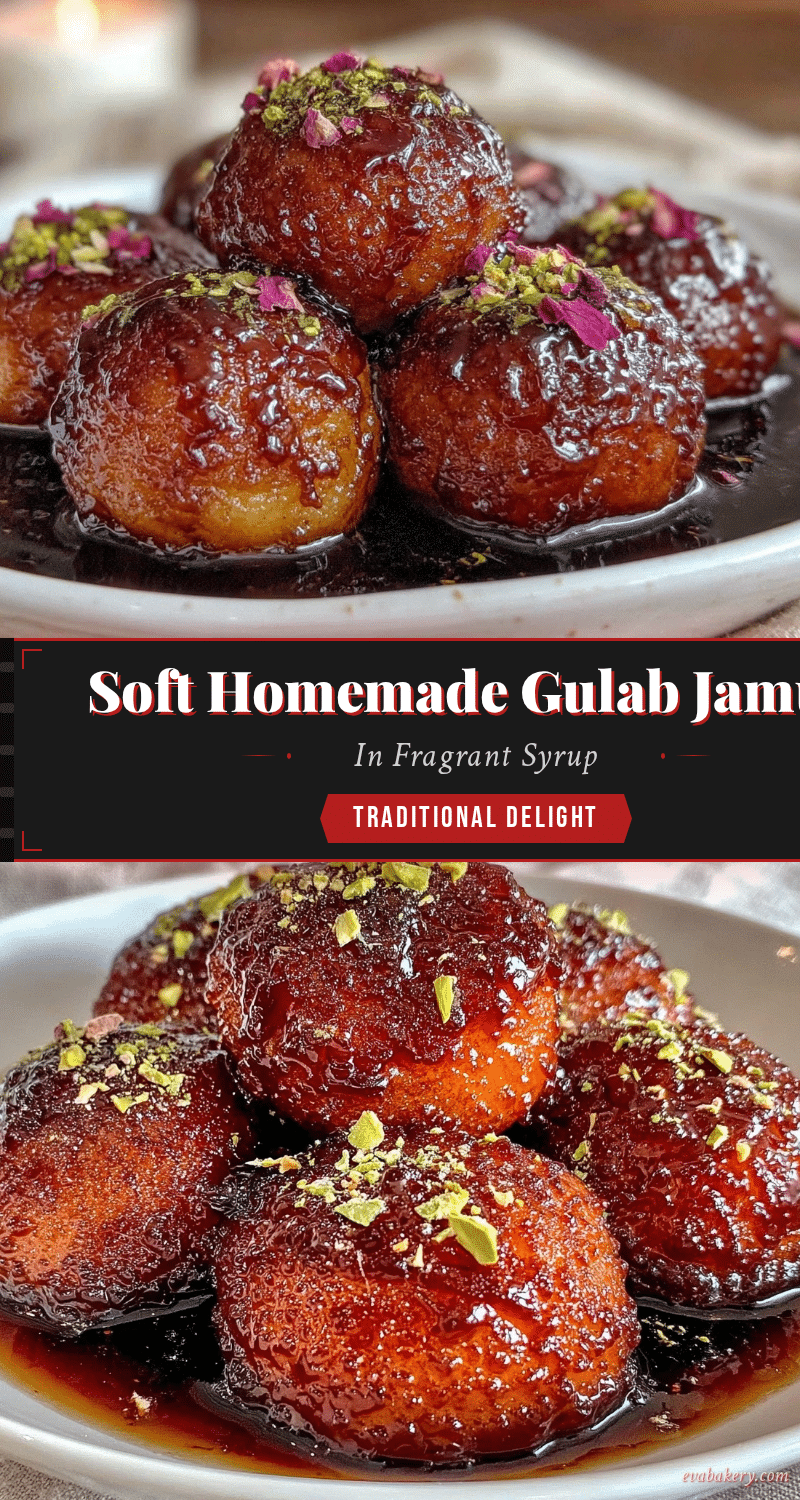
Perfect Homemade Gulab Jamun Recipe with Cardamom Rose Water Syrup for Easy Dessert Delight

This recipe delivers soft, melt-in-the-mouth gulab jamuns soaked in fragrant cardamom rose water syrup, perfect for celebrations or a comforting dessert treat.
- Prep Time: 15 minutes
- Cook Time: 25 minutes
- Total Time: 40 minutes
- Yield: 16-18 gulab jamuns (about 8 servings)
- Category: Dessert
- Cuisine: Indian
Ingredients
- Milk powder – 1 cup (120g / 4.2 oz) full-fat
- All-purpose flour – 2 tablespoons (15g / 0.5 oz) (can swap with gluten-free flour)
- Baking soda – 1/4 teaspoon
- Ghee or unsalted butter – 2 tablespoons, melted
- Whole milk – 1/4 cup (60ml / 2 fl oz), warm (adjust as needed)
- Sugar – 1/2 teaspoon (for dough)
- Sugar – 2 cups (400g / 14 oz) (for syrup)
- Water – 1 1/2 cups (360ml / 12 fl oz)
- Green cardamom pods – 6, lightly crushed
- Rose water – 1 tablespoon
- Fresh lemon juice – 1 teaspoon
- Vegetable oil or ghee – 3 cups (enough for deep frying)
Instructions
- In a large bowl, mix 1 cup milk powder, 2 tablespoons all-purpose flour, 1/4 teaspoon baking soda, and 1/2 teaspoon sugar.
- Add 2 tablespoons melted ghee or butter and gently mix with your fingers until crumbly.
- Gradually pour in 1/4 cup warm milk, mixing lightly to form a soft dough. Add more milk if needed to achieve a smooth, pliable but not sticky dough.
- Cover the dough with a damp cloth and let it rest for 10 minutes.
- In a saucepan, combine 2 cups sugar and 1 1/2 cups water. Add crushed cardamom pods and bring to a boil over medium heat, stirring until sugar dissolves.
- Lower heat and simmer syrup for 5-7 minutes. Add 1 teaspoon fresh lemon juice and 1 tablespoon rose water. Remove from heat and keep warm.
- Divide rested dough into 16-18 equal portions. Roll each into smooth, crack-free balls about 1 inch diameter.
- Heat 3 cups oil or ghee in a deep frying pan over medium-low heat to about 325°F (160°C).
- Fry dough balls in batches, stirring gently and constantly, until golden brown (6-8 minutes).
- Remove fried gulab jamuns with a slotted spoon and drain briefly on paper towels.
- Immediately immerse the fried balls in warm syrup and soak for at least 30 minutes.
- Serve warm or at room temperature, optionally garnished with crushed pistachios or dried rose petals.
Notes
Maintain oil temperature around 325°F (160°C) for best results. Resting the dough for 10 minutes improves softness. Add lemon juice to syrup to prevent crystallization. Soak gulab jamuns in syrup for at least 30 minutes for full flavor absorption. For vegan version, substitute ghee with coconut oil and milk with almond or soy milk.
Nutrition
- Serving Size: About 2 gulab jamuns
- Calories: 250
- Sugar: 28
- Sodium: 50
- Fat: 12
- Saturated Fat: 6
- Carbohydrates: 32
- Fiber: 0.5
- Protein: 4
Keywords: gulab jamun, homemade gulab jamun, Indian dessert, cardamom rose water syrup, easy dessert, fried sweets, traditional Indian sweets