“You’ve got to try this before the scapes disappear!” my neighbor called over the fence one sunny afternoon as I wrestled with dinner ideas. Fresh garlic scapes had just arrived at the local farmer’s market, their curly green tendrils promising something unique. Honestly, I was skeptical—pesto is pesto, right? But curiosity won over, and that night, I whipped up a batch of fresh garlic scape pesto pasta with Parmesan. The first bite was like stepping into spring itself: bright, grassy notes with just enough garlicky punch to wake up your taste buds without overwhelming them. It wasn’t just another pasta dish; it was a fresh, lively twist that stuck with me through several dinners that week. That unexpected joy from simple, seasonal ingredients—that’s why this recipe has a permanent spot in my kitchen rotation now.
Why You’ll Love This Fresh Garlic Scape Pesto Pasta Recipe
From the first trial, this fresh garlic scape pesto pasta with Parmesan quickly proved itself a keeper. It’s been tested repeatedly (yes, sometimes twice in one week), and I’ve tweaked it to get just the right balance. Here’s what makes it stand apart:
- Quick & Easy: Ready in under 30 minutes, perfect when you want a satisfying dinner without fuss.
- Simple Ingredients: Uses pantry staples plus fresh garlic scapes you can grab at spring markets or substitute with mild garlic chives.
- Perfect for Seasonal Meals: A bright, fresh dish that celebrates spring’s bounty, great for casual dinners or impressing guests.
- Crowd-Pleaser: The subtle garlic flavor and creamy Parmesan win over both kids and adults, even those skeptical about pesto variations.
- Unbelievably Delicious: The fresh scapes lend a crisp, herbal twist that’s unlike traditional basil pesto, adding a new depth of flavor.
What really sets this recipe apart is how the garlic scapes’ mild, floral garlic flavor pairs perfectly with nutty Parmesan and a touch of lemon zest for brightness. It’s not just a pesto—it’s a fresh take that invites you to linger over your plate, savoring every bite. Honestly, it’s one of those dishes that makes you wish the garlic scape season lasted all year long.
What Ingredients You Will Need
This recipe uses simple, wholesome ingredients to deliver bold flavor and satisfying texture without the fuss. Most are pantry staples, with fresh garlic scapes adding that seasonal magic. If you can’t find scapes, mild garlic chives or a small amount of fresh garlic can work as a substitute.
- Fresh garlic scapes: about 1 cup chopped (roughly 100g) – look for firm, bright green scapes at farmers markets or specialty stores.
- Parmesan cheese: ½ cup freshly grated (50g) – I prefer Parmigiano-Reggiano for its nutty depth.
- Olive oil: ½ cup extra virgin – the richer the better for that silky mouthfeel.
- Pine nuts: ¼ cup toasted (30g) – adds a buttery crunch; walnuts can be a budget-friendly swap.
- Fresh lemon juice: 1 tablespoon – balances the richness and brightens the pesto.
- Salt: to taste, start with ½ teaspoon.
- Black pepper: freshly ground, about ¼ teaspoon.
- Pasta: 12 oz (340g) of your favorite type – linguine or spaghetti works beautifully.
- Optional: a pinch of red pepper flakes for subtle heat.
For substitutions, almond flour or nutritional yeast can be used in place of nuts or cheese for a dairy-free or vegan version. Swapping lemon juice with lime can give a slightly different citrus note if you want to experiment. I’ve tried this with gluten-free pasta, and it comes out just as delightful.
Equipment Needed
To make this fresh garlic scape pesto pasta with Parmesan, you don’t need much beyond the basics:
- A food processor or blender – essential for turning the garlic scapes and nuts into a smooth pesto. A good-quality one like a Breville or Cuisinart makes a difference but a basic model works fine.
- Large pot – for boiling the pasta.
- Colander – to drain the pasta.
- Wooden spoon or spatula – for mixing the pesto with the pasta.
- Measuring cups and spoons – to keep the balance just right.
If you don’t have a food processor, a mortar and pestle can work, though it’s more time-consuming and rustic. I once made this pesto by hand and honestly, it felt like a mini workout but delivered lovely texture. Also, keep your equipment clean and dry, especially the blades and bowls, to keep the pesto vibrant green.
Preparation Method
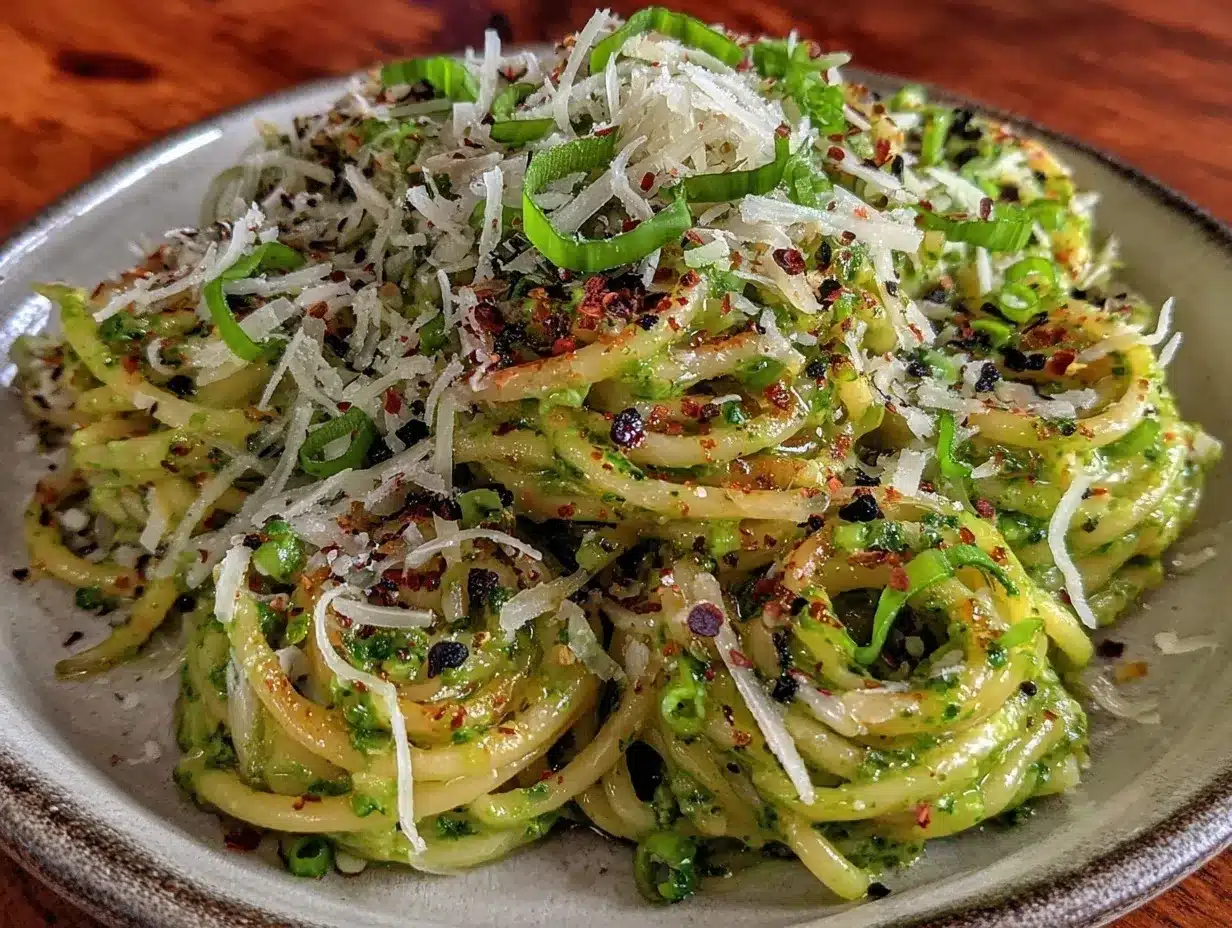
- Prepare the pasta water: Bring a large pot of salted water to a boil. Use about 1 tablespoon salt per 4 quarts (4 liters) of water. This will season your pasta from the inside out. It usually takes 10-15 minutes to reach a rolling boil.
- Toast the pine nuts: In a dry skillet over medium heat, toast the pine nuts for 3-5 minutes, stirring frequently until golden and fragrant. Watch carefully—they burn fast! Set aside to cool.
- Make the pesto: In your food processor, combine chopped garlic scapes, toasted pine nuts, grated Parmesan, lemon juice, salt, and pepper. Pulse a few times to start breaking them down.
- Add olive oil: With the processor running on low, slowly drizzle in the olive oil, blending until smooth but still slightly textured. Stop and scrape down the sides as needed. The pesto should be creamy but not watery.
- Cook the pasta: Add your pasta to the boiling salted water and cook according to package instructions until al dente (usually 8-10 minutes). Stir occasionally to prevent sticking.
- Reserve pasta water: Before draining, scoop out about ½ cup (120 ml) of pasta water and set aside. This starchy water helps bind the pesto to the pasta.
- Combine pasta and pesto: Drain the pasta and return it to the pot or a large bowl. Add the pesto and toss well to coat evenly. Add reserved pasta water a little at a time if the mixture feels too thick or dry.
- Adjust seasoning: Taste and add more salt, pepper, or lemon juice as desired. If you like a bit of spice, sprinkle in red pepper flakes now.
- Serve immediately: Plate the pasta with an extra sprinkle of Parmesan and a drizzle of olive oil for a glossy finish.
Pro tip: Don’t overblend the pesto; you want some texture to highlight the pine nuts and scapes. Also, tossing the pasta while it’s hot helps the pesto absorb evenly. If you’re short on time, you can make the pesto ahead and keep it refrigerated up to 2 days.
Cooking Tips & Techniques
Making fresh garlic scape pesto pasta with Parmesan is straightforward, but a few little tricks make a big difference. First, always toast your pine nuts lightly. Raw pine nuts can taste a bit grassy and won’t provide that rich, nutty flavor that makes pesto sing. I once forgot this step and the pesto was… well, underwhelming.
Next, timing is key when cooking pasta. Aim for al dente texture—soft but with a slight bite. It holds up better when tossed with the pesto and won’t get mushy if you take a few minutes to finish the sauce.
Also, reserve some pasta water before draining! That starchy water is gold for loosening your pesto and helping it cling to every strand. Add it gradually; too much water makes the sauce runny.
When blending pesto, pulse rather than run the processor continuously. This prevents over-processing and keeps some texture, which enhances the eating experience. Lastly, don’t be shy with seasoning—pesto needs a good pinch of salt and fresh pepper to balance the flavors.
Variations & Adaptations
This fresh garlic scape pesto pasta recipe is a great canvas for creativity. Here are a few variations I’ve enjoyed:
- Nut-free version: Swap pine nuts for toasted sunflower seeds or pepitas for a similar crunch without allergens.
- Vegan adaptation: Replace Parmesan with nutritional yeast and make sure your pasta is egg-free. The lemon juice and olive oil keep the flavor vibrant.
- Seasonal swap: When scapes aren’t available, mild garlic chives or even young basil leaves can provide a similar fresh note.
- Spicy twist: Add a small fresh chili or a pinch of cayenne pepper to the pesto for a gentle heat.
- Extra green: Toss in a handful of fresh spinach or arugula leaves when blending for a more herbaceous, leafy pesto.
Personally, I’ve tried this pesto with crispy prosciutto-wrapped asparagus bites on the side—such a lovely spring combo! You can also mix in some grilled chicken or shrimp for a heartier meal.
Serving & Storage Suggestions
This pasta is best served fresh and warm, with a final sprinkle of Parmesan and a drizzle of olive oil for shine. The bright flavors really pop when the dish is fresh out of the pot. Pair it with a crisp white wine or a sparkling drink like the refreshing champagne punch for a springtime dinner that feels both casual and special.
To store leftovers, place pasta in an airtight container and refrigerate for up to 2 days. The pesto will mellow over time, so you might want to add a little fresh lemon juice or Parmesan when reheating. Warm gently in a pan, adding a splash of water or olive oil to loosen the sauce.
Freezing pesto separately in ice cube trays is a great way to preserve garlic scapes when in season. Just thaw and toss with freshly cooked pasta whenever you want a quick meal.
Nutritional Information & Benefits
One serving of this fresh garlic scape pesto pasta (about 1.5 cups or 200g cooked) provides roughly:
| Calories | 420 kcal |
|---|---|
| Protein | 12 g |
| Fat | 22 g |
| Carbohydrates | 40 g |
| Fiber | 3 g |
Garlic scapes are low in calories but rich in antioxidants and vitamins A and C. Olive oil adds heart-healthy monounsaturated fats, while Parmesan provides calcium and protein. This recipe is naturally gluten-free if you use gluten-free pasta and can be easily adapted for vegan diets. Just watch for nut allergens and swap ingredients accordingly.
Conclusion
Fresh garlic scape pesto pasta with Parmesan is one of those dishes that surprises you with how a few simple, fresh ingredients can transform a meal. It’s bright, satisfying, and perfect for sharing a quiet dinner or impressing unexpected guests. I love how it brings the taste of spring straight to the table, and I hope you find yourself making it again and again—maybe even alongside some fluffy mini quiches for brunch or a casual dinner party. Feel free to tweak the recipe to your taste, and don’t be shy about adding your own spin. Cooking is all about joy, after all!
FAQs about Fresh Garlic Scape Pesto Pasta with Parmesan
What can I substitute if I can’t find garlic scapes?
You can use mild garlic chives or even a small amount of fresh garlic cloves, but be careful as garlic cloves are more pungent. Another option is young basil leaves for a more traditional pesto flavor.
Can I make the pesto in advance?
Yes! The pesto can be made up to 2 days ahead and stored in an airtight container in the fridge. Press a thin layer of olive oil on top to prevent browning.
Is this recipe suitable for vegans?
To make it vegan, swap the Parmesan for nutritional yeast and ensure your pasta contains no eggs. The flavor remains fresh and satisfying.
How do I store leftover pesto?
Store leftover pesto in a sealed container, cover with olive oil, and refrigerate for up to 2 days. For longer storage, freeze pesto in ice cube trays and thaw as needed.
What pasta types work best with this pesto?
Linguine, spaghetti, or any long pasta shapes work wonderfully to hold the pesto sauce. Short pasta like penne or fusilli also work well if you prefer.
Pin This Recipe!
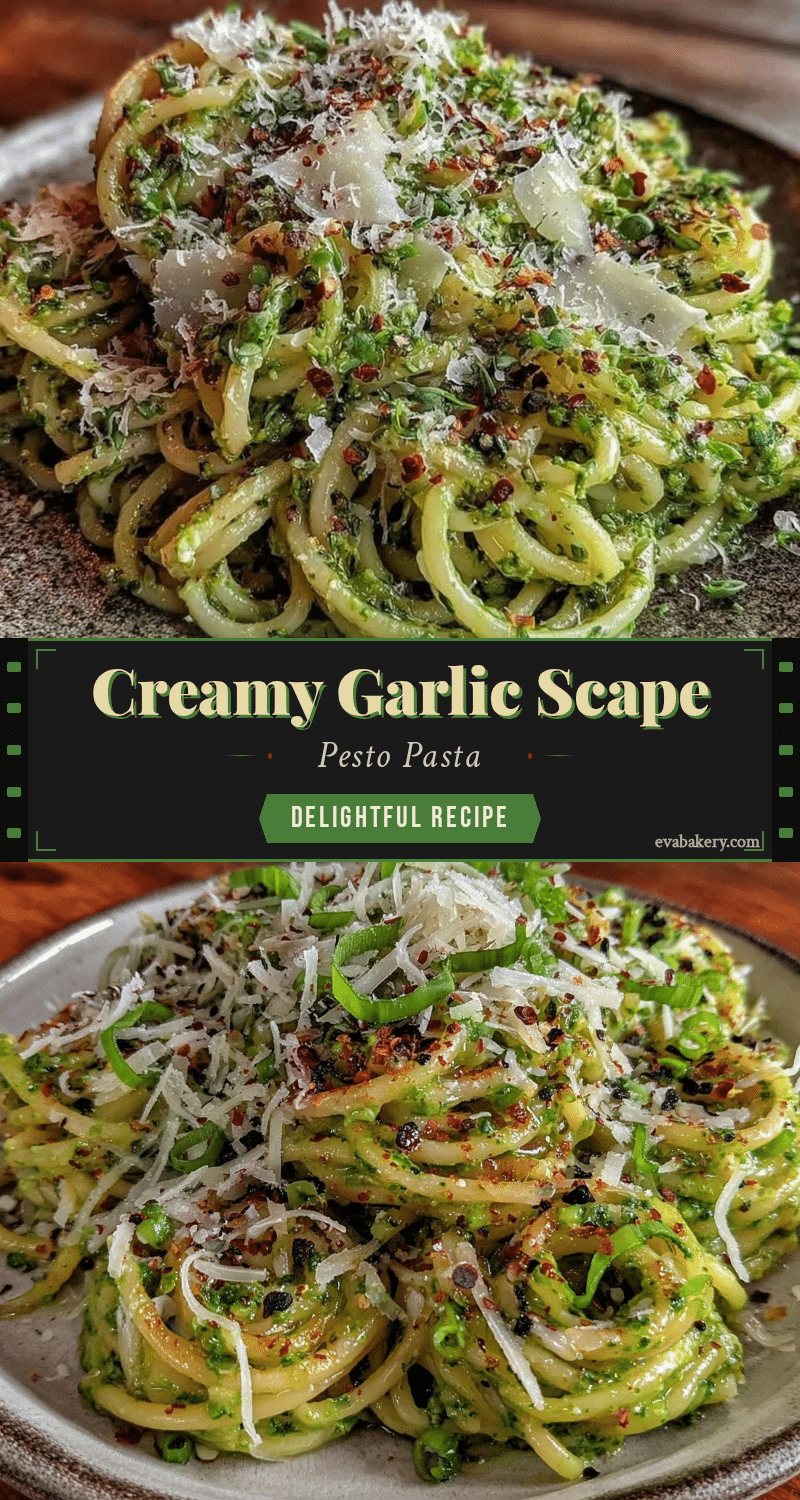
Fresh Garlic Scape Pesto Pasta Recipe Easy Homemade Parmesan Delight
A bright and fresh pasta dish featuring homemade pesto made from fresh garlic scapes and Parmesan cheese. Quick and easy to prepare, perfect for spring meals.
- Prep Time: 10 minutes
- Cook Time: 15 minutes
- Total Time: 25 minutes
- Yield: 4 servings 1x
- Category: Main Course
- Cuisine: Italian
Ingredients
- 1 cup chopped fresh garlic scapes (about 100g)
- 1/2 cup freshly grated Parmesan cheese (50g)
- 1/2 cup extra virgin olive oil
- 1/4 cup toasted pine nuts (30g)
- 1 tablespoon fresh lemon juice
- 1/2 teaspoon salt, to taste
- 1/4 teaspoon freshly ground black pepper
- 12 oz (340g) pasta (linguine or spaghetti recommended)
- Optional: pinch of red pepper flakes
Instructions
- Bring a large pot of salted water to a boil (about 1 tablespoon salt per 4 quarts of water).
- Toast pine nuts in a dry skillet over medium heat for 3-5 minutes until golden and fragrant; set aside to cool.
- In a food processor, combine chopped garlic scapes, toasted pine nuts, grated Parmesan, lemon juice, salt, and pepper. Pulse a few times to break down ingredients.
- With the processor running on low, slowly drizzle in olive oil until the pesto is smooth but slightly textured. Scrape down sides as needed.
- Cook pasta in boiling salted water according to package instructions until al dente (8-10 minutes). Stir occasionally.
- Reserve 1/2 cup (120 ml) pasta water before draining.
- Drain pasta and return to pot or large bowl. Add pesto and toss to coat evenly, adding reserved pasta water gradually if needed to loosen sauce.
- Adjust seasoning with additional salt, pepper, or lemon juice as desired. Add red pepper flakes if using.
- Serve immediately with extra Parmesan and a drizzle of olive oil.
Notes
Do not overblend the pesto to keep some texture. Toast pine nuts lightly for best flavor. Reserve pasta water to help pesto cling to pasta. Pesto can be made up to 2 days ahead and stored refrigerated with a layer of olive oil on top to prevent browning.
Nutrition
- Serving Size: About 1.5 cups (200g
- Calories: 420
- Fat: 22
- Carbohydrates: 40
- Fiber: 3
- Protein: 12
Keywords: garlic scape pesto, pesto pasta, fresh garlic scapes, homemade pesto, Parmesan pasta, spring pasta recipe, easy pasta recipe